
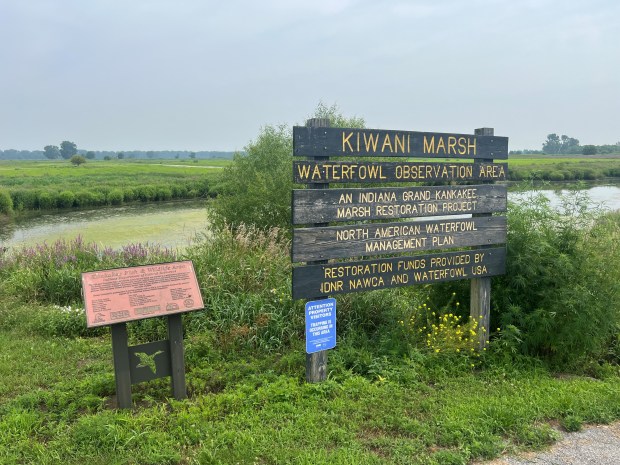
When Annette Hansen learned about the federal concerns regarding Indiana’s wetlands program, she felt uneasy. As the executive director of Porter County’s chapter of the Izaak Walton League of America, Hansen was involved in wetland conservation efforts. “We helped restore 150 acres,” she said. “But that’s a small part compared to what’s needed.” Managed by the Indiana Department of Natural Resources (DNR), the Kiwani Marsh in Starke County demonstrates efforts to manage a 125-mile area for waterfowl observation and restoration initiated in 2010.
The Indiana Capital Chronicle reported on issues found by the U.S. Army Corps of Engineers, which oversees the program. It found that the DNR’s program did not comply with the “three-growing-season timeframe” requirement. The DNR has collected over $109 million for wetland credits since the program began in 2018, yet many projects remain stalled.
The DNR program, known as the Indiana Stream and Wetland Mitigation Program, allows developers to buy credits to meet compensatory mitigation requirements under various laws. A spokesperson stated, “We will complete all approved projects,” referencing ongoing and planned projects in Northwest Indiana.
Hansen noted that their past restoration projects, like the Frame Family Little Calumet Conservation Area, are unaffected by these compliance issues. This area has improved drainage and removed invasive species, benefiting local farms by managing stormwater more effectively. Hansen emphasized the significance of wetlands: “With climate change, flooding is more frequent. Wetlands help communities manage water.”
The DNR regularly inspects these restored areas to ensure compliance and prevent improper use, like unauthorized construction. Hansen stressed that protecting wetlands reduces stormwater issues amid increasing statewide land development, saying, “People often prioritize profits over community and environmental health.”
The Post-Tribune reached out to the Army Corps’ Chicago District, which referred the inquiry to the Louisville District, the lead on Indiana’s wetlands program. The Corps found compliance shortcomings during a 2025 review. The issues included improving physical and biological conditions, credit allocation, and cost management.
The Corps demanded a Corrective Action Plan to address these problems in all service areas. They continue to collaborate with the DNR to enhance project timelines and credit delivery. Permit application reviews for Northwest Indiana projects reportedly face no delays.
Compliance involves following the 2008 Compensatory Mitigation Rule, which details site selection, plan preparation, approvals, and ongoing monitoring. Concerns about data center development impacting wetlands were shared by Hansen and Susie McGovern of the Hoosier Environmental Council. The Corps clarified that development involving fill discharge into jurisdictional waters needs Department of Army authorization and possibly compensatory mitigation.
McGovern warned that data centers pose significant risks, facilitated by eased regulations encouraged by the previous administration. Development in wetland areas threatens these vital ecosystems, which provide flood mitigation, water purification, and wildlife habitat support. “Nearly 30% of endangered species depend on wetlands at some life stage,” McGovern stated.
She urged Indiana residents and officials to prioritize wetland preservation and restoration, citing economic opportunities linked to ecological conservation. “Our state favors business,” she acknowledged, “yet economic gains exist in conserving wetlands.”