
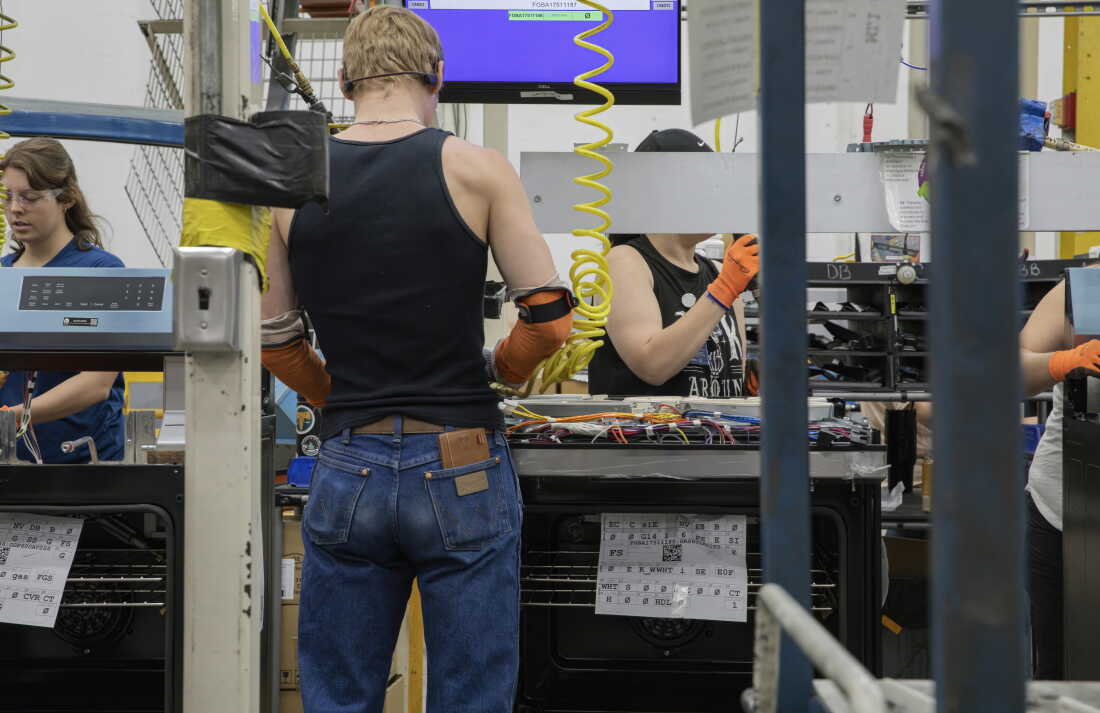
Innovations in Manufacturing at GE Appliances
At the GE Appliances plant in LaFayette, Georgia, advanced technologies are revolutionizing the manufacturing process. Camera systems are strategically placed along the assembly lines to identify mistakes, ensuring the production of flawless cooking appliances.
Director of manufacturing operations, Tony Gabbert, emphasizes the system’s importance. If an incorrect component is detected, like a wrong gasket, the system halts the line and plays loud music to alert the staff. “If you hear AC/DC, you know to come running down here,” Gabbert notes, highlighting this unique alert system.
Efficiency and Perfection Pressure
American factories face immense pressure to deliver perfect and efficient products in order to compete with foreign imports. Manufacturers are increasingly relying on artificial intelligence and technology. Gabbert states, “We’re not shooting for 97. We want to run 100 every day,” showcasing their drive for perfection.
According to Bill Good, GE Appliances’ vice president of manufacturing, each percentage point increase in performance saves the company between $1.5 to $2 million annually. This significant saving shows the substantial impact of technological advancements.
Data-Driven Transformation
For over a decade, GE Appliances has utilized cameras and sensors to collect massive amounts of data. Their Brilliant Factory platform offers real-time insights, allowing headquarters in Louisville, Kentucky to monitor equipment status across nine major plants.
Good explains that AI analysis of data helps pinpoint and resolve issues efficiently. Managers receive AI-generated reports detailing potential problems and solutions. For instance, AI can flag when a motor is overheating, enabling timely intervention and preventing costly breakdowns.
The Role of AI in Manufacturing
AI in manufacturing is bridging the experience gap between veterans like Good, who has nearly 40 years in the field, and newer employees. Despite its capabilities, Good doesn’t foresee AI replacing human workers; instead, it’s helping maintain competitiveness.
After its acquisition by Haier in 2016, GE Appliances has embraced AI for staffing optimization and market demand forecasting. This technological integration has supported a $180 million expansion, adding 600 jobs in Georgia.
Good asserts that being faster, better, and more adaptable is essential in facing competitive challenges, highlighting the necessity for ongoing innovation.