
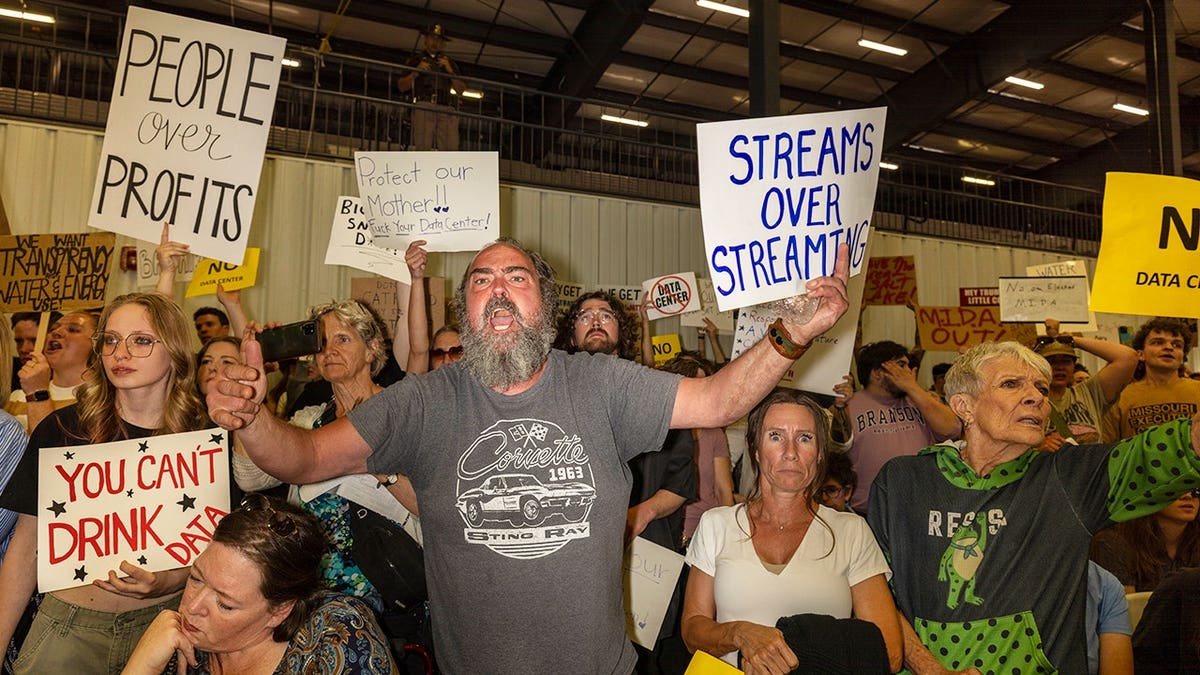
Imagine if, during World War II, protests targeted factories producing tanks and planes. Or if, just before Pearl Harbor, restrictions obstructed the opening of new plants vital for defense. Any observer in 1940-1941 would recognize these actions as advantageous to America’s adversaries. Today, a different conflict arises: an artificial intelligence (AI) competition with China. Both nations aim to master technology that will shape the future.
U.S. companies and policymakers view AI as a tool for prosperity and individual autonomy. Conversely, China seeks to use AI to control its population and expand its influence globally. These divergent goals highlight the stakes in the AI conflict.
AI Dominance: U.S. vs. China
The U.S. and China are leading contenders in AI development. They together possess 90% of AI compute capacity, with America holding 75% and China 15%. Although China focuses on industrial AI applications and military strategy, the U.S. excels in generative AI and innovation. Efforts are underway in America to strengthen industrial and military AI capabilities.
Protests erupted as local authorities approved a large AI data center in Tremonton, Utah, amid concerns over resources and environmental effects. These protests threaten potential economic and strategic advancements.
Data Center Bans: Economic and Security Implications
Approximately 78 local jurisdictions nationwide have imposed temporary moratoriums or bans on new data centers. Only New York has enacted a construction moratorium, but 14 other states, including Florida, Oklahoma, and Georgia, are considering similar measures.
If the restriction movement gains momentum or political party backing, the main beneficiary will be China. Historical parallels show that halting defense construction during World War II would have bolstered enemy powers. Such movements risk significant job losses and tax revenue declines, exemplified by Georgia’s potential outcome of losing 552,000 jobs and $850 million in revenue.
Challenging Myths about Data Centers
Opponents of data centers claim they raise electricity costs, consume excessive water, and harm local economies. In reality, new data centers can lower electricity costs by distributing expenses across a broader base. Most data centers use little to no water, contrary to golf courses’ significant water usage. Data center projects boost local employment, with construction jobs increasing by 11% and information sector employment growing by 22%, according to the Brookings Institution.
Data centers aren’t merely beneficial to major corporations. They drive economic growth, enabling startups and small businesses to thrive. The influx of data centers is projected to contribute trillions to the U.S. economy, enhancing GDP growth by 1.5%-3.7% annually.
AI’s National Security Role
AI plays a critical part in national security, with applications such as military drones and cyber threat detection. AI enhances intelligence analysis, logistics, and industrial efficiency, crucial for maintaining competitiveness against China.
Decisions about data center development will significantly impact future freedom. America must choose a path that benefits its citizens and future generations, not external governmental interests.