
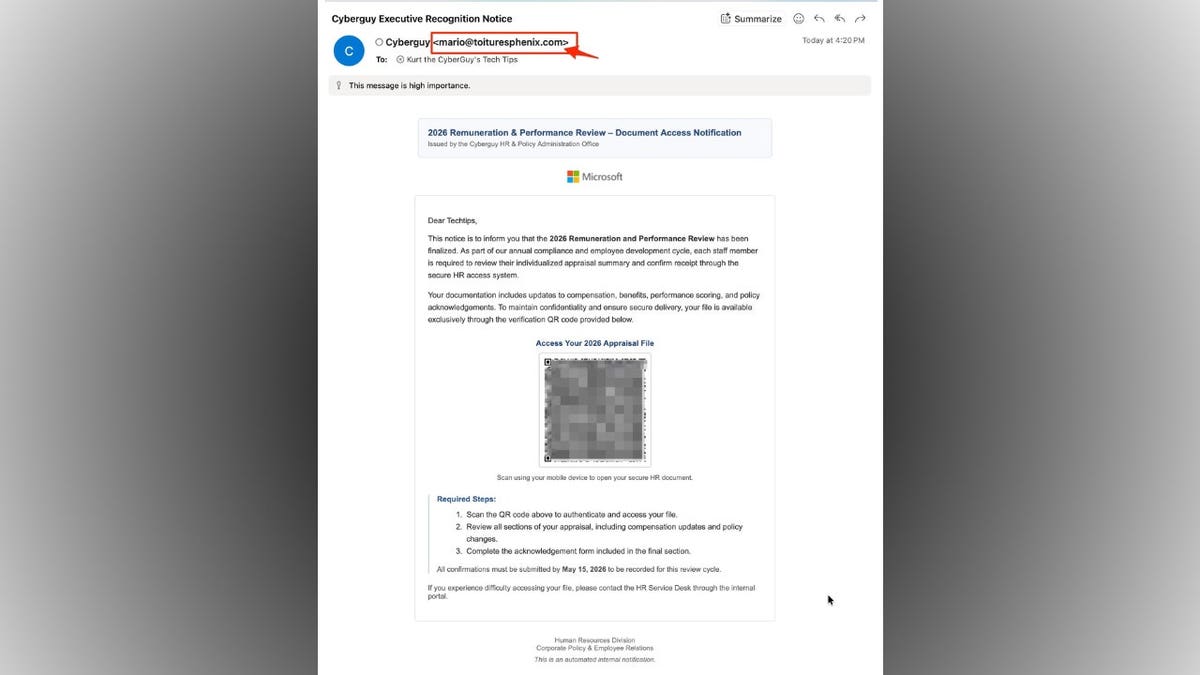
A recent email scam, disguised as an official HR notice about performance reviews, has emerged. The message references pay updates, benefits, and an impending deadline. Notably, it includes a QR code, claiming to access your file. This is a typical phishing tactic designed to mislead.
Spotting Red Flags in the Email
The email exhibits classic signs of a scam that should not be overlooked.
Various red flags indicate potential danger. Carefully review these to identify phishing attempts.
Sender’s Email Mismatch: The sender’s email does not align with the company’s domain. Real companies use their domain for official communications.
Urgency with a Deadline: Imposing a deadline, such as May 15, 2026, aims to hasten your response. Scammers rely on rushed decisions to circumvent rational checks.
QR Code as Main Action: Encouraging you to scan a QR code is known as “quishing.” Legitimate companies provide direct links or require logins through familiar portals.
Generic Greeting: Phrases like “Dear Techtips” indicate a bulk email, not personalized communication expected from HR.
Vague HR Language: References to a “secure HR access system” without specifics lack credibility. Real notices mention recognizable platforms.
Questionable Branding: Unauthorized use of logos and inconsistent formatting appear authentic, yet differ from legitimate communications.
Marked as High-Importance: Emphasizing urgency by tagging emails as high-priority increases pressure to act.
Atypical Instructions: Requests to access files via a QR code bypass standard security procedures, indicating a scam.
Understanding QR Code Phishing Risks
QR codes are ubiquitous, seen in restaurants and airports, which can lower your guard. Scammers exploit this familiarity by embedding malicious links that lead to phishing pages.
If a questionable QR code is scanned, the following risks arise:
- You inadvertently share login credentials.
- Malware may be installed silently on your device.
- Additional personal information might be requested.
Scammers can use stolen details to gain unauthorized access to company systems or target your contacts.
Steps to Protect Yourself from QR Code Scams
Adopting precautionary measures can safeguard your data:
- Do not scan unexpected QR codes. Verify the source manually on official websites.
- Examine the sender’s domain carefully. Reject emails from unverified addresses.
- Rely on known login paths instead of email-provided links or codes.
- Be cautious of generic greetings without your name.
- Confirm suspicious emails with your HR department through recognized channels.
- Use robust antivirus software to block malicious content and detect phishing attempts.
- Consider a data removal service to decrease online personal data exposure.
- Ensure devices and applications are up to date with security patches.
- Activate two-factor authentication for enhanced account protection.
Stay Informed and Vigilant
Phishing tactics continually evolve. While QR codes are current tools, scams may adopt new forms quickly. Exercise caution and utilize personal verification pathways for accessing sensitive information.