
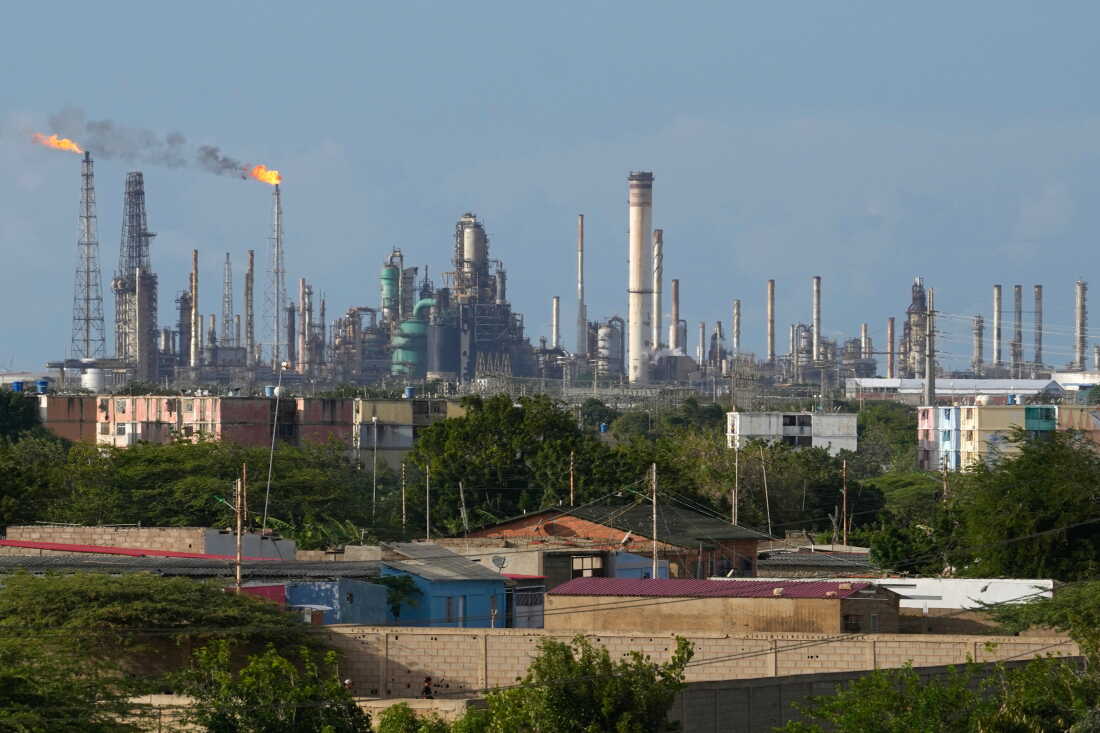
WASHINGTON — The White House announced on Monday its partnership with North American Blue Energy Partners (NABEP) to explore Venezuela’s oil industry. This initiative is part of President Donald Trump’s strategy to access Venezuela’s substantial oil reserves.
The administration detailed the partnership days after Trump announced what he termed the largest oil deal ever. Analysts express skepticism regarding the timeline to rejuvenate Venezuela’s oil production, but Trump’s team views it as a new opportunity for oil development in the Western Hemisphere.
A significant aspect of the deal involves the establishment of a private joint venture with NABEP. Until now, this detail was withheld by the White House. NABEP, owned by Venezuelan businessman Alejandro Betancourt, is already the second-largest operator in Venezuela, following Chevron.
Venezuela’s acting President Delcy Rodríguez has granted the company 100-year rights to 17 oil fields with reserves totaling 65 billion barrels. These fields were previously managed by Russian or Chinese firms, according to White House information.
Betancourt emphasized Venezuela’s abundance of natural resources and potential, stating the deal would benefit both Venezuelans and Americans.
The company has been active in Venezuela’s oil sector for over 15 years, employing more than 5,000 workers and engaging over 10,000 contractors.
Under the agreement, the Pentagon’s Office of Strategic Capital will acquire a 35% ownership stake in NABEP. Furthermore, the U.S. is assured rights to purchase 20% of oil output at cost, facilitated by the State Department. Defense Secretary Pete Hegseth and Secretary of State Marco Rubio signed the agreement.
NABEP has pledged $100 billion in new oil infrastructure investment. Trump has sought to increase Venezuela’s oil production since the military mission captured former President Nicolás Maduro on charges of narcoterrorism and drug trafficking.
The White House asserts the deal incurs no cost to the U.S., grants veto power over board members, and operates under U.S. law and court jurisdiction.
However, former U.S. government energy advisers warn of political risks, noting future administrations in both countries could question the agreement. Analysts also caution it may take years to revamp Venezuela’s faltering energy sector.
Trump acknowledged that U.S. gas prices would not decrease immediately but suggested a timeline of two years is possible for seeing change. Trump believes the deal will replenish America’s strategic oil reserve, depleted due to the Iran war affecting global oil shipments. Venezuelan heavy oil could also be used for asphalt and other products.
Rodríguez supports the agreement, viewing it as an opportunity to modernize Venezuela’s oil industry without compromising sovereignty.
Concerns on Capitol Hill
Lawmakers on Capitol Hill are requesting more details. Rep. Rick Crawford, Republican House Intelligence Committee Chairman, seeks information from the Trump administration soon.
Sen. Jack Reed, top Democrat on the Senate Armed Services Committee, criticizes the military’s involvement in a private oil venture. He demands an explanation of the legal justification for the deal, stating it is a misuse of power and public funds.
The White House released these details just before Trump’s scheduled meeting with oil refiners to discuss increasing the U.S.’s refining capacity. The Iran conflict has led to an average pump price of $4.08, marking a 28% rise over the previous year, according to AAA.
Increasing refinery numbers and capacity could potentially reduce consumer prices. Additionally, the administration identifies the necessity for more refineries to process Venezuelan oil.
Interior Secretary Doug Burgum, Energy Secretary Chris Wright, and Jarrod Agen, the director of the White House National Energy Dominance Council, will attend the meeting.