
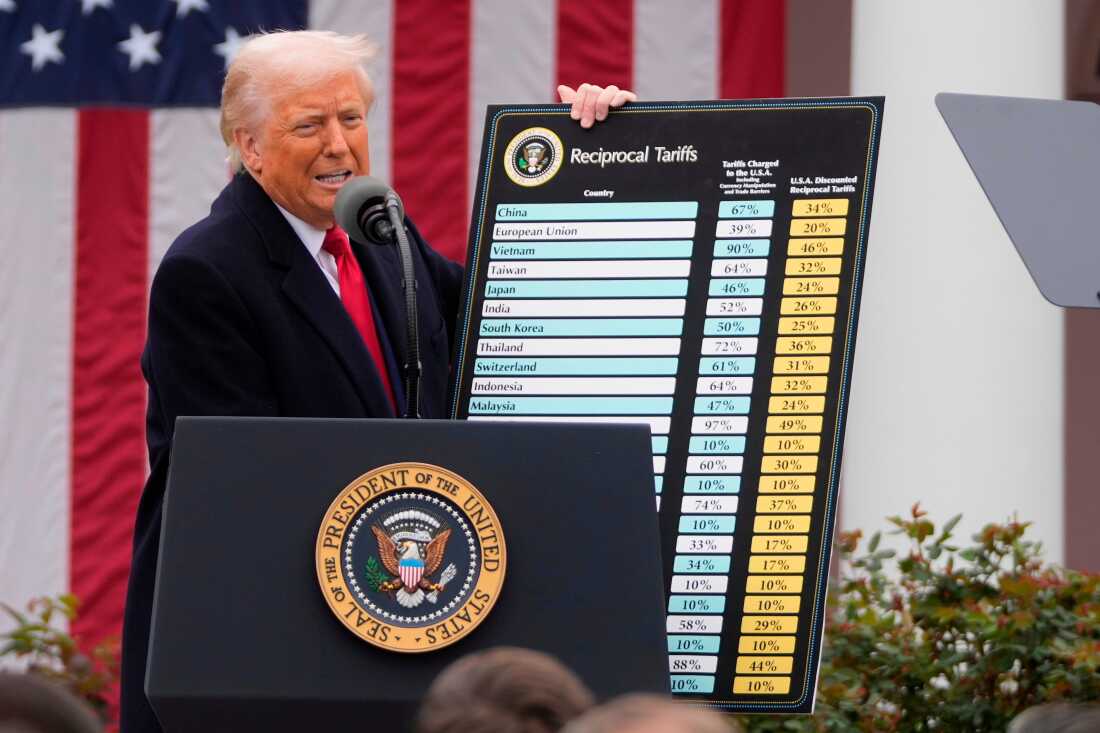
Washington: President Donald Trump has unveiled new double-digit tariffs on imports from 60 countries. These nations account for 99% of U.S. imports and have allegedly failed to enforce bans on goods produced through forced labor.
U.S. Trade Representative Jamieson Greer emphasized the importance of this move. “The United States has rigorously enforced its import ban on goods produced by forced labor for nearly a century. It’s high time our trading partners do the same,” Greer stated.
The tariffs, ranging from 10% to 12.5%, aim to rectify human rights abuses and distortive trade practices. They will come into effect just as temporary worldwide tariffs expire at 12:01 a.m. Friday. These were initially imposed after the Supreme Court overturned Trump’s substantial tariffs in February.
Now, Trump is utilizing Section 301 of the Trade Act of 1974 to implement these more durable tariffs. This section allows for import taxes and sanctions against countries engaging in unjustifiable, unreasonable, or discriminatory trade practices.
Previously, Trump imposed large tariffs on China under Section 301, which survived legal challenges. The U.S. Trade Representative’s office is also investigating 16 countries, accounting for 70% of U.S. imports, for overproduction that disadvantages U.S. companies.
Trump argues that high tariffs could revive American manufacturing. Last year, citing a national emergency due to the trade deficit, he used the IEEPA to impose tariffs globally.
However, the Supreme Court ruled IEEPA did not authorize such tariffs, forcing refunds to importers. Trump then announced 10% worldwide tariffs under Section 122 of the Trade Act of 1974, but these are set to expire.
The administration initially proposed forced labor tariffs last month. Since then, some countries have improved forced labor enforcement, resulting in reduced tariffs. For example, tariffs on Indian imports have decreased from 12.5% to 10%.
Exempt from the new tariffs are products like oil and gas, fertilizer, and goods qualifying for duty-free status under the US-Mexico-Canada Agreement.
Human rights experts are divided over the real intentions behind these tariffs. While tariffs might contribute to addressing forced labor, they could also raise consumer prices. Americans, already burdened by living costs, face the impact of the tariffs before November’s midterm elections.
According to the ILO Forced Labor Convention of 1930, forced labor involves any work or service exacted under threat and without voluntary consent. The ILO estimated that in 2021, approximately 27.6 million people were subjected to forced labor worldwide.
Martina Vandenberg, founder of The Human Trafficking Legal Center, acknowledges the tariffs may help combat forced labor globally. Yet, she advocates for phased tariff implementation, allowing countries time to establish enforcement mechanisms.
“Countries need time to build import ban mechanisms that are meaningful and enforceable,” Vandenberg asserted.
Kenya Davis, partner at Boies Schiller Flexner, referenced the Uyghur Forced Labor Prevention Act. Passed in 2021, it prohibits U.S. imports of goods made wholly or partly in China’s Xinjiang region or by certain entities. Davis emphasized the Act’s role in drawing attention to labor trafficking issues.
Isabelle Glimcher, senior research scientist at NYU Stern Center for Human Rights, noted one flaw in the tariffs. They focus on levying taxes based on imports rather than domestically produced goods.
Glimcher observed that the tariff threat spurred countries like India to amend foreign trade policies to incorporate forced labor bans. EU regulations due next year have also catalyzed action.
“Countries are responding and starting to take all of this seriously,” Glimcher concluded.