
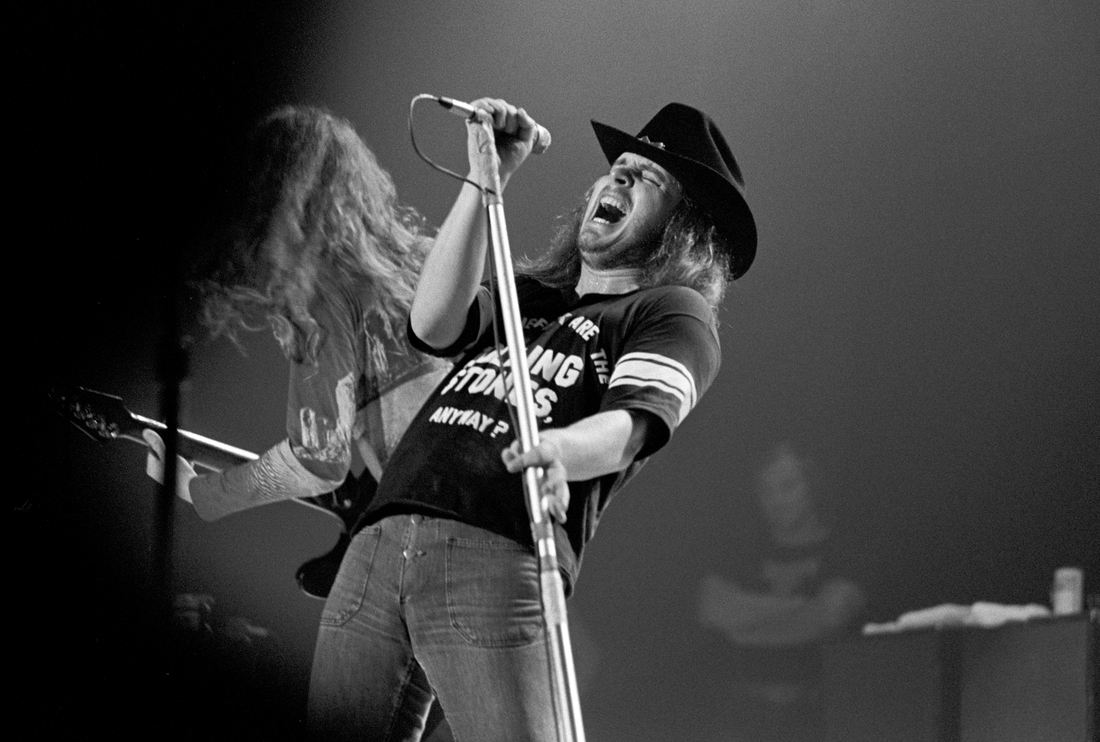
In 1975, Ronnie Van Zant, lead vocalist of Lynyrd Skynyrd, performed on stage with the band at the Omni Coliseum in Atlanta. This moment is captured by Tom Hill/WireImage. Skynyrd’s famous song, “Sweet Home Alabama,” has become known as a kind of anthem for Alabama since it cracked the Top 10 charts in 1974. It has also been adopted as a fight song by the University of Alabama’s Crimson Tide football team. However, the song’s history and meaning are more complex than they appear.
Origins and Controversy
Lynyrd Skynyrd had no personal ties to Alabama, as two members were from Florida and one from California. Their motivation was partly to respond to Neil Young’s song “Southern Man,” which criticized the South for its association with slavery and segregation. Ronnie Van Zant mentioned their intent to counter Young’s view, fearing backlash yet determined to make a statement. The song quotes Young by name, challenging his critique of the South.
The lyrics question Young’s perspective with the line:
“Well I heard Mister Young sing about her / Well, I heard ol’ Neil put her down / Well, I hope Neil Young will remember / A Southern man don’t need him around, anyhow.”
Despite wanting to reject stereotypes, the band embraced some Southern symbols, performing beside a Confederate flag as advised by their record label. Additionally, Van Zant admitted to playing up to the “drunken redneck” image. This duality makes the song a testament to the human struggle with bigotry and stereotype, as noted by Mark Kemp, author of “Dixie Lullaby: A Story of Music, Race and New Beginnings in a New South.” Kemp speaks to the persisting history of such themes in America.
Beyond the Lyrics
The song mentions George Wallace, Alabama’s governor during its release, often associated with segregationist policies. Guitarist Gary Rossington explains their inclusion of “boo, boo, boo,” to show their disagreement with Wallace, though he acknowledges the song’s interpretations may differ among its creators.
The tragedies surrounding Lynyrd Skynyrd deepened the song’s mythos. In 1977, a plane crash claimed the lives of Ronnie Van Zant and other key band members. This loss left questions about the song’s intent largely unanswered, keeping Van Zant’s artistic spirit a lingering influence in music discussions.
Personal Reflections and Interpretations
Merry Clayton, a background vocalist renowned for her work with artists like The Rolling Stones, was approached to perform on “Sweet Home Alabama.” Despite her initial reluctance, due to Alabama’s violent racial history, she participated, later expressing that the inclusion added her, an African-American woman’s experience, to the narrative of Alabama.
Moreover, some assert that the song embodies Southern pride, devoid of racism. Attendees like fan Nick Paul from a Kansas City concert see it as “an American anthem,” exemplifying unity at social gatherings. Dr. Henry Panion III, a composer at the University of Alabama at Birmingham, arranged the song for various orchestras. He believes it highlights positive aspects of the South beyond its troubled past.
As time passes, perspectives shift, allowing interpretations like Panion’s suggestion to incorporate the song into Black History Month celebrations to reshape its reception. Such evolving interpretations invite speculation on how Van Zant might view these developments.
Daoud Tyler-Ameen has contributed to fleshing out the digital version of this analysis.