
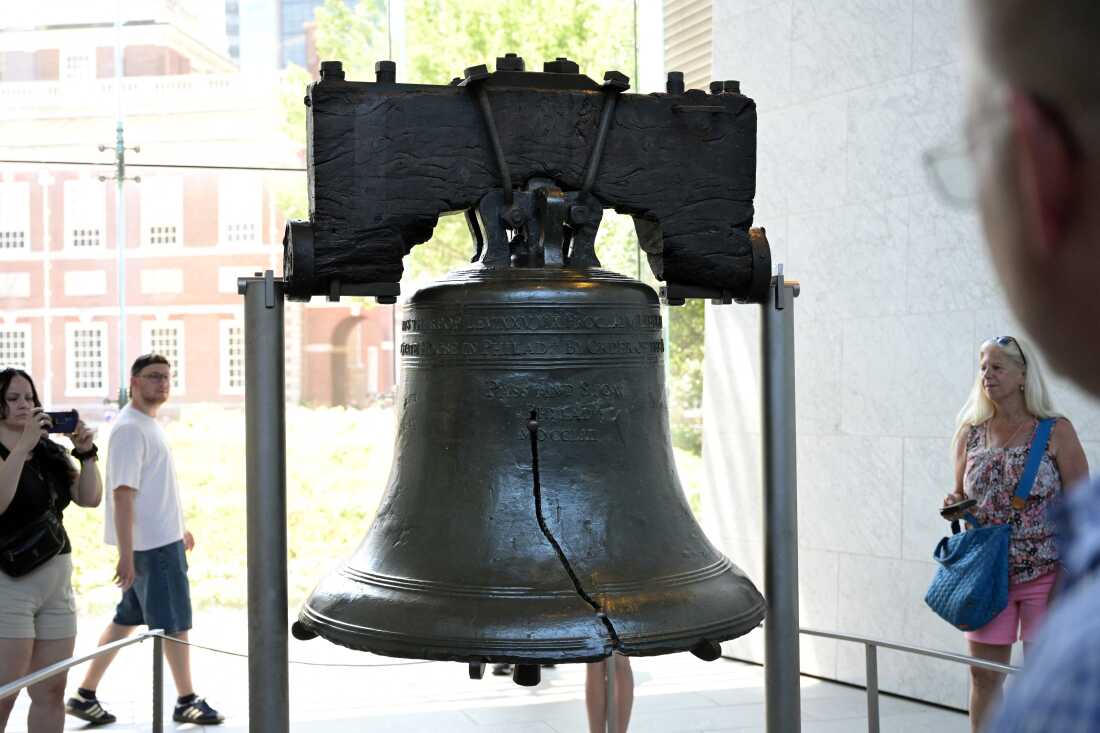
On July 3, 2025, visitors gathered at the Liberty Bell in Philadelphia, contemplating both national pride and civic ignorance. A recent poll by the Cato Institute highlights this paradox ahead of America’s 250th anniversary.
The poll surveyed over 2,000 U.S. adults, revealing that 86% feel grateful to be American, and 70% see the founding principles as relevant. Yet, 46% are unaware that the anniversary marks the Declaration of Independence’s adoption.
This lack of civic knowledge extends further. Nearly 60% don’t understand the U.S. Constitution’s primary role in limiting government power, nor the colonies’ reasons for declaring independence from Great Britain.
Furthermore, the survey underscores public concerns about American liberty’s future. Most respondents believe the nation has deviated from its founding principles. Over half fear that corruption and power abuse could end American freedom within 50 years. These fears cross political lines, shared by Republicans and Democrats alike.
Gen Z respondents expressed particular anxiety. They exhibited the lowest civic knowledge and less favorable views of the nation’s founders. Many failed to identify the Declaration of Independence as central to the 250th celebration.
“The lack of civic knowledge is a great disaster,” remarked Jack Rakove, a Stanford University Professor Emeritus of History and Political Science. “Any democratic system of government to succeed requires having an informed electorate.”
Rakove, a Pulitzer Prize winner on the Constitution and the Declaration of Independence, attributes the issue to fragmented media and schools prioritizing STEM over civics and history. “Our educational system is decentralized, making broad reforms challenging,” he explained. “We live in an information environment where people choose preferred sources, hindering democratic debate and exposure to diverse views.”