
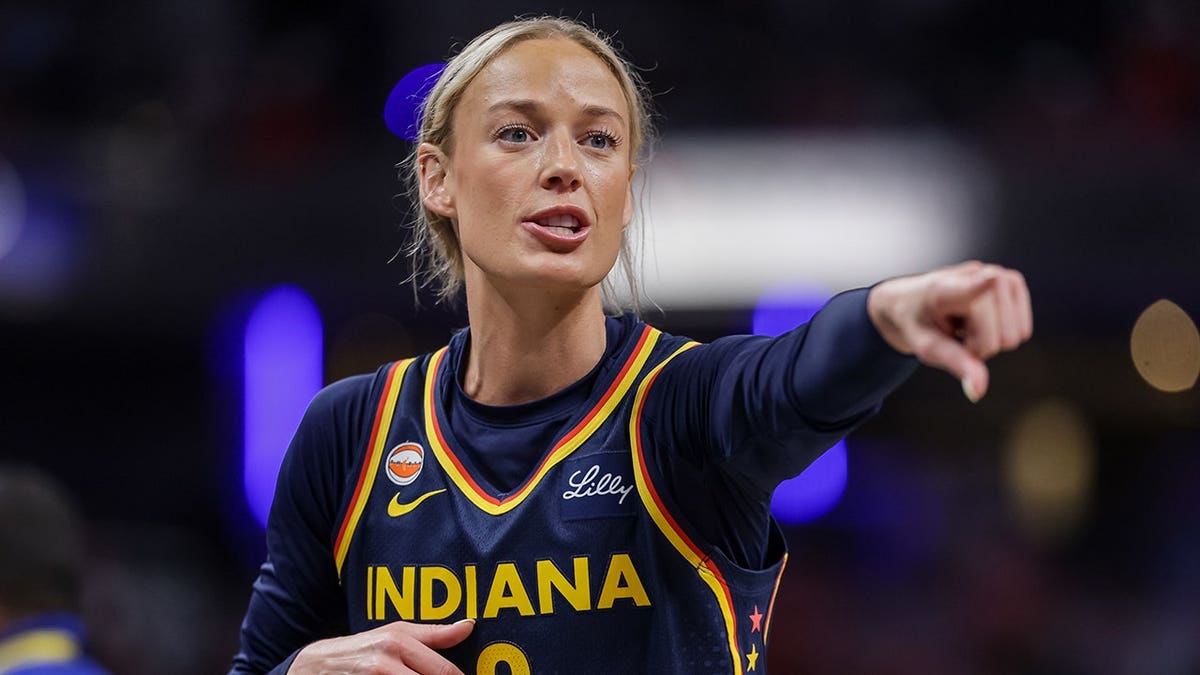
On the morning of August 8, ABC’s ‘Good Morning America’ highlighted the Women’s National Basketball Association (WNBA). Rachel Scott from ABC asked about the current significant WNBA stories for fans to follow. ESPN’s Holly Rowe mentioned the difficulty in making the playoffs. However, a bigger story quickly emerged involving Indiana Fever player, Sophie Cunningham.
Cunningham was hit in the face during a game, an incident overlooked by media following her controversial stance on maintaining women’s basketball as female-only. Chicago Sky’s DiJonai Carrington, involved in the incident, was ejected and later attributed her ejection to ‘White privilege.’ This aspect was largely ignored by major networks, but CBS reported on the WNBA’s challenges with men in women’s sports.
On July 29, CBS covered the suspension of Seattle Storm co-owner Celeste Keaton after an altercation with fans supporting Cunningham. The report highlighted Cunningham’s position as the first active professional female athlete opposing transgender women in women’s sports. In an interview with ESPN, Cunningham stated her perspective on biological men competing against women.
CBS revisited the topic following another on-court incident involving Cunningham on August 10. Jan Crawford reported fan division over the debate and noted Enes Kanter Freedom’s announcement of identifying as a woman to enter the WNBA draft—a move scrutinized for spotlighting the league’s unpreparedness for its growing popularity.
NPR briefly addressed the controversy during its sports roundup, mentioning WNBA Commissioner Cathy Engelbert’s announcement of a task force to discuss transgender participation, despite no known transgender athletes in the league. Former ESPN reporter Michele Steele commented on the league’s challenge of balancing on-court achievements with off-court controversies.
The WNBA’s public positioning reflects a challenge in forming policies amidst criticism of promoting certain inclusivity narratives. Engelbert expressed frustration over the organization being part of a political debate from those disengaged with the league, highlighting a gap between public discourse and official policy stance.