
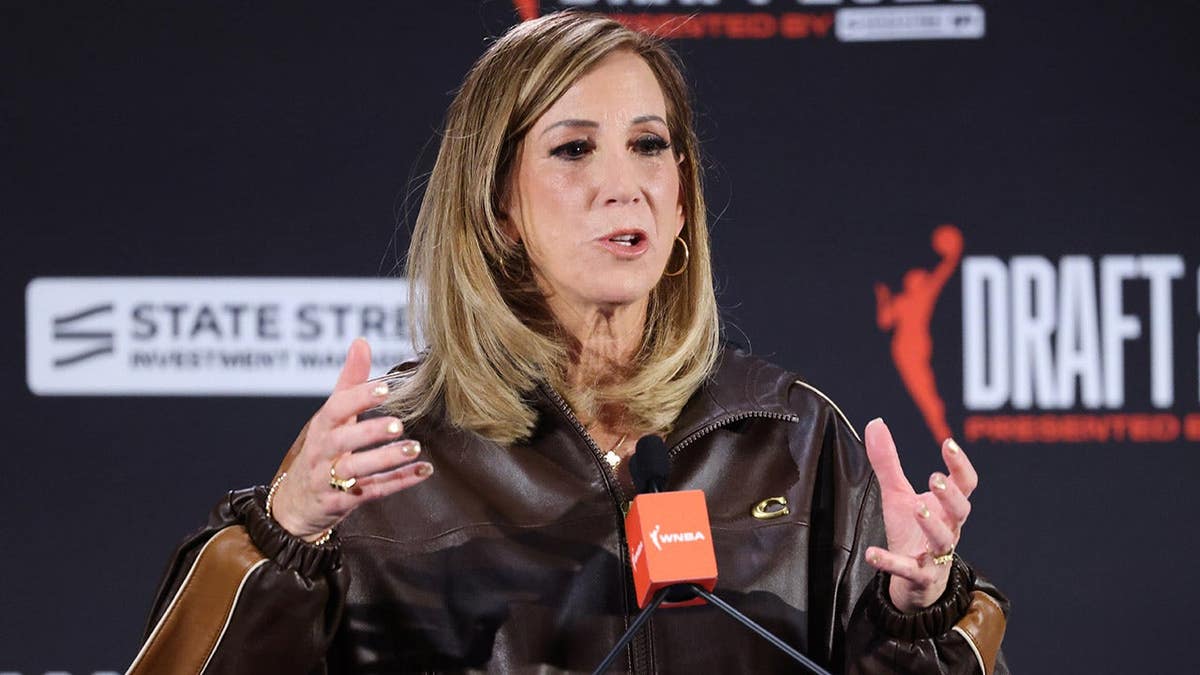
WNBA Commissioner Cathy Engelbert criticized individuals exploiting the league to incite division over transgender athlete discussions. During her visit to Dallas, Engelbert responded to the controversy, which emerged a week after the league released a statement challenging concerns about transgender participation.
Engelbert, alongside Wings CEO Greg Bibb, remarked, People are trying to use the league to sow divisiveness.
She expressed frustration, noting that many orchestrating such divisiveness have neither watched nor covered the WNBA.
The league faced criticism from various players and media members, following comments by Fever star Sophie Cunningham. Cunningham’s ESPN profile suggested protecting young female athletes from competing against biological males. Her remarks prompted backlash and questions from former NBA players Enes Kanter Freedom and Royce White, who announced their eligibility for the WNBA draft, identifying as women.
The league’s collective bargaining agreement specifies that only women can play in the WNBA, lacking detailed guidelines on men identifying as women. Engelbert and others perceive Freedom, White, and critics as divisive forces.
Opinions differ on the source of division. Some point to hostility from certain players and media towards prominent figures like Caitlin Clark, aligning with Cunningham’s stance on safeguarding female athletes.
Cunningham’s comments emphasize extending love and honesty, alongside the protection of young girls competing against biological males. Polls indicate around 78% of adults agree with her viewpoint that males should not compete with females in transgenderism’s name.
Her statements triggered widespread backlash, including protests and hostility from players, coaches, and media. Supporters defend Clark against perceived mistreatment by the league and players, highlighting pronounced issues of racism and discrimination.
Controversy surrounds how insiders cover the league, exemplified by Cindy Brunson’s argument against DiJonai Carrington’s ejection for fouling Cunningham, advocating rather for Cunningham’s removal.
Defenders of Cunningham and Clark argue they are not the antagonists. Engelbert’s challenge lies in identifying bad-faith actors, given the delicate intersections of race and political ideology within the league.