
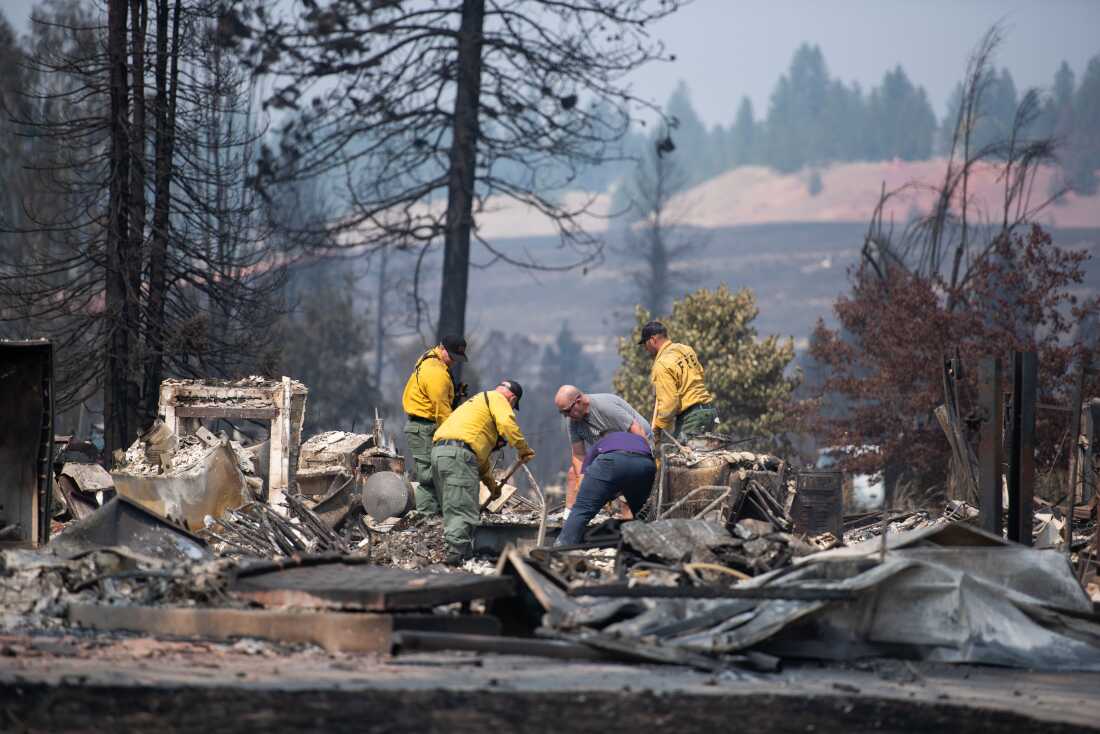
Firefighters and residents combed through debris in Spokane, Washington, after a wildfire annihilated homes in a local neighborhood. The region, home to over 500,000 people, is grappling with wildfires that have obliterated entire neighborhoods and led to the evacuation of approximately 65,000 residents. Despite the devastation, emergency officials believe it could have been far worse.
Local fire authorities estimate the loss of over 800 structures in Spokane County. However, no fatalities have been reported. Sarah Nuss, the city’s emergency management director, noted that all evacuated individuals escaped without reported injuries or deaths. This outcome is significant when compared with past urban wildfires.
For instance, in January 2025, the Eaton and Palisades fires in Los Angeles County claimed more than 30 lives. In 2023, the Lahaina fires on Maui resulted in over 100 casualties. Additionally, the Marshall Fire near Boulder, Colorado, in late 2021 led to two deaths. These urban firestorms ignited in wildlands, transitioning quickly to urban areas where homes fueled their spread.
Success in evacuations played a crucial role. Spokane County Sheriff John Nowels praised the swift evacuation of neighborhoods, including sensitive facilities such as nursing homes, a dementia care center, and the Veterans Affairs hospital campus. “We managed to evacuate people from these areas within just a few hours during an active fire,” Nowels explained.
Spokane Fires After Extreme Danger Alerts
When the Old Trails Fire crossed the Spokane River, it advanced towards a wooded park near Terry and Warren Clark’s home. The Clarks had only an hour to evacuate and assist their 91-year-old neighbor. Their neighborhood lies within the Wildland Urban Interface (WUI), where forests meet densely populated areas.
Experts emphasize that coordination and learning from past errors have improved fire management. Hugh Safford, an environmental science professor at UC Davis and former fire ecologist with the U.S. Forest Service, mentioned advancements in forecasting over the past decade. In Spokane, warnings about extreme weather conditions were well-publicized in advance.
Preparedness Amid Rising Fire Risks
Local leaders have long anticipated this type of fire disaster. Sarah Nuss stated that wildfires have increased over the past ten years due to climate change, which has led to hotter summers and decreased precipitation. Spokane is developing into areas where wildlands and urban settings intersect.
Nuss’s office conducted two mass evacuation drills in neighborhoods prone to fires. Though more drills were needed, funding constraints limited their scope. Still, these exercises may have helped officials and residents manage evacuation challenges more effectively.
The Increasing Dangers of Wildfire Fighting
Urban wildfires offer cities and first responders more data to manage crises effectively. However, experts warn that overarching issues remain unaddressed, including urban expansion into wildlands, past fire suppression practices, and rising CO2 levels contributing to climate change.
The job of wildland firefighting grows increasingly perilous, with five firefighter fatalities in the past six weeks. Jose Ibarra, a crew boss trainee from Oregon, emphasized that many fires now occur in towns rather than forests. He highlighted the need to manage remaining hot spots carefully, illustrating this by pointing out a smoldering tree stump.