
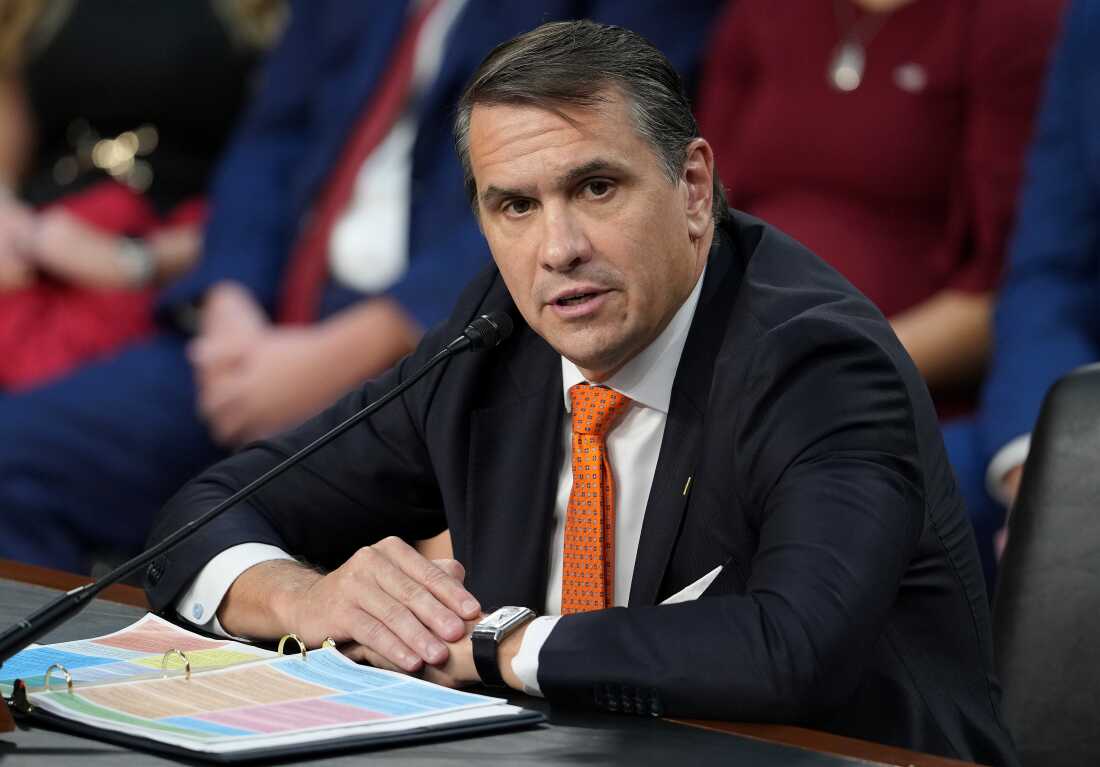
Todd Blanche appeared at his confirmation hearing for the position of U.S. attorney general before the Senate Judiciary Committee on July 15, 2026, in Washington, D.C. The Senate confirmed Blanche to lead the Justice Department, previously serving as President Trump’s personal lawyer and acting head of the department. This decision came after a tight 50-49 vote early Saturday morning.
Despite objections from Democrats, as well as Republican Senators Susan Collins and Lisa Murkowski, Blanche secured confirmation with crucial support from Republican Senator Bill Cassidy of Louisiana. Cassidy’s vote proved essential following the absence of Senator Mitch McConnell and Murkowski’s opposition. Although Cassidy expressed concerns about Blanche’s exemption of the president from IRS audits and the Justice Department’s lawsuits against Trump’s perceived political foes, he concluded that backing Blanche was not a judgment on the president’s actions.
Cassidy emphasized Blanche’s imperfections but reasoned that the alternative lacked his experience and proximity to providing President Trump with candid legal advice. Blanche had to overcome various challenges, such as controversy over the $1.8 billion Anti-Weaponization Fund, which was designed to compensate those claiming federal power was misused against them. This fund faced legal challenges, prompting Blanche to ensure its discontinuation, appeasing Republicans John Cornyn and Thom Tillis, who initially withheld their votes.
Blanche provided a written statement on August 2, rescinding the order establishing the Anti-Weaponization Fund. Cornyn praised Blanche’s cooperation, highlighting the need for a permanent Justice Department leader. The Justice Department later clarified the retroactive scope of audit protections included in a Trump-IRS settlement. These protections, limited to Trump, two of his sons, and the Trump Organization, sparked doubts among legal experts and Democrats, questioning their legal standing.
Despite this, President Trump defended the fund, suggesting that it would have provided solace to his supporters prosecuted for the January 6 Capitol riot. Meanwhile, Blanche’s past as Trump’s personal attorney remains a point of contention. Senator Alex Padilla criticized Blanche’s continued allegiance to Trump, challenging his ability to serve the American people adequately. Blanche’s tenure at the Department faced scrutiny for pursuing Trump’s retribution agenda against his perceived enemies, including lawsuits against individuals and organizations.
The Justice Department’s court record encountered judicial skepticism concerning compliance with orders and factual representations. High-profile cases have unraveled, prompting criticism over Blanche’s leadership. Additionally, concerns emerged over Blanche’s handling of the Jeffrey Epstein scandal, with survivors of Epstein’s abuse expressing dissatisfaction after meeting with him.