
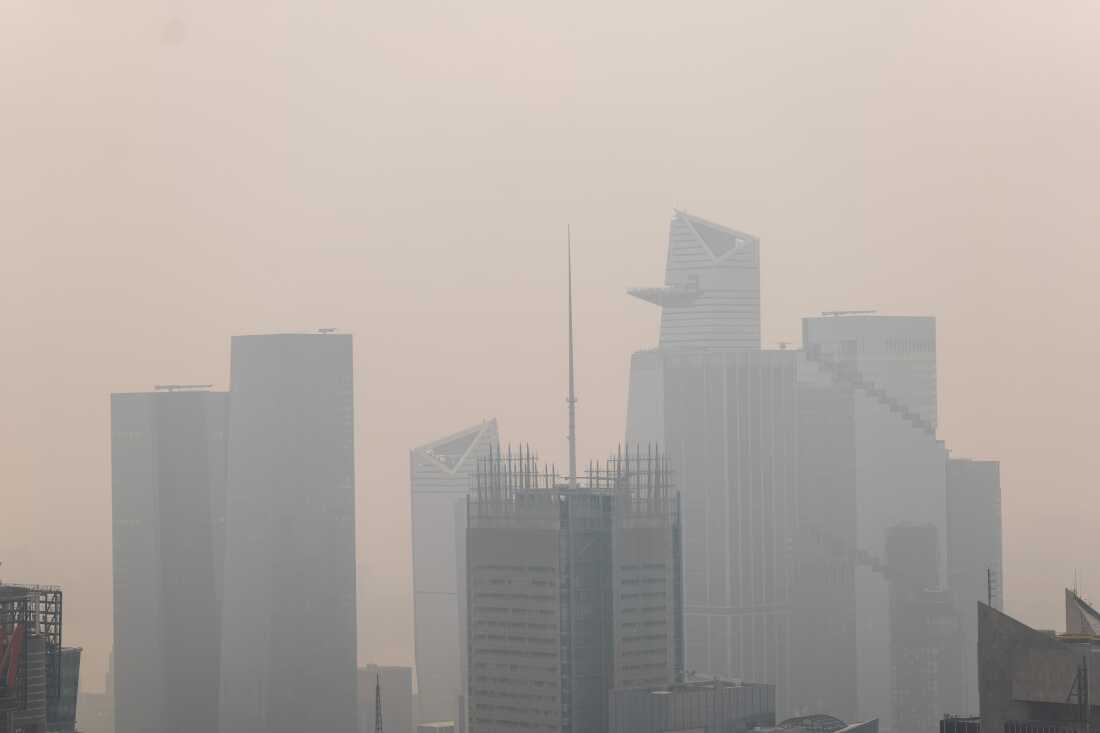
Smoke from Canadian wildfires has enveloped the U.S., impacting air quality in several regions. The Manhattan skyline, obscured by haze, highlights the widespread effect.
Impact Across Regions
Thick smoke has spread from the Great Lakes to New England and as far south as Maryland. This has resulted in hazardous air quality levels in multiple states. The smoke stems from wildfires in Ontario and northern Minnesota. Record temperatures, reaching over 100 degrees, contributed to the fires’ rapid spread.
Currently, over 800 wildfires are active across Canada, as per the Canadian Wildland Fire Information System. Dramatic visuals reveal intense blazes in Ontario and skies thick with smoke.
Health and Safety Concerns
Air quality in the affected areas ranges from unhealthy to hazardous. Cities like Philadelphia, New York City, and Baltimore are among those choking under smoke-filled skies. Derek Mallia, atmospheric sciences professor, notes that these conditions are expected to persist.
Human-induced climate changes are worsening these conditions. Longer droughts and heat waves are making vegetation drier, leading to more frequent wildfires. Dan Westervelt from Columbia University notes that these smoke events are becoming predictably annual.
Health Risks of Wildfire Smoke
Wildfire smoke contains tiny particles that can penetrate deep into lungs and the bloodstream. Dr. David Eisenman from UCLA emphasizes the serious health implications, citing increased heart and respiratory problems.
“Air pollution from wildfires is a leading cause of premature deaths globally, comparable to smoking and high cholesterol,” said Eisenman.
He warns that even when smoke isn’t visible, air quality can be poor.
Recommended Precautions
Many Americans face heat advisories with temperatures exceeding 100 degrees, compounding health risks. Eisenman advises adhering to the Environmental Protection Agency’s guidelines. This includes monitoring air quality, using air purifiers, and creating a cleaner air space at home.
Limit outdoor activities and use N95 masks if venturing outside is unavoidable, depending on air quality reports.