
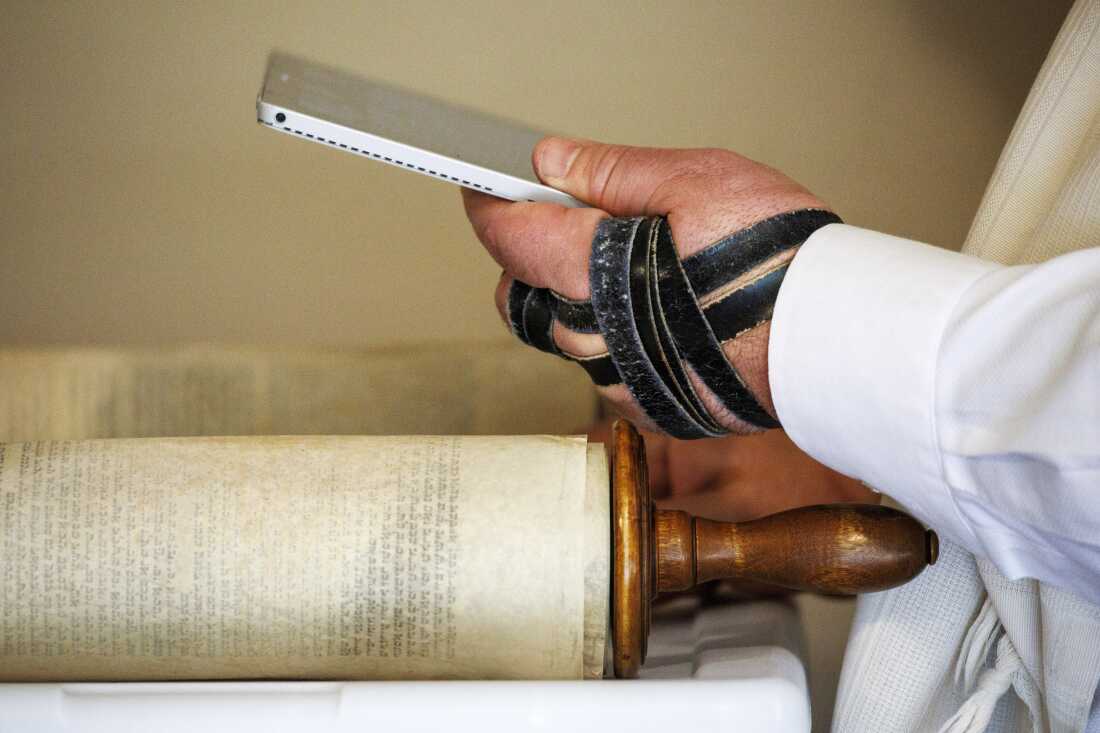
Rabbi Haim Ovadia reads the Torah from his Maryland home via Zoom in 2020.
The U.S. House of Representatives has passed the Sunshine Protection Act to make daylight saving time permanent. The vote was 308-117. Now, the bill moves to the Senate, but its success there is unclear. This legislation has support from former President Donald Trump, who criticized the traditional time changes.
If enacted, Americans would gain an extra hour of evening sunlight in winter months. However, winter sunrises would occur one hour later. This concerns Orthodox Jews who adhere to specific prayer schedules beginning with the Shacharit morning service, which cannot start in the dark.
Rabbi A.D. Motzen from Agudath Israel of America explains the impact. Prayers delayed by an hour affect work commutes and school start times. Orthodox Jewish groups, like the Orthodox Union and the Coalition for Jewish Values, oppose the measure. Jewish law requires communal prayer, needing a quorum of ten adults, known as a minyan. This means attending synagogue every morning before going to work or school for prayers like the Shema.
Challenges arise for synagogues if fewer people can attend due to later prayer times. Agudath Israel has Senator Tom Cotton’s backing; he resisted fast-tracking the bill previously. Orthodox Jews account for 9% of 5.8 million Jewish adults in the U.S., per Pew Research Center. Larger Jewish organizations have not declared their positions.
Historically, Congress has dealt with clock-changing legislation numerous times. In 1974, it attempted to stop clock-switching, reversing it shortly due to public discontent. A similar 2022 Senate measure failed in the House.
Concerns are shared beyond the Orthodox Jewish community. Some health experts suggest the human body aligns better with standard time. Parents and school boards worry about children going to school in darkness. Motzen cites these concerns as safety issues.
Permanently adopting daylight saving time means sunrises after 8 a.m. nationally, and after 9 a.m. in some areas. Agudath Israel’s compilation shows potential sunrise times: after 9 a.m. for 55 days in South Bend, Indiana, and for 23 days in Detroit, Michigan.
Places like Hawaii, most of Arizona, Puerto Rico, Guam, American Samoa, the U.S. Virgin Islands, and the Northern Mariana Islands continue to observe standard time year-round.