
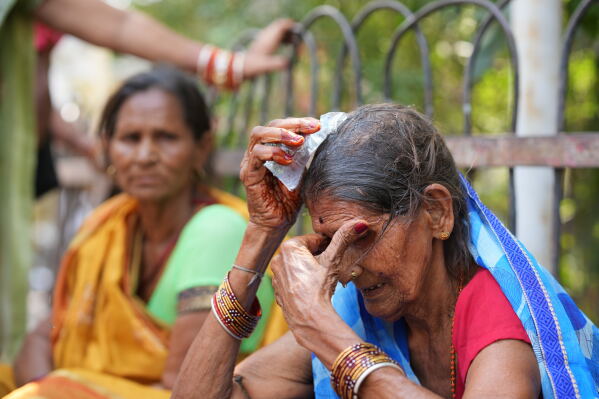
Residents of Banda, a town in northern India, face extreme heat day and night. In a locality that often records some of India’s highest temperatures, daily life presents a significant challenge. The intense heat results from global warming, primarily driven by the burning of fossil fuels. These conditions are especially severe in Uttar Pradesh, the state where Banda is located, making it one of the regions most susceptible to extreme heat.
In 2023, a heatwave in Uttar Pradesh claimed the lives of at least 119 people over several days. During this time, Banda not only registered some of the highest temperatures in India but also emerged as the hottest place on Earth on multiple occasions in the year. According to climatologist Maximiliano Herrera, Banda recorded the planet’s highest temperature seven times, mostly in April.
Though temperatures have cooled slightly, they remain oppressive, exacerbated by the rising humidity from seasonal rains.
Morning Challenges at the Market
In June, an Associated Press team visited Banda to observe how residents manage to endure the heat. In the early hours, even when much of the town sleeps, the marketplace buzzes with activity.
Munni Devi, along with her four sons, begins loading and unloading vegetables at 4 a.m., when it is already a sweltering 30 C (86 F). At the market, workers handle tomatoes, jackfruits, and other produce, transferring them to smaller vehicles for neighborhood delivery.
Devi, who is 70, notes that the heat has intensified annually, with this year being particularly harsh. Yet, economic obligations prevent her and her family from skipping work, despite the taxing conditions.
Munni Devi, 70, says, “Everyone feels the heat, but because of our circumstances, we have to bear it.”
Throughout the morning, carts navigate narrow lanes, and women sort vegetables on the streets. To avoid the worst of the heat, customers often shop early. Devi and her sons labor until noon and then return home to rest. However, persistent power shortages mean their relief is often limited, leaving them relying on water hoses for cooling.
Afternoon Efforts: Caring for Birds
In the blistering afternoon, those who can, retreat indoors. Yet, some, including vegetable sellers and auto-rickshaw drivers, remain outside hoping for some business.
Shobharam Kashyap, 70, has made it his mission to protect local birds from the heat. He crafts wooden birdhouses for sparrows, installing more than 15,000 around Banda. Painted primarily in green—a color Kashyap believes is preferred by birds—these houses offer respite. He also places clay bowls with water for birds to drink and cool off.
Kashyap explains, “Our culture has long encouraged feeding birds.”
Evening Surge in Hospital Visits
As the heat rises, Banda’s hospitals experience an influx of patients. Cases of heat-related conditions such as fainting, heatstroke, dehydration, and abdominal pain become common.
Dr. Abhishek Pranayami, the leading physician at a regional hospital, remarks on the growing number of patients each summer, noting the heightened demand on hospital resources and staff.
Dr. Abhishek Pranayami states, “The number of patients is increasing every year.”
Seeking Nighttime Relief Outdoors
Evenings provide little relief from the heat. Many, including families with young children, head to the open areas of the railway station in search of a cooler sleeping environment.
On these nights, the stone platforms become makeshift beds, as dozens sleep outdoors seeking solace from the sweltering conditions of their homes. Children often cluster together around mobile phones, while adults attempt to rest on blankets laid out on benches or the ground.
Efforts to Combat Heat Effects
The severity of the issue has prompted responses from local authorities. Cooling centers have been established, and oral rehydration kits are distributed. Officials continue to monitor hospitals during heat advisories.
Amit Aasery, Banda’s district magistrate, highlights efforts to better understand and manage water resources and to raise public awareness. Yet, he acknowledges the broader context, citing climate change as a global issue impacting Banda dramatically.
District Magistrate Amit Aasery acknowledges, “We are the recipient of climate change’s effects.”