
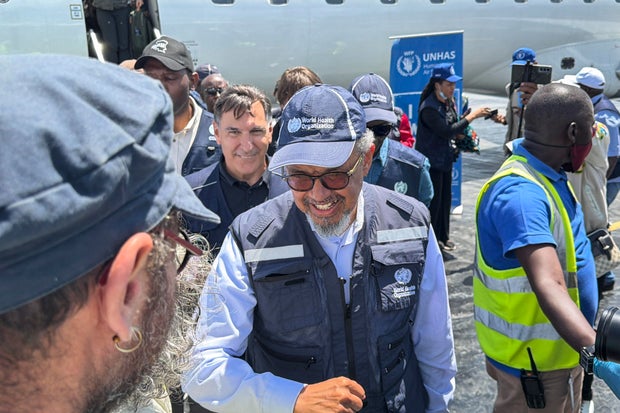
On May 30, 2026, Tedros Adhanom Ghebreyesus, the Director-General of the World Health Organization (WHO), visited Bunia in eastern Congo. Bunia is facing a fast-spreading outbreak of a rare type of Ebola despite organized health facilities and new arrival of aid in the region. The WHO leader toured treatment centers and met with local authorities, health workers, and affected families in Bunia.
The best way to address this is to provide all the necessary support to fight the disease at its epicenter and to continue offering every assistance needed,
Ghebreyesus told reporters. The latest figures show 906 suspected cases and 223 suspected deaths, but the actual number could be much higher. In neighboring Uganda, nine cases and one death have been confirmed, according to Uganda’s ministry of health.
Current Ebola Strain
The outbreak involves the Bundibugyo virus, a type of Ebola with no approved treatment or vaccine. Ghebreyesus acknowledged the difficulty of the situation, yet expressed confidence that the Democratic Republic of Congo could overcome the outbreak, citing the country’s past experiences.
Last week, WHO upgraded its risk assessment to “very high” nationally due to the rapid spread of the disease. Medical aid has been arriving in Ituri, including donations from the European Union, and the U.S. has pledged additional aid totaling over $112 million.
Response Efforts
At Bunia’s Rwampara and General hospitals, organized efforts are underway with added staff, protective gear, and medical supplies. However, the pace of the outbreak is exceeding the response capability. Doctors Without Borders (MSF) warned of the outbreak’s unprecedented rate of spread, stressing the need for swift action.
Never before has an Ebola outbreak recorded so many cases so soon after its declaration,
said Dr. Alan Gonzalez from MSF, calling for expanded testing and faster aid deployment.
Health workers face dangers due to local anger over burial protocols. There have been attacks on health centers, and rebel groups’ activities in Ituri complicate efforts. The outbreak has reached other provinces like North Kivu and South Kivu, affecting cities controlled by rebel groups.
Border Closures
The WHO has criticized border closures by Uganda and Rwanda, claiming they aren’t effective against the outbreak’s spread. Ghebreyesus urged countries to maintain transparency and reconsider such measures. The U.S. has banned entry for certain travelers, and airports are conducting health screenings with potential hospitalization for symptomatic individuals.
Legal challenges have emerged, including a Kenyan judge blocking a bid to establish an Ebola quarantine facility on an air base in Kenya.