
KAMPALA, Uganda — Ugandan authorities announced on Tuesday that the country is now free of Ebola after the last patient was discharged in mid-June. This milestone is significant as the virus remains a concern in neighboring Congo.
Uganda’s health officials have maintained that their cases were connected to a larger outbreak in Congo’s Ituri province, which shares a border with Uganda. Initially, the first cases in Uganda involved Congolese individuals who sought medical help across the border before Ebola was diagnosed, according to health authorities.
The Democratic Republic of Congo declared its outbreak on May 15, coinciding with Uganda’s confirmation of two Ebola cases, including a fatality. In total, Uganda reported 20 cases.
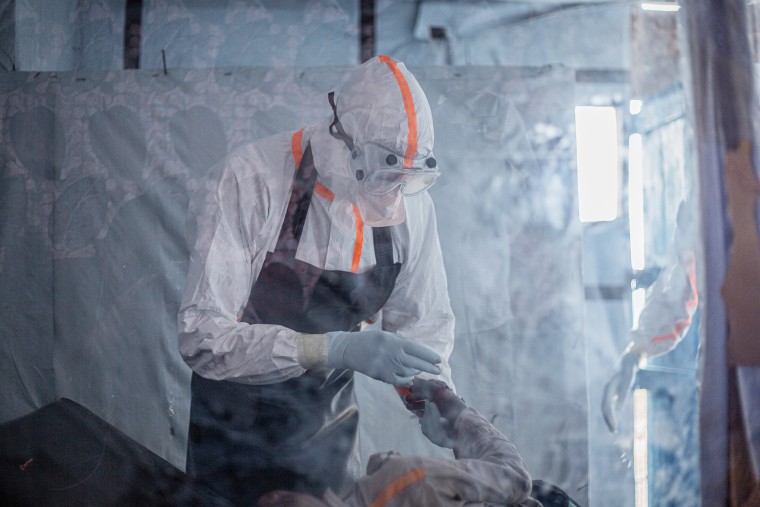
While a photo depicted a doctor treating an Ebola patient in Congo’s Ituri province, Ugandan health officials indicate no further domestic spread of Ebola. The release of the last patient occurred on June 16.
Following the World Health Organization’s guidelines, Uganda waited 42 days (two incubation cycles) before declaring itself free of Ebola. The Ugandan Health Ministry stated that the 2026 outbreak was a result of a documented importation event, unlike previous incidents.
All identified contacts underwent institutional quarantine and completed a 21-day follow-up without further transmission. Enhanced surveillance found no unexplained community cases.
The Bundibugyo strain, responsible for the outbreak, lacks an approved vaccine or treatment, and the region’s outbreak is declared a global health emergency. Uganda’s health authorities have experience in swiftly addressing Ebola outbreaks.
In May, following the confirmation of cases, Ugandan President directed citizens to avoid shaking hands and postponed a religious event that attracts many pilgrims to a Catholic shrine near Kampala. Measures also included suspending public transportation and flights between Uganda and Congo due to the outbreak.
Meanwhile, in Congo, teams from the International Federation of the Red Cross and Red Crescent Societies prepared for burial in Bunia, Ituri province, where confirmed cases have reached 3,262 with 1,437 fatalities.
Congolese health authorities indicate that this outbreak is unprecedented in speed, likely surpassing past records shortly. Only the 2014-2016 West African outbreak with 28,000 cases and over 11,000 deaths has been worse.
The rapid transmission rate raises concerns as some communities remain unreachable or abandoned by responders due to safety threats from residents and rebels. Tracing and isolating contacts is crucial for stopping Ebola, which typically presents as hemorrhagic fever.