
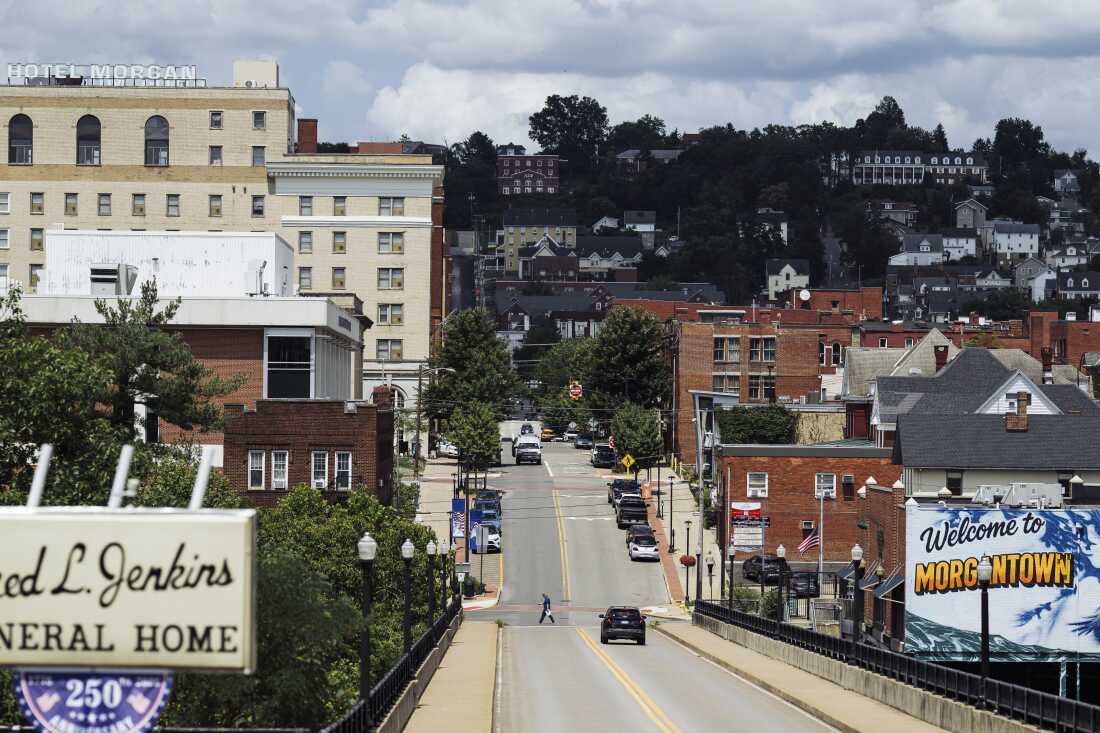
West Virginia is among several states providing financial incentives to workers who relocate to areas with a lower cost of living. NPR’s Chris Jackson explores this trend, focusing on stories like Ashley Eklin’s.
Transformation Through Relocation
In 2022, Ashley Eklin, living in Chicago, faced a life-changing multiple sclerosis diagnosis. She decided to take significant steps, including moving eastward. A work colleague suggested Ascend West Virginia, a program offering cash and incentives for relocation to the state.
Eklin embraced the program and after a lengthy application process, relocated to Inwood, a small town in West Virginia. She was accompanied by her two pets, and after settling in, her fiancé joined her. She describes her experience as perfect, highlighting her new skills in kayaking and astrophotography.
The Larger Picture: Economic Revitalization
Ascend West Virginia emerged during the pandemic when remote work shifted many Americans’ lives. States like Indiana, Kansas, and Kentucky joined in offering relocation incentives to revitalize local economies. West Virginia struggles with population decline and poverty, yet offers a significantly lower cost of living than neighboring areas.
Launched in 2021, Ascend West Virginia geared toward attracting remote workers and rejuvenating local businesses. The program was initially financed with $25 million from the private Wing 2 Wing Foundation by Brad D. Smith, the former Intuit CEO.
Attracting a New Demographic
Beyond bringing new residents, the program aims to retain local talent. Spinoffs like First Ascent focus on preventing graduates from leaving, while Teachers Ascend targets educators, and Ascend Heroes appeals to military veterans.
Participants like Abby Snyder and Colin Scott illustrate the program’s reach. Originally digital nomads, they chose to settle in Lewisburg, WV, drawn by community and a vibrant local arts scene.
Success Stories and Future Prospects
Ascend West Virginia has reported high retention rates; 96% of participants remain post-program. They receive coworking spaces, outdoor recreation, and gear rentals. Chipper Thurber, another participant, relocated his family from Pennsylvania to Fairmont, attracted by outdoor activities and the incentive package.
Kimberly and Andrew Ayers moved back to their home state of West Virginia. They leverage the coworking facilities offered, appreciating the balance it provides in their professional routines.
Economic Impact of the Program
The initiative aimed to welcome 1,000 workers initially but has expanded due to strong interest. The financial impact, including spending on housing and local services, approached $750 million. For a state with around 1.7 million residents, this contribution is noteworthy.
The initiative takes inspiration from successful projects like Tulsa Remote, but each program reflects unique local characteristics. Ascend West Virginia’s success could spur future expansion efforts to attract more remote professionals.
Challenges and Adjustments
Participants sometimes face challenges, such as Eklin who now commutes to Washington, D.C., several times weekly. Despite the commute, she values West Virginia as her sanctuary and has no plans to relocate.