
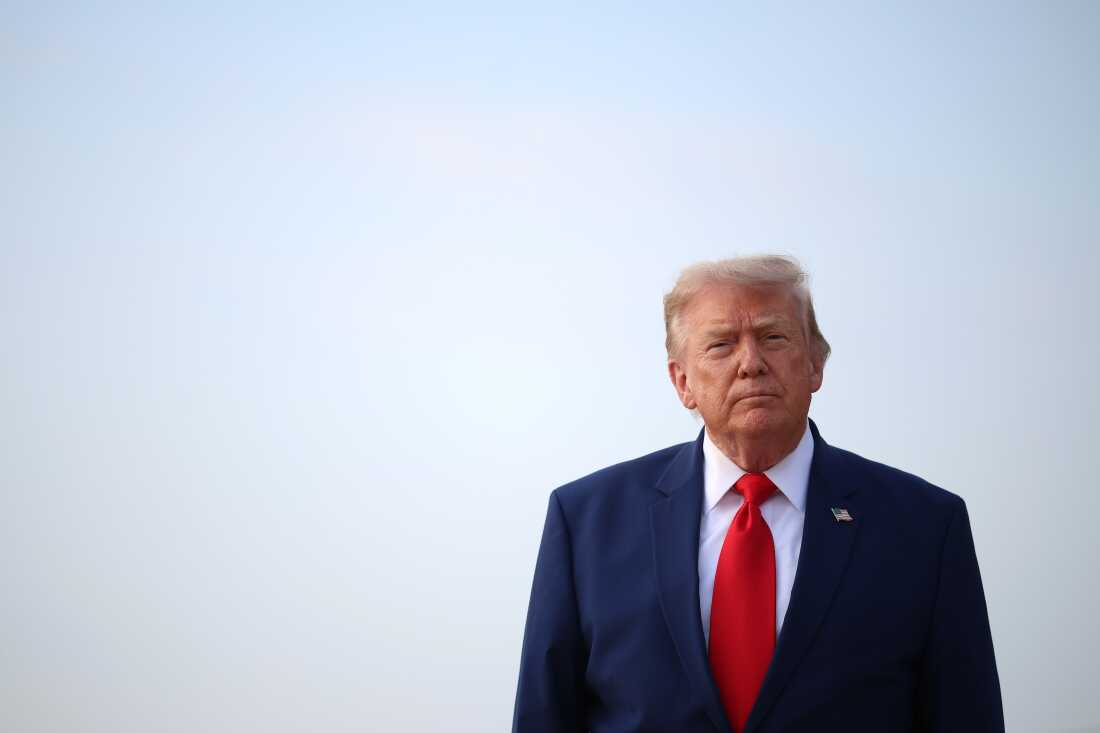
On July 22, 2026, U.S. President Donald Trump disembarked from Air Force One at Joint Base Andrews, Maryland, visibly angry after the Supreme Court ruled against a significant portion of his tariffs. At a White House press briefing on February 20, Trump expressed his determination to implement new tariffs, declaring that “other alternatives” would replace those rejected by the court. These alternatives involved laws his administration might leverage to authorize tariffs, following the court’s decision that tariffs under the 1977 International Emergency Economic Powers Act (IEEPA) were unlawful.
The administration has since demonstrated its readiness to apply various legal statutes to reconstruct the president’s tariff framework. Recent developments have included new tariffs replacing global ones, levying fees on Canadian imports, and threatening future tariffs on pharmaceuticals. The president remains steadfast in his economic policy, despite public frustration over increased import taxes.
At 12:01 AM Eastern on Friday, a global 10 percent tariff expired. The administration had imposed these in response to the Supreme Court’s ruling. New tariffs on the U.S.’s top 60 trading partners took effect simultaneously. These two-tiered tariffs, at rates of 10 and 12.5 percent, cover countries responsible for over 99% of U.S. imports. Some significant import categories, like energy and food, are exempted.
A senior administration official noted the strategic timing aimed to simplify compliance for businesses. They also emphasized the administration’s commitment to combatting forced labor. A U.S. Trade Representative fact sheet lauds the U.S. as the sole enforcer of a ban on imports made with forced labor. Critics, however, question the motives, with Senator Ron Wyden accusing the administration of using old laws for ulterior financial motives.
While the president formerly relied on IEEPA for quick unilateral tariff implementation, these forced-labor tariffs resulted from a lengthy investigation. Tariffs on goods like aluminum and lumber also follow investigative processes. Yet, the president can still act swiftly; new 50% tariffs on some Canadian goods were quickly announced, invoking a 1930 law never previously used for tariffs.
Although using new legal bases, the president’s tariff approach remains consistent. Past threats, such as cutting off trade with Spain, illustrate potential for negotiation and redirection. The announced pharmaceutical tariffs may not enact for two years, allowing for changes in circumstances or strategy.
Multiple laws, identified by section numbers like 122, 338, 232, and 301, facilitate the patchwork of tariffs. This complexity challenges importers navigating evolving regulations. Professor Kathleen Claussen of Georgetown Law notes the increased complexity, leaving importers to determine how various tariffs interact and what exemptions apply.
Further actions loom, with section-301 investigations assessing claims of unfair practices by numerous countries and the EU. Despite unfavorable public opinion and diminishing economic approval ratings, Trump’s affinity for tariffs remains robust, featuring prominently in his speeches. His critiques of past free trade deals and exploration of protectionist policies resonate with a populist base that supported his initial 2016 election.
The administration argues that tariffs will foster manufacturing, addressing generational trade issues. U.S. Trade Ambassador Jamieson Greer conveyed to senators the long-term focus of these policies, though manufacturing employment has not yet rebounded to levels seen before Trump’s presidency. The continuation of tariffs poses a risk, balancing voter dissatisfaction against uncertain future economic benefits.