
In Indonesia, Mount Anak Krakatau erupted early Sunday, impacting air travel and local activities. This volcanic island, situated in the Sunda Strait between Java and Sumatra, had shown signs of increased activity since Friday.
The initial eruption lasted 30 seconds at 3:53 a.m., followed by another 16-second eruption three hours later, as reported by Indonesia’s Geological Agency. Lava flares were visible through closed-circuit cameras.
Impact on Air Travel
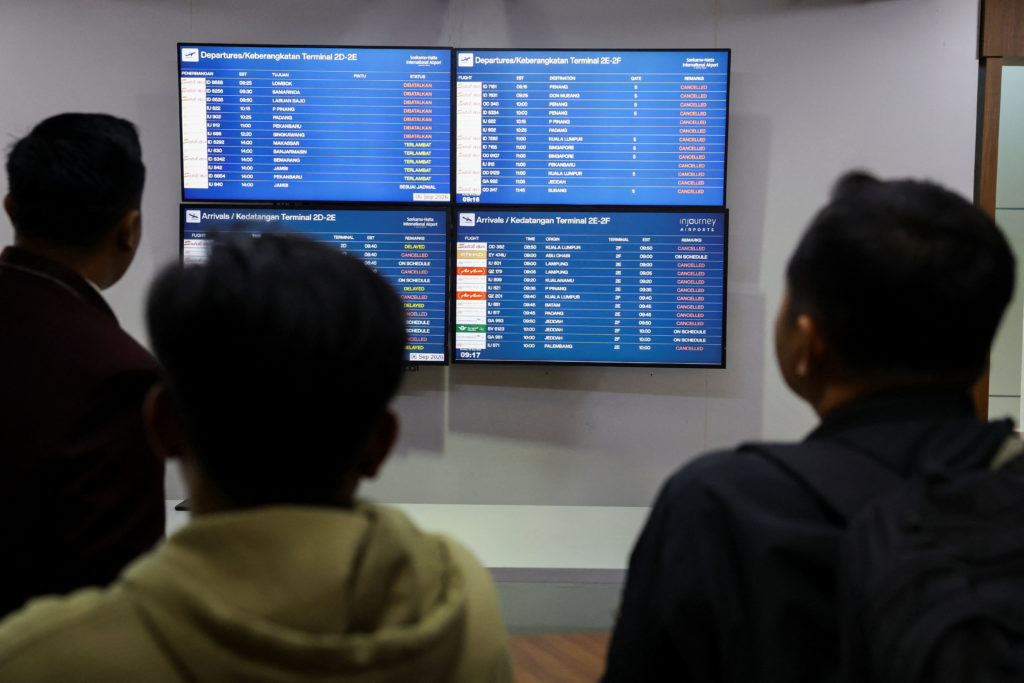
The eruption led to the temporary closure of Jakarta’s Soekarno-Hatta International Airport and several other domestic airports. Volcanic ash affected parts of Jakarta and Lampung province. AirNav Indonesia closed airspace around several airports, including Radin Inten II Airport in Lampung.
By Sunday evening, the closure of eight airports had disrupted 170,000 passengers, leading to the cancellation of 1,558 flights. Among these, 963 flights were from Jakarta’s main airport. Airports stayed shut until midnight.
Spanish tourist Diego Urdiales, impacted by the disruptions, said, “It’s of course an inconvenience.” Indonesian passenger Michele Gouw remarked, “It’s a natural disaster…we just have to accept it and wait.”
Volcano Activity and Monitoring
Indonesia’s Directorate General of Civil Aviation stated they are monitoring the situation closely. “Safety remains our top priority,” said Lukman F. Laisa, Ministry of Transportation director general of civil aviation. Airlines and airports are coordinating to manage the impact on schedules and operations.
The eruption also affected Bali’s I Gusti Ngurah Rai International Airport and an airport in Medan. Two ash clouds were detected using satellite imagery, one reaching 20,000 feet and affecting Jakarta and surrounding areas, while another rose to 50,000 feet impacting further geographic regions.
Lana Saria, head of Indonesia’s Geological Agency, stated that activity at Anak Krakatau has grown since July, with the current eruption being the most significant. Despite ongoing monitoring, predicting a larger eruption remains uncertain. “We continue to evaluate the volcano’s development,” Saria said, highlighting potential hazards like volcanic ash and gases.
Education and Historical Context
The government authorized schools in affected ash areas to switch temporarily to online learning to minimize students’ exposure. Anak Krakatau, known as the child of Krakatau, is the offspring of Krakatau, whose historic 1883 eruption impacted global weather patterns. The 2018 eruption of Anak Krakatau resulted in a deadly tsunami, altering the island’s structure significantly.
Maintaining vigilance, scientists understand that volcanic activities pose various threats, underscoring the necessity for ongoing evaluation and precautionary measures.