
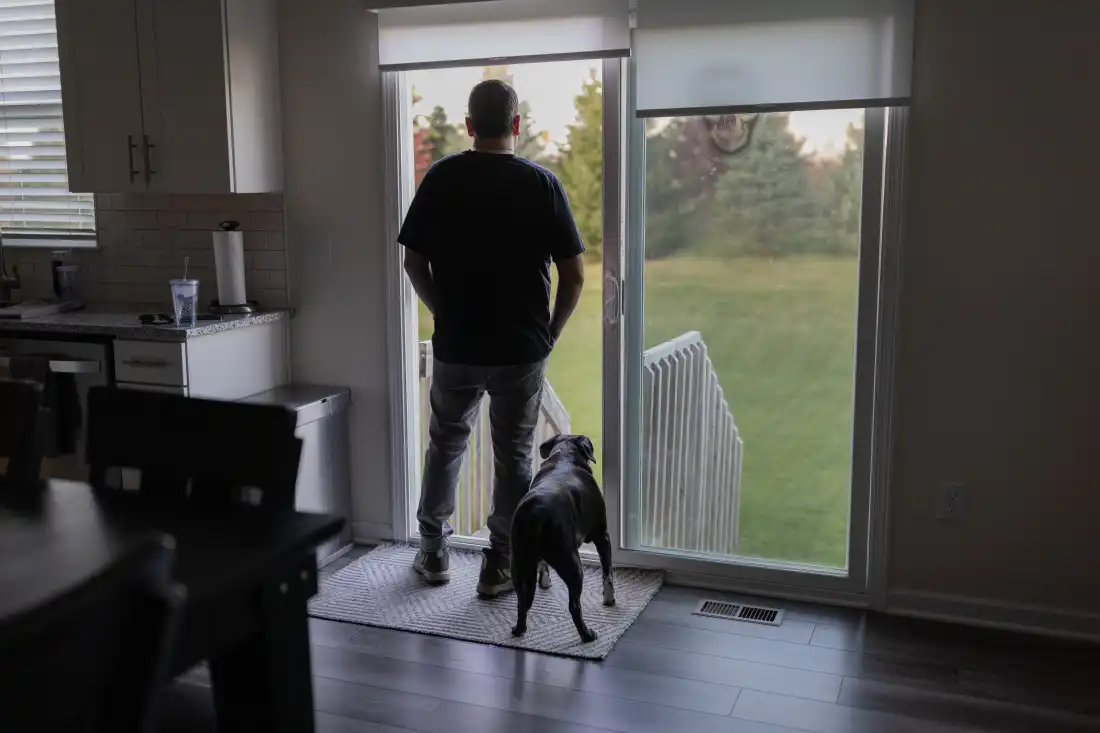
Army veteran Scott Boyd, living near Columbus, Ohio, faced a monthly increase of nearly $1,200 in his VA home loan payment after a loan modification. He is among thousands of veterans who have experienced higher mortgage payments following the end of a low-interest VA program last year. More than 15,000 veterans saw their payments rise by at least $150; over 700 faced increases of $1,000 or more, according to data acquired by NPR from the Department of Veterans Affairs (VA).
Loan modifications are typically offered to help homeowners catch up on missed payments by altering their mortgage terms. For most people, this results in lower or unchanged payments. However, the abrupt end of a VA program has led to a different outcome for VA loans. NPR’s investigation revealed that 63% of VA loan modifications resulted in increased payments, compared to only 2% for loans backed by Fannie Mae and Freddie Mac.
“This is the height of insanity,” said Rep. Mark Takano, ranking member of the House Veterans’ Affairs Committee. “These are veterans that are already financially distressed.”
Scott Boyd’s story is a poignant example. Having joined the military at a young age to support his family, Boyd later built a career in tech after his service. He purchased a house using a VA loan, enjoying a low-interest rate at the time. But financial hardships, including job loss and PTSD, led him to fall behind on payments. His lender suggested a forbearance program that was no longer available after the program’s closure.
The Veterans Affairs Servicing Purchase (VASP) program had helped veterans by combining missed payments into a mortgage with a 2.5% interest rate. The cancellation of this program left veterans with modified home loans at much higher interest rates. Boyd now pays an extra $1,181 monthly. “This is outrageous,” Boyd stated.
Congressional voices like California’s Rep. Mark Takano have criticized the situation. He argues the VA home loan program should not add stress to veterans. Attempts by NPR to reach key Republican committee members who supported ending VASP received no response.
Before its termination, VASP served as a vital support system, bundling missed payments into affordable new loans. While some Republicans voiced concerns over taxpayer risk, the mortgage and housing sectors warned against ending VASP without a replacement. Their predictions of increased foreclosures for those unable to afford higher payments have proved accurate.
Boyd and others now face untenable modifications. His loan term has extended to 40 years with significant interest. “This was foreseeable,” said Matthew Douglas of the Housing Policy Council, highlighting the predictable consequence of ending the program without alternatives.
The VA has announced a new Partial Claim Program (PCP) designed to address such issues by allowing veterans to defer missed payments until the end of their mortgage term. However, the rollout has been slow, leaving Boyd and others stuck in modified loans with higher rates.
Industry data shows VA loan foreclosures reaching a 10-year high post-VASP cancellation. Congress could act to reinstate more favorable loan terms for affected veterans, but has yet to do so.
Maintaining his home has been a challenge for Boyd, who values providing a stable environment for his family. He recently faced impossible financial decisions, opting for modification rather than risk foreclosure. Boyd expressed frustration at receiving worse options from the VA compared to civilians. He noted feeling “defeated” by the situation, despite his service.