
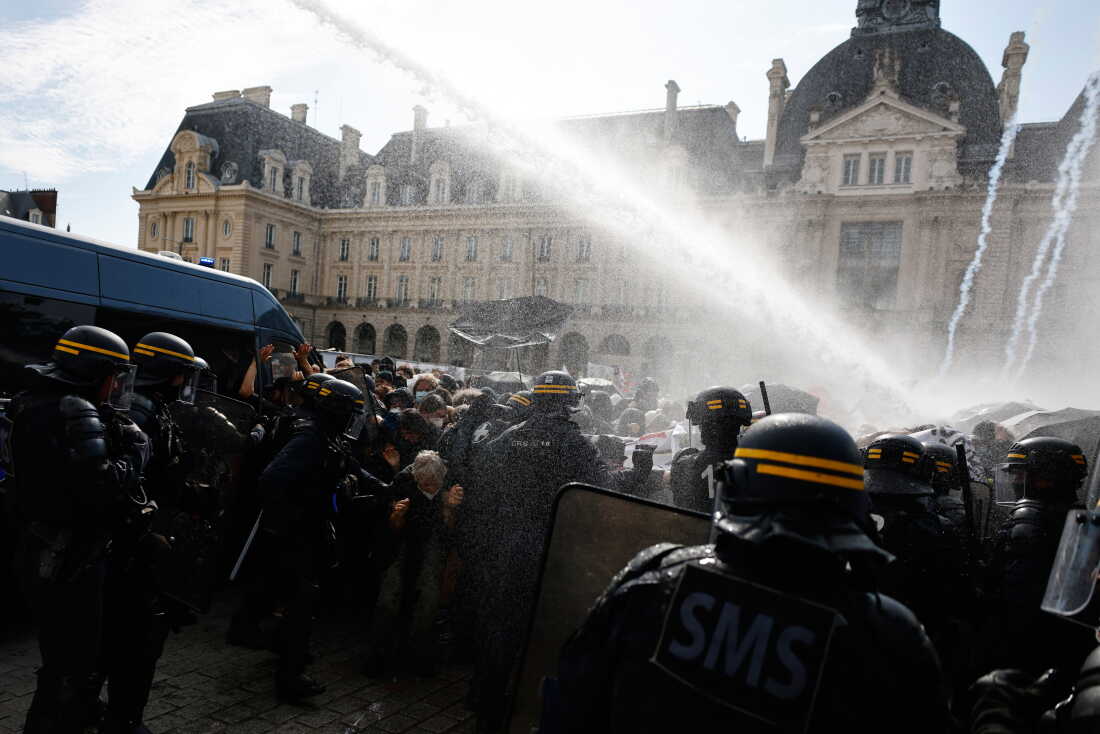
In Rennes, western France, riot police used water cannons against students protesting under-resourced schools. The unrest spread beyond Rennes, with police firing tear gas in Paris and other French cities as over 250,000 people rallied for increased education funding, according to government figures. This significant turnout added pressure to President Emmanuel Macron’s administration.
Protests started mid-September at a high school near Paris and have become a nationwide movement. Demonstrations took place in Marseille, Strasbourg, and other cities. Léa Monimart, a protester in Lille, highlighted the need to listen to the students, noting their awareness of the issues at hand. The Interior Ministry reported that 256,000 people joined protests nationwide, with 56,000 in Paris. Clashes occurred in Paris between small groups of protesters and riot police.
The police faced criticism for their response to the teenagers, with arrests, tear gas, and riot-control weapons causing resentment among some parents and teachers. Riot police using water cannons against students in Rennes and other regions has increased tensions.
Interior Minister Laurent Nuñez claimed the police’s actions were mostly appropriate, though he stated some protests escalated into riots needing intervention. Prime Minister Sébastien Lecornu stressed the importance of addressing students’ concerns and criticized violent threats to schools. He promised to investigate any police misconduct while rejecting accusations of racism against officers.
Class Boycotts and Arrests
Over two weeks of class boycotts and school blockades have led to more than 6,100 arrests, mainly of minors. This unrest coincides with the start of the presidential election campaign. Felix Barney, a university student, described the police response as irrational against minors. A far-left lawmaker, Aurélien Le Coq, condemned the violence as unbearable while affirming support for the protests.
The use of riot-control weapons has resulted in severe injuries. Recently, a 15-year-old lost a hand from a police stun grenade, and 715 officers have been injured during incidents.
The protests resonate with a broader sense of dissatisfaction in France, extending beyond immediate challenges like rising fuel costs due to the Iran war. Concerns about public spending, poverty, and income inequality have amplified pupil’s requests for more education funding. Their demands highlight the risk to their future due to education funding shortfalls.
Government Response and Public Sentiment
The Education Ministry reported that 891 schools were fully or partially closed on the day of the protests. The ministry launched an online portal for high school students to anonymously share school difficulties and the changes they seek.
At the Hélène Boucher lycée in Paris, protesters formed barricades, and parents supported them. Emilia Sichili Suriam, from a parents association, emphasized the shared goal of protecting children’s rights and their legitimate right to advocate for better education conditions.
Protesters noted issues like rundown classrooms, inadequate resources, lack of air conditioning, and pest infestations. Complaints also include staff shortages and high workloads, with French high schoolers having some of Europe’s highest instructional hours. Suzanne Nijdam, head of the student association federation, vowed continued protests until the government addresses these issues.