
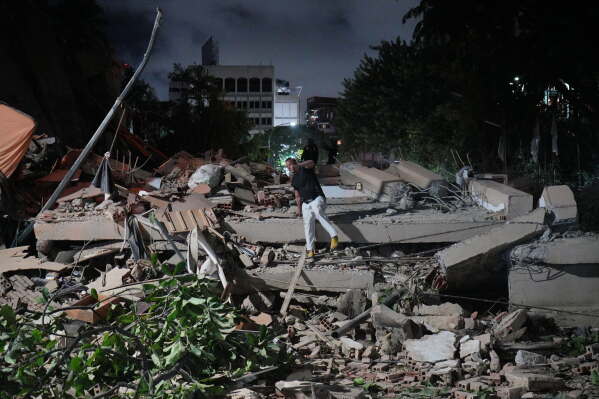
Caracas, Venezuela faced powerful earthquakes on Wednesday evening, causing widespread damage and panic across the nation. Acting President Delcy Rodríguez declared a state of emergency. Speaking to the nation, Rodríguez reported the 7.2 and 7.5 magnitude earthquakes struck shortly after 6 p.m., impacting several states. Details on fatalities, injuries, or specific damages to homes and buildings were not provided.
The seismic events are among the strongest to hit Venezuela in over a century. Buildings were evacuated as far away as Brazil’s Amazon region, 1,700 kilometers from Caracas. Rodríguez described damage and closure of Simón Bolívar International Airport near Caracas, the country’s primary air hub. Subway and natural gas services in Caracas were canceled, and citizens were encouraged to report damages using a government app. Schools have been closed, with some buildings designated as shelters and donation centers.
Rodríguez urged calm among residents. Healthcare professionals were advised to assist hospitals in treating injuries. Her appeal for unity underlines the gravity of the situation.
“We urge our population to remain calm.”
— Acting President Delcy Rodríguez
The initial earthquake, recorded by the U.S. Geological Survey at 7.1 magnitude, was revised to 7.2. Its epicenter was identified as west of Morón on the Caribbean coast, around 168 kilometers west of Caracas, with a depth of 22 kilometers. A second, larger earthquake followed, with a magnitude of 7.5 at a 10-kilometer depth. Its epicenter was 16 kilometers southwest of Morón.
Falcon’s Governor Víctor Clark reported hospitalization of 32 people and 15 individuals trapped in the aftermath. International assistance came from several countries, including the United States, Argentina, Brazil, and others, offering various aid forms.
Jeremy P. Lewin from the U.S. State Department mentioned the mobilization of a disaster assistance team, coordinating rescue teams, supplies, and resources with the interim Venezuelan government. It marked a significant international response with leaders like El Salvador’s President Nayib Bukele and Ecuador’s President Daniel Noboa offering help and expressing solidarity despite political differences. Brazil’s administration noted no injuries among Brazilians from the disaster.
During the quakes, residents fled swaying buildings in Caracas. Hector Ricci, a local, emphasized the need to evacuate. Dust clouds formed over neighborhoods, prompting many to stay outdoors. The tremors caused buildings to collapse, blocking streets with debris and toppling electric poles. Power and cellphone service disruptions added to the distress.
Opposition leader María Corina Machado, now in exile, shared words of encouragement on social media.
“May strength, serenity, and solidarity prevail among us in the face of this difficult time.”
— María Corina Machado
Interior Minister Diosdado Cabello warned of felt impacts across several Venezuelan states. He urged caution, advising residents to stay outside due to potential aftershocks. Buildings in Brazil’s Amazon regions, like Manaus and Belem, were evacuated. Colombia experienced tremors without recorded damage.
The U.S. Pacific Tsunami Warning Center issued alerts, later lifted. Strong earthquakes are rare in Venezuela since its geographical position near fault lines makes seismic activity infrequent as compared to the Pacific Coast regions of Latin America.
Garcia Cano reported from Bogota, contributing along with other AP writers from various locations.