
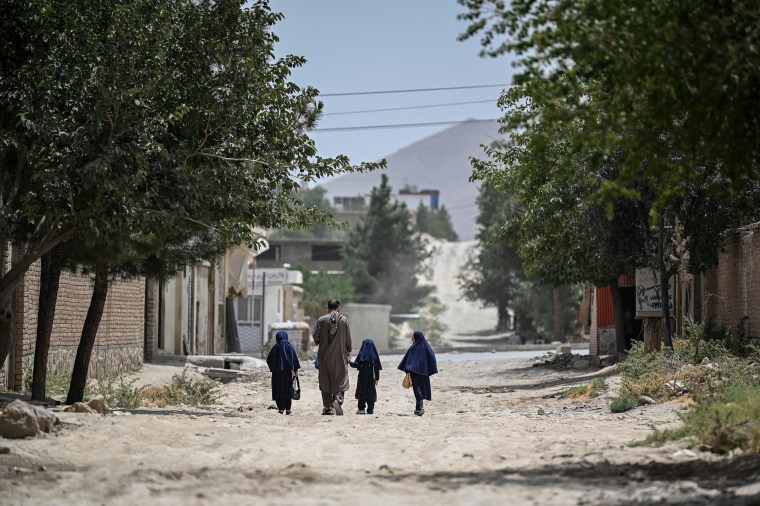
In Ankara, Turkey, a United Nations agency has reported that an estimated 2.4 million Afghan girls remain excluded from secondary education, five years after the Taliban seized control of Afghanistan. UNESCO, the United Nations Educational, Scientific and Cultural Organization, has called for the immediate restoration of their educational rights.
According to UNESCO, the continued exclusion of females from education represents a severe violation of their fundamental rights. Hoda Jaberian, UNESCO’s program coordinator for education in emergencies, stated that Afghanistan is currently the only nation where women and girls are formally banned from both secondary and higher education.
“Five years is not a temporary interruption in a child’s education. It is clearly almost an entire secondary school cycle.”
Jaberian emphasized that UNESCO demands the immediate and unconditional restoration of educational rights for girls and women. She affirmed that these rights are non-negotiable and fundamental human rights.
The blockade began when the Taliban regained power on August 15, 2021, as U.S. and NATO forces withdrew after two decades of war. Initially, the Taliban barred girls from attending secondary schools and subsequently extended restrictions to higher education, employment, and additional sectors, thus curtailing women’s presence in public life.
Despite appeals from the United Nations, humanitarian organizations, human rights activists, and several Islamic nations, the Taliban insists the matter is domestic and has maintained these bans.
Prior to the current restrictions, Afghanistan had made two decades of educational progress, including increased access to education for girls. By 2021, nearly 1 million girls were attending secondary education, a significant increase from severely limited access in 2001.
UNESCO is actively supporting educational efforts in Afghanistan by establishing community-based programs focused on education, literacy, and skill development. These educational endeavors often occur within the homes of literacy facilitators, with the authorities’ knowledge.
To preserve educational opportunities, UNESCO collaborates with communities and partners, employing more than 1,000 literacy facilitators trained by its experts. Despite existing restrictions, Jaberian emphasizes UNESCO’s commitment to maintaining educational access within communities.