
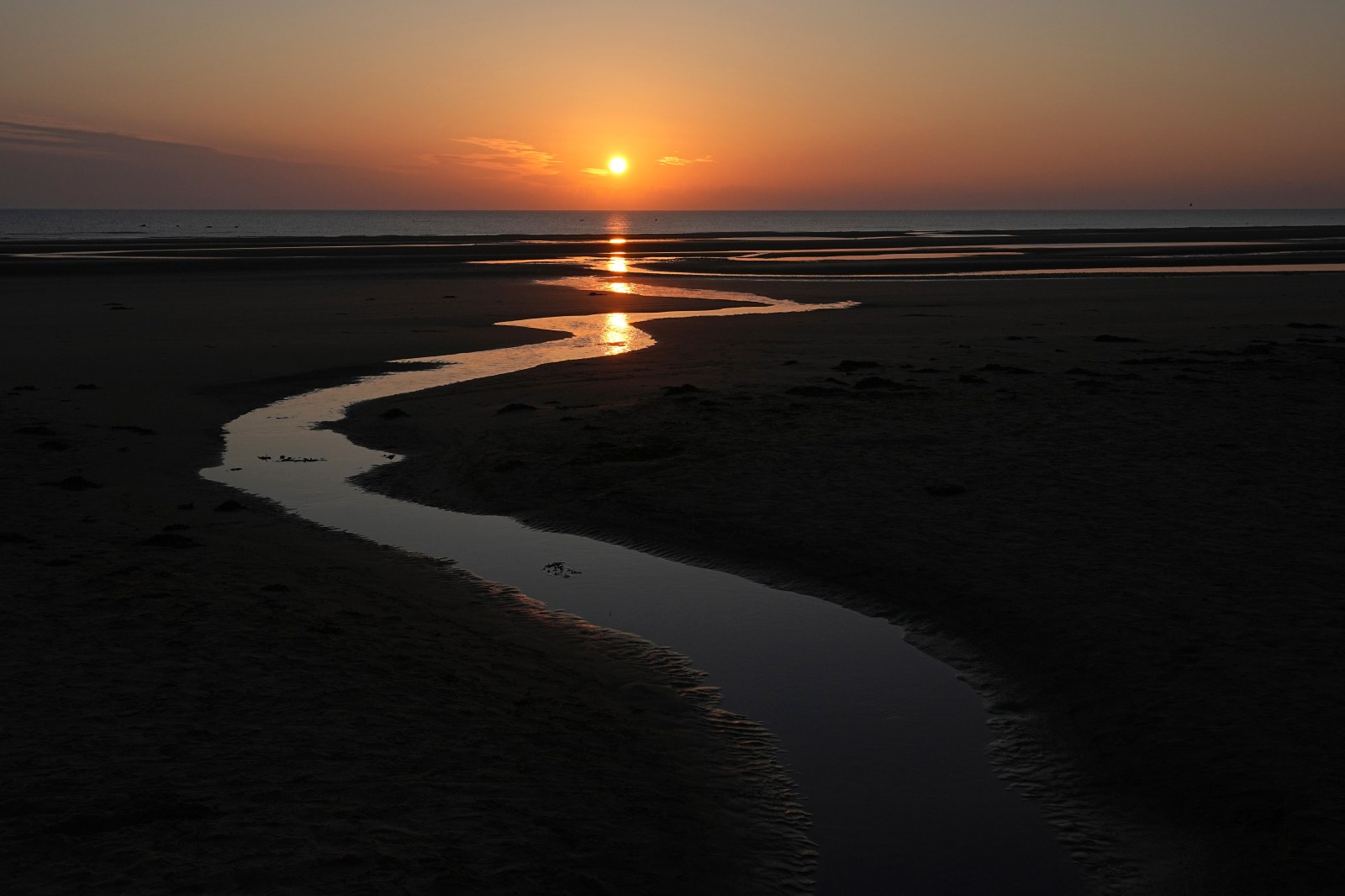
The Normandy beaches where Allied forces launched the D-Day invasion during World War II have joined UNESCO’s World Heritage List. This announcement was made alongside the inclusion of Mount Olympus in Greece and other notable sites. The decision was finalized at a UNESCO World Heritage Committee meeting in Busan, South Korea, where delegates assessed numerous worldwide nominations.
These new listings acknowledge places of significant cultural, historical, or natural importance, emphasizing their long-term preservation. Prominently among these additions are the five Normandy landing beaches: Omaha, Utah, Sword, Gold, and Juno, along with Pointe du Hoc, seized by U.S. Army Rangers during the June 6, 1944 Allied invasion of Nazi-occupied France.
UNESCO’s designation encompasses essential parts of the D-Day operation, which was pivotal in the liberation of Western Europe from Nazi control. Around 150,000 Allied troops participated, marking the start of a crucial campaign.
The International Council on Monuments and Sites (ICOMOS), responsible for evaluating heritage nominations, stated that the Normandy sites contain extensive evidence of the historic landings. This includes German defensive structures, wartime damages, Allied harbors, and sunken ships. ICOMOS highlighted the event’s role in restoring freedom and peace in Europe.
Despite the importance of these sites, ICOMOS cautions about preservation challenges such as tourism pressure, climate change, rising sea levels, and nearby development projects. They suggest enhanced conservation efforts to maintain the sites’ historical integrity.
Ahlem Gharbi, France’s UNESCO delegate, noted that the Normandy landings signaled a shift from global conflict to a post-war order focused on peace. She underscored the sites’ recognition amid current global unrest.
“It’s probably the greatest amphibious landing there’s ever been,” historian David Edgerton remarked. “It ought to be remembered for that alone.”
Recognition of Mount Olympus
Mount Olympus, Greece’s highest peak and mythological home to the Olympian gods, has been added to the World Heritage List. This recognizes Mount Olympus as a mixed heritage site after a 12-year campaign by Greek authorities.
The mountain, reaching 9,573 feet, holds unique ecological and historical significance. Ancient Greeks believed it was Zeus’s throne, while today it is known for its biodiversity and protected areas.
Evangelos Geroliolios, Dion-Olympus’s mayor, acknowledged the UNESCO status’s potential to bolster conservation efforts and manage visitor impact responsibly. Georgios Koumoutsakos, Greece’s delegate to UNESCO, vowed commitment to preserving the site.
“We reaffirm our unwavering commitment to safeguarding Mount Olympus for the benefit of present and future generations,” he stated. “As Greek mythology wisely reminds us, it is always best to remain on good terms with gods.”
Ancient Capitals of Japan
The UNESCO committee approved adding Japan’s ancient capitals of Asuka and Fujiwara to the World Heritage List. Located in Nara Prefecture, Japan, the inscription includes 19 archaeological sites from the sixth to eighth centuries, marking Japan’s shift to a centralized state influenced by Chinese governance.
The sites contain remnants of palaces, administrative buildings, temples, and tombs that impacted later imperial capitals. Japanese Vice Culture Minister Shigeki Kobayashi expressed gratitude for the designation, pledging continued preservation efforts. Prime Minister Sanae Takaichi hoped the recognition would attract more visitors.
Archaeology professor Yoshiyuki Aihara from Nara University stated, “If you dig underneath these rice paddies about 1 meter, you start finding a stretch of ruins in this area, though that’s not easy for ordinary visitors to understand.”
South Sudan’s First World Heritage Site
South Sudan celebrated its first World Heritage Site with the inclusion of the Boma-Badingilo Migratory Landscape. This vast area contains wetlands, floodplains, and savannas, supporting one of Earth’s largest land mammal migrations. Approximately 6 million kob, tiang, and Mongalla gazelles traverse the landscape seasonally.
The ecosystem also shelters elephants, lions, cheetahs, and diverse species, aiding local herding, farming, and fishing communities. This recognition is pivotal for South Sudan, the youngest nation, attracting international support for conserving the area under environmental and economic pressures.
Importance of UNESCO Designations
UNESCO World Heritage status is a prestigious acknowledgment for cultural and natural sites. While it doesn’t provide funding, it heightens global awareness, stimulates tourism, and strengthens conservation initiatives.
This year’s additions demonstrate UNESCO’s mission scope, linking sites to historical moments and landscapes associated with mythology, archaeology, and biodiversity. As the Busan meeting continues, more sites are expected to gain inclusion in the World Heritage List. The newfound status provides international exposure and the challenge of preserving these significances for future generations.