
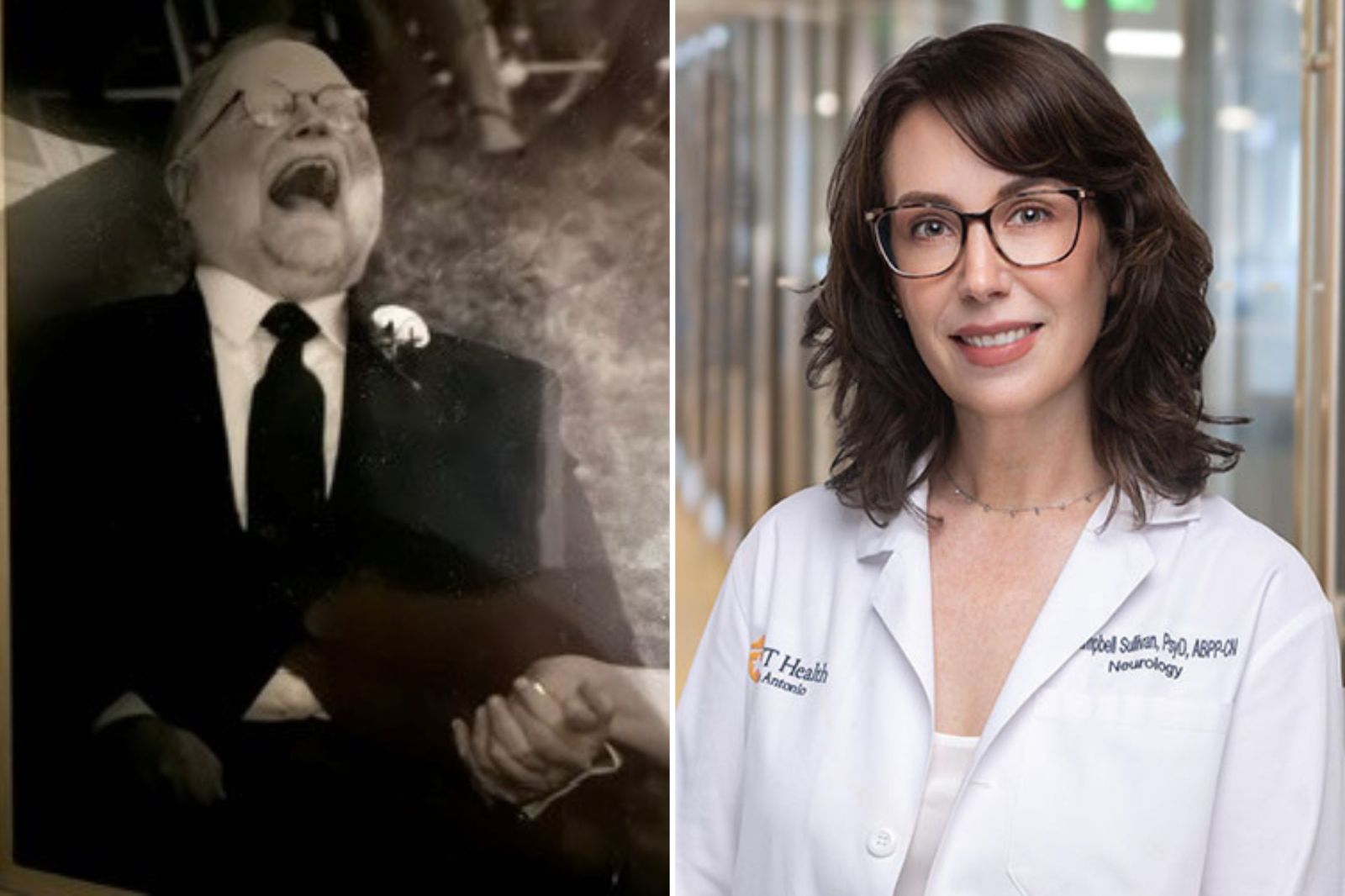
Growing up in Bellville, a small town in central Texas, psychologists weren’t common in my life. Neuropsychology, in particular, was unknown. My interest in the field sparked during my first master’s degree. I took a job as a psychometrist, a role that involved administering neuropsychological tests. This work suited me well and set the tone for my future career.
I trained as an extern at the University of California, San Francisco. This center was one of the first to focus on frontotemporal dementia (FTD). FTD refers to disorders that progressively harm the frontal and temporal lobes of the brain, altering thinking, behaviors, and movement. There, I discovered skill in dealing with the dynamic personalities of many patients. My upbringing possibly prepared me well, as my family was full of vibrant personalities. Both my father and my aunt were known for their provocative humor and engaging presence.
I Knew Something Was Wrong, But Didn’t Know Exactly How The Signs Fit Together
Around 2003, my father began experiencing mobility issues, which we thought were complications from back surgery. His condition worsened, eventually requiring a wheelchair by 2009. In 2006, we noticed behavioral changes. His conversations became superficial, and his humor turned juvenile. A memorable moment was when he licked his dinner plate, shocking those around him. His judgment also deteriorated, leading to poor financial decisions. These changes were confusing, as we didn’t recognize the signs of amyotrophic lateral sclerosis (ALS) combined with FTD, conditions affecting both motor function and behavior.
At that time, I hadn’t yet worked with ALS patients. The overlap between ALS and FTD wasn’t widely understood. In 2011, my father passed away at 65. I was completing a fellowship at Johns Hopkins School of Medicine. This experience prompted me to focus on atypical neurodegenerative diseases. Afterward, I moved to San Antonio to establish a new clinic.
FTD and ALS Are Profoundly Misunderstood
In the past decade, our clinic has specialized in atypical cases, assisting both patients and families. Both FTD and ALS are often misinterpreted, even by medical professionals. Symptoms can vary, including personality changes, language issues, and movements. This complexity means families may spend years trying to understand symptoms while facing the impact of these diseases alone. Living through it with my dad heightened my sensitivity to these changes.
In 2021, my aunt showed similar symptoms. She struggled with mobility at a family gathering. Financial missteps had left her uninsured, and I felt helpless. Fortunately, a philanthropic fund at the Biggs Institute helped cover part of her diagnosis and care. It revealed a familial ALS-FTD connection caused by a rare TARDBP gene variant. She was 61 then. This experience influenced me deeply, particularly when sharing the diagnosis with her daughters. She passed away the following year at age 62.
You Don’t Have To Navigate These Diseases Alone
Now, in my practice, I empathize more with families facing genetic testing decisions. Previously, I saw testing as a clear choice, but now I understand the complexity. I also encourage participation in research to advance our understanding of these conditions. My aunt’s choice to donate her brain for research was significant for her daughters, providing them a sense of pride.
Support for families coping with ALS and FTD is crucial. Many non-profits are doing essential work to support these families, ensuring they aren’t alone. A. Campbell Sullivan, 48, blends her roles as a board-certified clinical neuropsychologist and professor with providing support and clinical insight. Based in San Antonio, Texas, she lives with her three daughters, aged 6 to 17, and enjoys listening to non-scientific podcasts in her free time.
For further information on this story, contact Newsweek editors Kara Dolman and Emma Lee-Sang.