
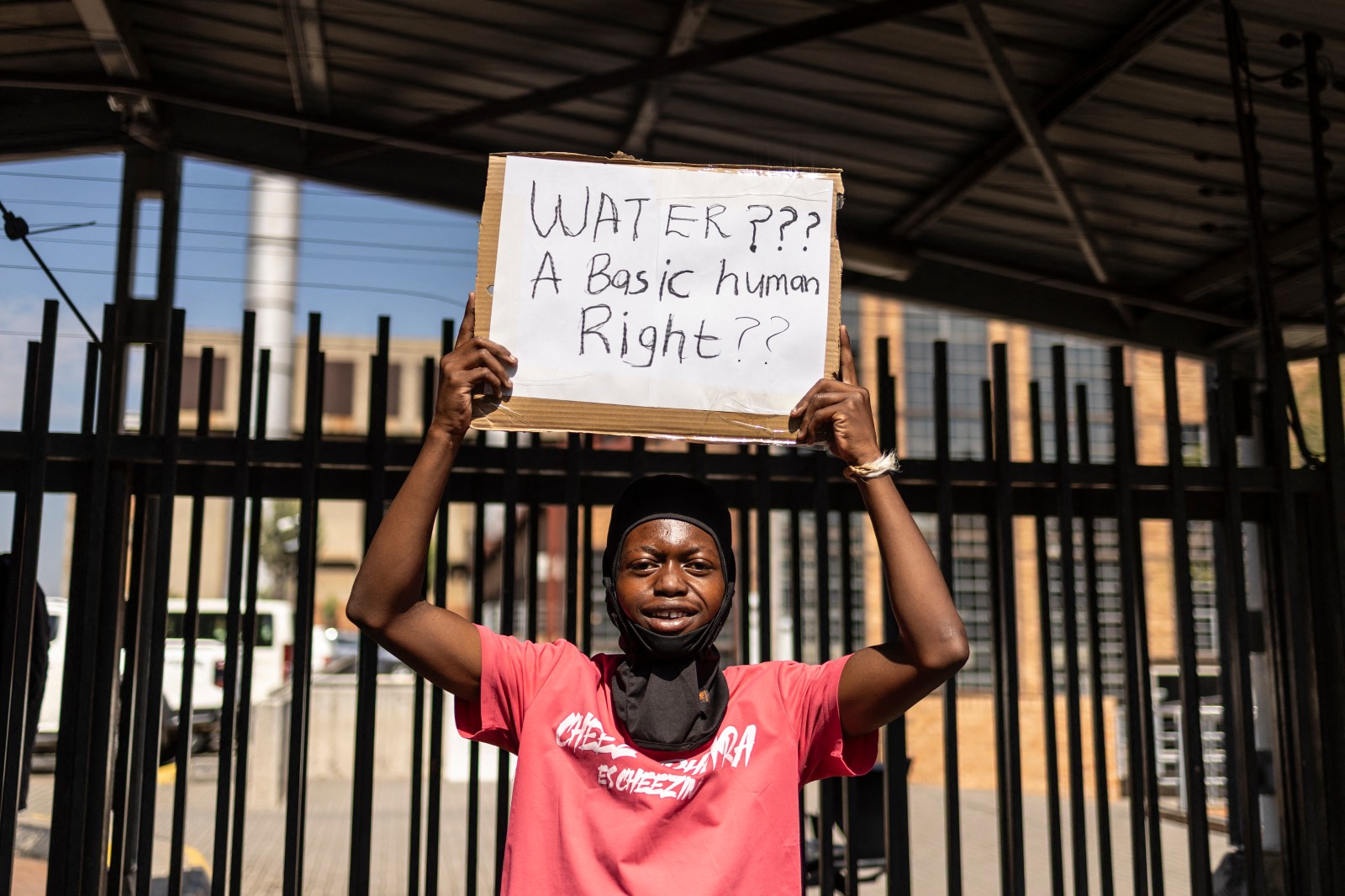
Johannesburg faces a severe water crisis, with residents sometimes enduring over a week without access to running water. The city, home to approximately 6.2 million people, struggles with what officials describe as “severely constrained systems.” Recent proposals by authorities include implementing new restrictions and supply cuts in certain areas.
The issue has gained significant attention on social media, attracting millions of views. The daily lives of South Africans are severely disrupted by the shortages. For instance, Sharlene Smith, 59, shared with Bloomberg how she crosses dangerous areas plagued by gang violence to fetch water for her elderly mother from a church or mosque. Businesses also face challenges; a coffee shop owner stated that he uses a day’s profit to refill his backup water tank.
This problem coincides with local elections, making service delivery a focal point for voters. According to Craig Sheridan from the University of the Witwatersrand, the problem lies in “major constraints in getting water from the dams through the system to people’s taps.” He highlights the lack of maintenance of pipes, reservoirs, and water towers as demand grows, nearing the supply capacity for such a large population.
Mike Muller, former director general of water affairs in South Africa, said, “The region’s dams are full, and summer rains have hardly begun. But Johannesburg’s distribution network has been badly neglected for decades, losing over 30 percent of supplied water to leaks.”
Johannesburg’s mayor, Dada Morero, admitted that reservoirs and towers struggle to recover due to water being used faster than replenished. He cited “labor action” as delaying interventions and acknowledged that many residents have experienced dry taps for over ten days. Plans include using a fleet of trucks to deliver water to informal settlements, with storage levels recently improving slightly.
Reasons Behind the Crisis
Unlike many industrial cities, Johannesburg is not situated on a river. Its water supply chain involves transporting water from dams through treatment plants to storage facilities before reaching homes. Sheridan highlighted the lack of maintenance on thousands of kilometers of pipes and reservoirs, leading to significant water loss.
Given the growing population and limited space for new dams, these challenges contribute to a complex system resulting in severe water shortages. Geography Associate Professor Anja du Plessis noted that power outages disrupt the pumping of water, further complicating the situation.
Johannesburg Water acknowledged leaks and infrastructure repair needs but emphasized high demand draining reservoirs faster than refilling capacity.
Proposed Solutions
The city has imposed “Level 1” water restrictions, prohibiting garden watering and swimming pool filling during specific hours. Additional restrictions are under consideration to help manage the situation, including using treated wastewater for tasks like road construction.
Reducing consumption in high-demand areas with targeted supply cuts is also being considered. Sheridan argued for prioritizing maintenance to reduce leaks, estimating a potential increase in water availability by 30-40 percent.
Sheridan emphasized, “The task is monumental but must be addressed step by step. Citizens must also contribute by conserving water and revising billing systems to encourage reduced consumption.”
Political instability and coalition governance since the ANC lost its majority in 2016 have further complicated maintenance efforts. However, all major political parties now recognize the urgency of repairing the city’s leaking pipes, setting this as a priority for future administrations.
Johannesburg Water continues efforts in leak detection, pipe repairs, and infrastructure improvement to reduce water losses and enhance system performance. Residents and businesses are urged to minimize water use to aid recovery.