
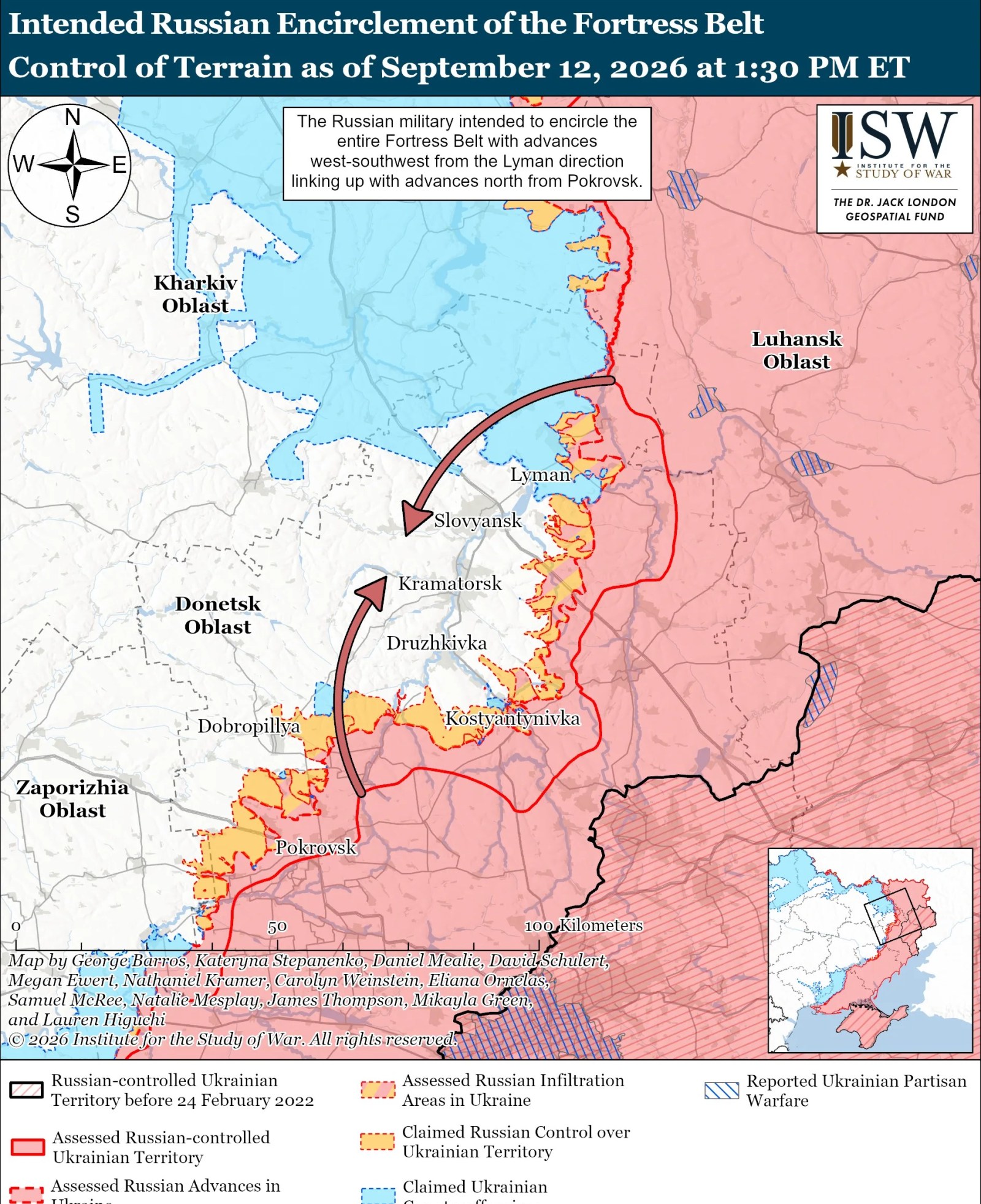
Amid the ongoing conflict, Ukrainian forces have disrupted Russian aims of capturing the Donetsk region. Analysts suggest Ukraine has regained the initiative both strategically and operationally for the first time in two years. This comes as reports indicate Russian President Vladimir Putin may be receiving exaggerated battlefield success accounts from his generals, which bolster his mistaken belief in winning the war. During recent talks with former Trump administration officials, Steve Witkoff and Jared Kushner, Putin has maintained his aggressive war objectives.
In the past six months, Ukraine has nullified Russia’s territorial advances and achieved successful counteroffensives in the Kupiansk, Oleksandrivka, and Lyman sectors. The Institute for the Study of War (ISW) reports maps illustrating this progress, with even pro-Kremlin military bloggers acknowledging these successes.
The ISW indicated that Ukraine’s forces halted Russian progression into the Dnipropetrovsk region, recovered ground around Kupiansk, and dismantled a Russian position threatening Slovyansk and the Donetsk Oblast Fortress Belt. This heavily fortified network has been key in Ukraine’s defense of the eastern Donbas region. Capturing this region is a central goal for Putin. The ISW analysis highlights Ukraine’s effective challenge to Russian strategies beginning in late 2025.
Giorgi Revishvili, a military analyst, noted Ukraine’s favorable achievements in early 2026, with successful local counteroffensives liberating territories. Pro-Russian bloggers concede Ukrainian forces cut a Russian salient north of Lyman and pushed them to the Zherebets River.
Retired Australian Army Major General Mick Ryan described Ukrainian gains as unexpected amid ongoing Russian missile attacks. He noted that Ukrainian forces executed a smaller operation in southern Ukraine, liberating around 290 square miles, defying the narrative of a stagnant frontline.
Russia’s Advances and Tactical Challenges
Despite Ukraine’s successes, Russian forces have made modest advances around Kostyantynivka, Slovyansk, and Kramatorsk, struggling to maintain momentum. As autumn approaches, Moscow may seize a two-month window to intensify pressure on the Fortress Belt. Cloudier weather conditions could hinder Ukrainian drone effectiveness, while the loss of foliage might expose Ukrainian defenses to Russian reconnaissance.
Focus remains on areas like Dobropillia, Kostiantynivka, and Druzhkivka, with Russian forces attempting to establish footholds for future operations. This could allow for increased offensive capability in these areas.
Airspace Defense and Mobilization Speculation
Ukraine faces challenges in protecting its airspace. Russia is increasingly using cost-effective strike systems like the S8000 Banderol and jet-powered drones, which are difficult to intercept. Intensifying strikes on civilian and strategically important infrastructures are anticipated.
Amid continuous Russian troop losses, there is speculation about whether Putin will comply with military requests for mass mobilization post-parliamentary elections. Although the Kremlin denies this, Ukraine’s Main Military Intelligence Directorate has warned of potential mobilization as Russian casualties outpace recruitments. However, the ISW suggests a gradual, covert approach is more likely due to the unpopularity of widespread conscription.