
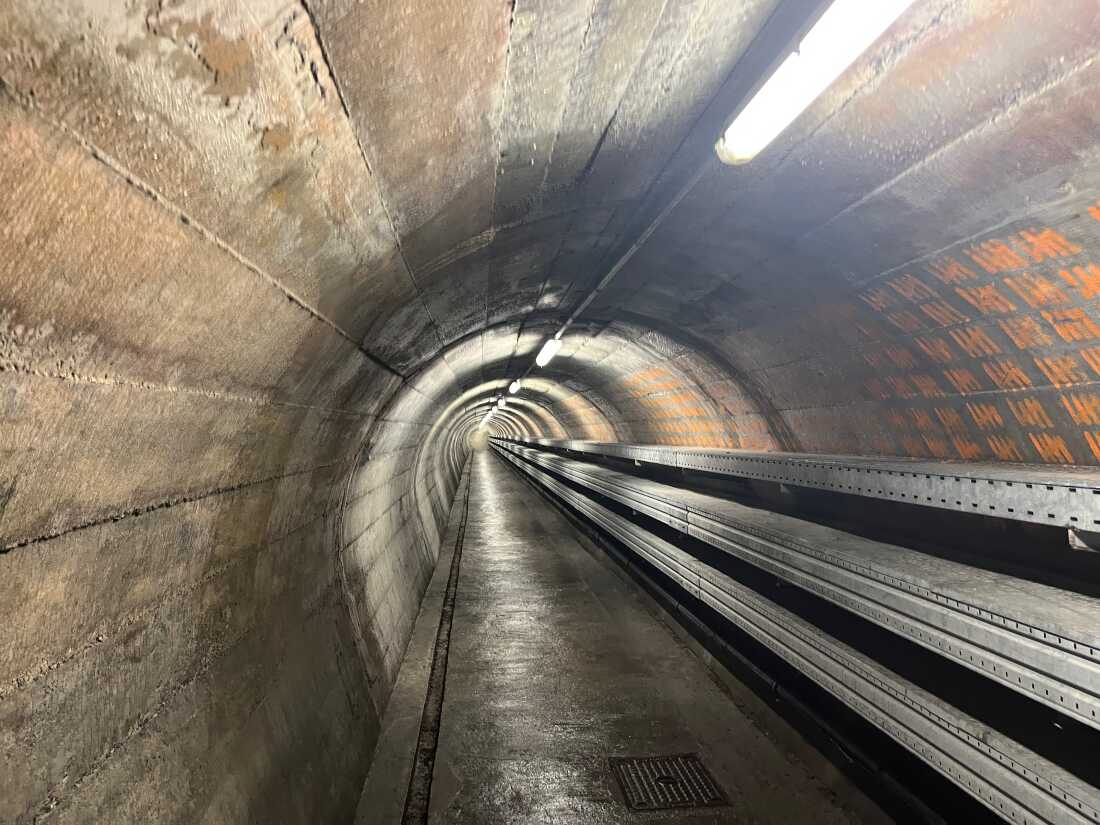
In Lucerne, Switzerland, a tunnel leads from the entrance of the Sonnenberg nuclear bunker to a vast underground complex. This bunker, the largest of its kind globally, was designed to shelter 20,000 individuals. Conceived during the Cold War in the 1970s, it aimed to protect a third of Lucerne’s population from potential nuclear conflict.
The Bunker’s Strategic Design
Though Switzerland, known for its neutrality, was unlikely to face a direct nuclear hit, Swiss officials anticipated the risk of fallout from surrounding non-neutral countries. Therefore, the bunker was equipped with diesel generators, providing two weeks’ worth of power, food, and water. After this period, occupants would have to reassess their situation based on external circumstances.
Zora Schelbert, a guide at Sonnenberg, explains that civil defense today considers different threats. As seen in recent conflicts, like those in Ukraine and Israel, shelters are seen as temporary havens until it becomes safe to leave.
Nationwide Shelter Network
Switzerland boasts over 370,000 nuclear bomb shelters, ensuring space for all nine million citizens. This network was maintained even after the Cold War, as evidenced by a parliamentary decision in 2011. Discussions about dismantling these shelters halted after Japan’s Fukushima disaster, affirming their importance in emergencies.
Every residential building in Switzerland must either feature a bunker with specific safety systems or contribute funds to a nearby state-managed bunker. Citizens pay an upfront fee ranging from $1,700 to $3,500 for their construction and maintenance.
Cultural and Educational Aspects
In peacetime, these bunkers often serve alternate purposes, such as wine storage, saunas, or storage spaces. The University of Bern, for example, uses its bunker for storage. Silvia Berger Ziauddin, a history expert on Swiss bunkers, points out that Swiss education incorporates lessons on civil defense. Students learn about shelters, draw them, and even spend nights there, embedding these structures in their cultural consciousness.
Realities and Current Usage
Berger Ziauddin notes that children’s perceptions of bunker life may differ from reality. While shelters symbolize safety, the logistics of sheltering thousands pose challenges, from social issues to psychological pressures.
Due to these considerations, Switzerland reduced the Sonnenberg bunker’s capacity to 2,000 in 2002. It now serves as overflow housing for refugees and asylum seekers, though this use has faced criticism. Remarkably, the bunker has never been used for its initial purpose of nuclear protection. Still, the Swiss government annually invests millions to uphold this vast network, valuing preparedness.