
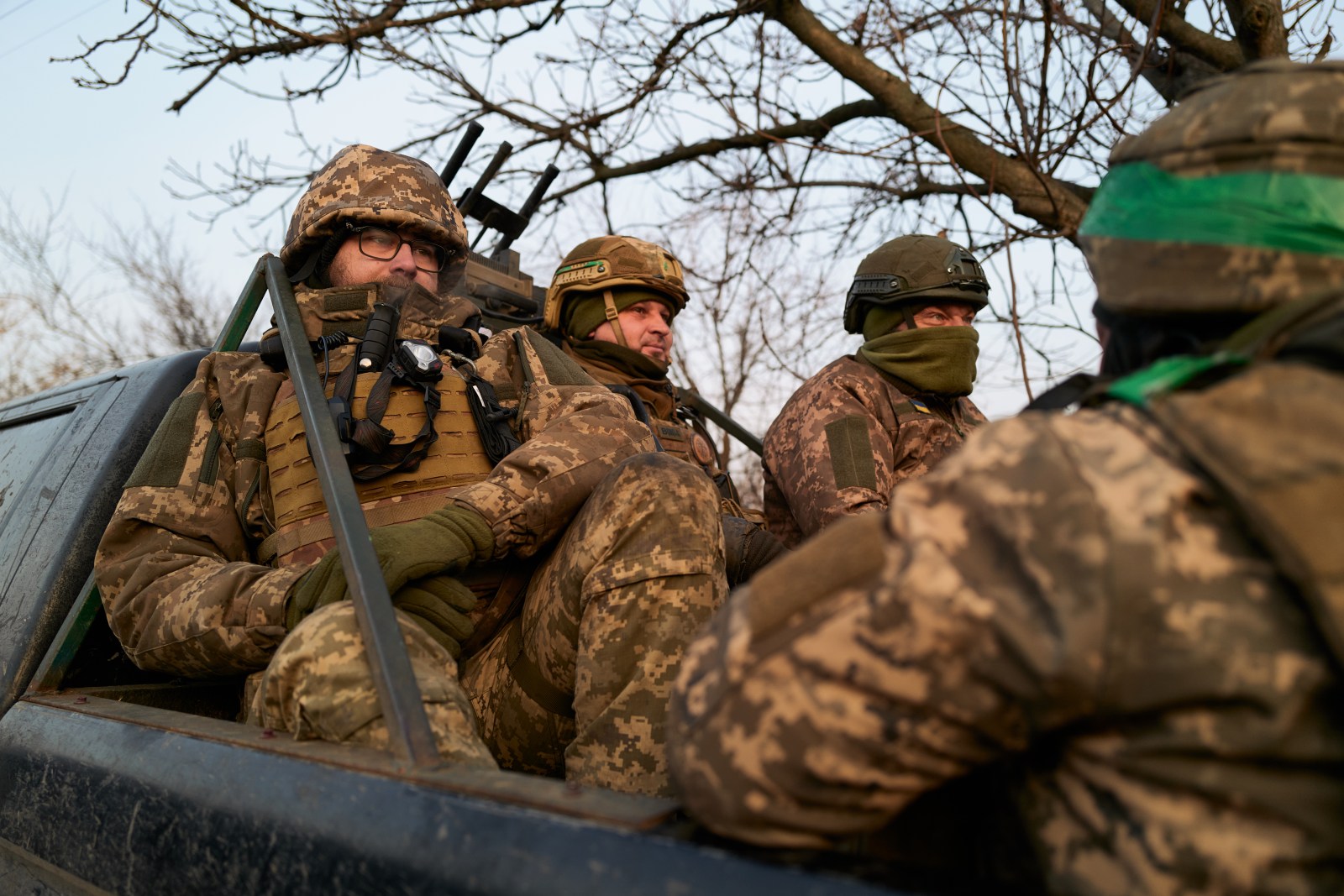
Ukraine’s military has set a precedent by deploying ground robots behind enemy lines as part of its “Operation Vivaldi” counteroffensive. The Third Army Corps announced that attack ground robots were launched from heavy bomber drones deep into Russian territory, functioning as payloads for larger aerial drones.
Unmanned ground vehicles are increasingly significant in Ukraine’s attack strategies, replacing roles traditionally held by infantry. According to Brigadier General Andrii Biletskyi, the Third Army Corps pioneered the use of ground-based robotic systems in this manner. These ground drones are deployed over 10 kilometers behind enemy lines.
While this method isn’t entirely new for Ukrainian forces, it marks the first use of kamikaze unmanned ground robotic systems over such a distance, as reported by RBC Ukraine. Newsweek reached out to the Russian defense ministry for comments on these developments.
Details of Operation Vivaldi
After achieving stealthy gains in the Donetsk region, Biletskyi shared details about Operation Vivaldi, which has been underway over the summer. The operation successfully halted Russian advancements north of Lyman in Donetsk, preventing an attempt to encircle key defensive cities in the Donbas area.
The Second phase of the operation revealed the liberation of three settlements northwest of Lyman, covering 19 square miles, and eliminating 800 Russian troops. Ukrainian forces used drones and unmanned ground vehicles over six miles behind the frontline to disrupt Russian tactical defenses and support Kyiv’s operations.
The operation intended to weaken Russian defenses, allowing Ukrainian troops to move forward. Biletskyi claimed that three Russian armies, including the 20th, 25th, and 1st Tank, were being targeted. Artillery and unmanned systems hit Russian command posts and logistics, while Ukraine’s air defense created a protective shield. The Third Army Corps reported successful entrenchments on liberated borders.
Strategic Analysis
The Institute for the Study of War (ISW) map indicated Ukrainian gains, including recapturing areas like Shandryholove, Derylove, and establishing control over Drobysheve, totaling 48 square miles since the operation’s commencement.
Military analyst Giorgi Revishvili commented that effective planning and execution in Operation Vivaldi demonstrate the potential for successful maneuver warfare, even in environments heavily influenced by drones and surveillance. However, Revishvili emphasized that while Ukraine’s local counteroffensives might succeed, they likely won’t change Putin’s strategic objectives. He predicted limited negotiation prospects until spring next year.
Retired Australian Army Major General Mick Ryan discussed the potential developments of Operation Vivaldi on his Futura Doctrina Substack. He raised the question of whether the operation will expand or consolidate recent gains, suggesting this as a key battlefield question for the upcoming months. Ryan noted the possibility of a shift to a new phase of the war.
Newsweek’s editorial team produced this story with assistance from their AI assistant, Martyn.