
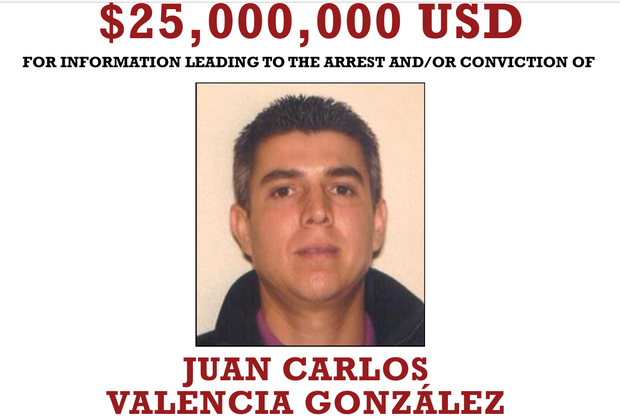
The U.S. State Department has increased efforts to capture Juan Carlos González, also known as “Pelón,” by offering a $25 million reward for information leading to his apprehension. This figure, recently raised from $5 million, highlights the priority placed on disrupting the Jalisco New Generation Cartel (CJNG). This notorious cartel operates extensively in Mexico and beyond.
The Trump administration has committed resources totaling $102 million in rewards directed at various CJNG leaders. Additional actions include restricting the visas of family members and business partners associated with the group. This initiative aims at dismantling the organization’s leadership as part of a broader security strategy involving Mexico and other Latin American countries.
The CJNG, one of eight Mexican cartels identified as foreign terrorist organizations, faced a significant setback when its leader, Nemesio Rubén Oseguera Cervantes, known as “El Mencho,” was killed by the Mexican military. U.S. intelligence contributed to this operation, which resulted in increased violence in Jalisco.
Following Oseguera Cervantes’s death, González, his stepson and a dual U.S.-Mexican citizen, reportedly assumed leadership. González engages in a wide spectrum of activities, from avocado production to drug trafficking. Born on September 12, 1984, in Santa Ana, California, he has emerged as a central figure in the cartel’s operations.
In addition to González, the State Department offers substantial rewards for other figures in the CJNG. These include up to $15 million for Audias Flores Silva, known as “El Jardinero,” and similar amounts for Gonzalo Mendoza Gaytán, “Sapo,” and Julio Alberto Castillo Rodríguez, “Chorro.” Further rewards are available for others such as Ricardo Ruiz Velasco, “Tripa,” and Julio César Montero Pinzón, “El Tarjetas.”
Recently, sanctions were applied to 50 individuals and entities linked to the cartel, including González, effectively freezing assets and curtailing U.S. financial transactions. The CJNG holds a dominant position across 21 states in Mexico, with its influence reaching several international territories, including the U.S.
In a statement, Secretary of State Marco Rubio declared the United States’ commitment to dismantling the cartel’s network. The administration has exerted pressure on Mexican President Claudia Sheinbaum’s government to intensify efforts against cartels. Discussion has even included potential military intervention to combat these groups.
The U.S. Treasury, in June, announced new measures targeting the cartel through a bank alert. The sanctions impacted individuals and companies involved in transportation, financial services, and real estate, tied to a fuel theft ring linked to the cartel. This operation, intended to circumvent Mexican taxes, has reportedly generated significant revenue for the cartel.