
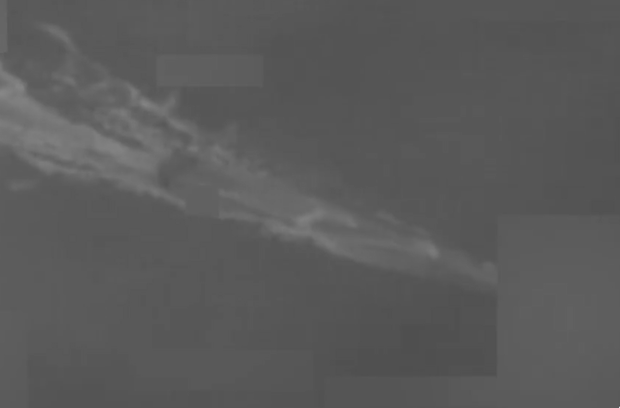
The U.S. military conducted a strike in the Pacific Ocean, targeting an alleged drug-trafficking vessel and resulting in two fatalities. The U.S. Southern Command (SOUTHCOM) revealed that the operation took place on a Sunday, focusing on a vessel that was operating along known narco-trafficking routes in the Eastern Pacific.
Confirmed intelligence revealed the vessel’s active involvement in narco-trafficking,
stated SOUTHCOM in a post. This operation emphasized SOUTHCOM’s commitment to combatting cartels directly.
Accompanying the report was a grainy black-and-white video, showing a boat before an explosion. The style of the boat was not officially identified, but it appeared to be a long semi-submersible vessel often used by international drug traffickers to avoid detection.
Narco subs are popular among traffickers as they can sometimes evade law enforcement. General Francis L. Donovan emphasized the military’s dedication to disrupting and dismantling cartel operations in the region. He stated, We are committed to imposing total systemic friction on narco-terrorists — disrupting their operations, dismantling their leadership, and eliminating cartel terror across the region.
The military operation, known as ‘Southern Spear,’ was initiated in September under President Trump’s administration, marking a stance against Latin American drug cartels. Since then, over 200 people have been killed in related strikes in the eastern Pacific Ocean and the Caribbean Sea.
The legality and effectiveness of these strikes have been questioned, especially as fentanyl, often linked to U.S. drug overdoses, is typically trafficked over land from Mexico rather than by sea. This raises concerns about targeting methods and the actual impact of these operations on drug smuggling activities.
Some U.S. lawmakers have called for the release of unedited footage from these military operations after reports of follow-up strikes on survivors of initial attacks. These actions have sparked discussions on their legality, with allegations of potential war crimes due to the striking of survivors.
The Pentagon has maintained that follow-on strikes were warranted, suggesting that survivors could still pose threats. Meanwhile, the Pentagon’s inspector general plans to review whether the military followed an established targeting framework during these operations. This review, however, focuses on the procedural aspects, not the legality of the strikes themselves.
In another instance in June, the U.S. military conducted a strike in the Caribbean against a boat accused of smuggling drugs, which also resulted in two fatalities and six survivors.