
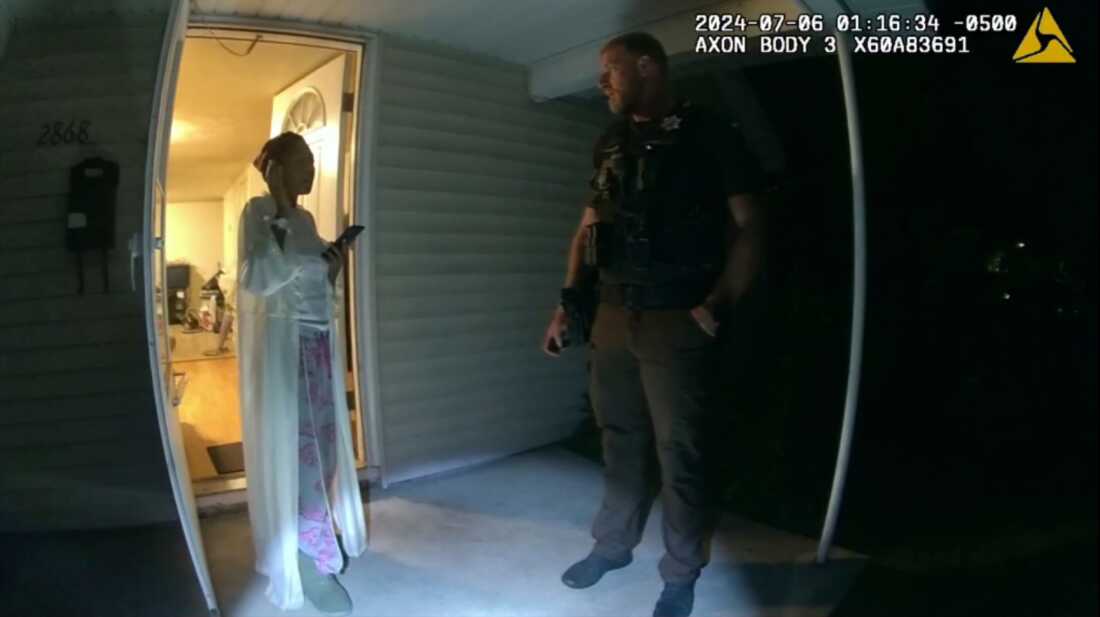
Sean Grayson, a former Illinois sheriff’s deputy, passed away while serving a 20-year prison term. He was convicted of second-degree murder for the fatal shooting of Sonya Massey in her home. Grayson died on Sunday, as confirmed by his attorney Daniel Fultz, who provided no further details about the cause of death.
Grayson, aged 32, was found guilty in October. Massey, a 36-year-old Black woman, had called 911 to report a potential prowler outside her Springfield-area residence. Video from the incident in July 2024 showed Massey crouching and apologizing before Grayson shot her. He received a maximum sentence in January.
Prior to this incident, Grayson had been diagnosed with colon cancer, and the disease had spread to his liver and lungs. In May, he sought medical release under Illinois law for inmates with terminal illnesses, but the Illinois Prisoner Review Board denied his request last month.
The incident escalated quickly when Grayson and another deputy, Dawson Farley, arrived at Massey’s home. Video footage showed Grayson instructing Massey to move a pot of hot water. She expressed her faith by saying, “I rebuke you in the name of Jesus.” Grayson threatened her, drew his weapon, and ordered her to drop the pot. Massey ducked behind the kitchen counter, apologizing just before Grayson fired three shots.
The other deputy, Farley, later testified that he did not perceive Massey as a threat. He only pulled out his gun after Grayson did.
Grayson was dismissed from his position after the shooting and initially faced first-degree murder charges. The jury ultimately convicted him of second-degree murder, accepting his defense that he feared Massey would throw the hot water.
Massey’s death attracted national attention, sparking protests and raising questions about Grayson’s past employment with various law enforcement agencies. These concerns led to the passage of the Sonya Massey Act. This law demands that agencies examine an officer’s previous employment history before hiring.
Following the incident, the Justice Department began a civil rights investigation. It reached an agreement with Sangamon County, the sheriff’s office, and other agencies to implement policing reforms. These changes include improved training for engaging with individuals with behavioral health disabilities and the establishment of a mobile crisis response program.