
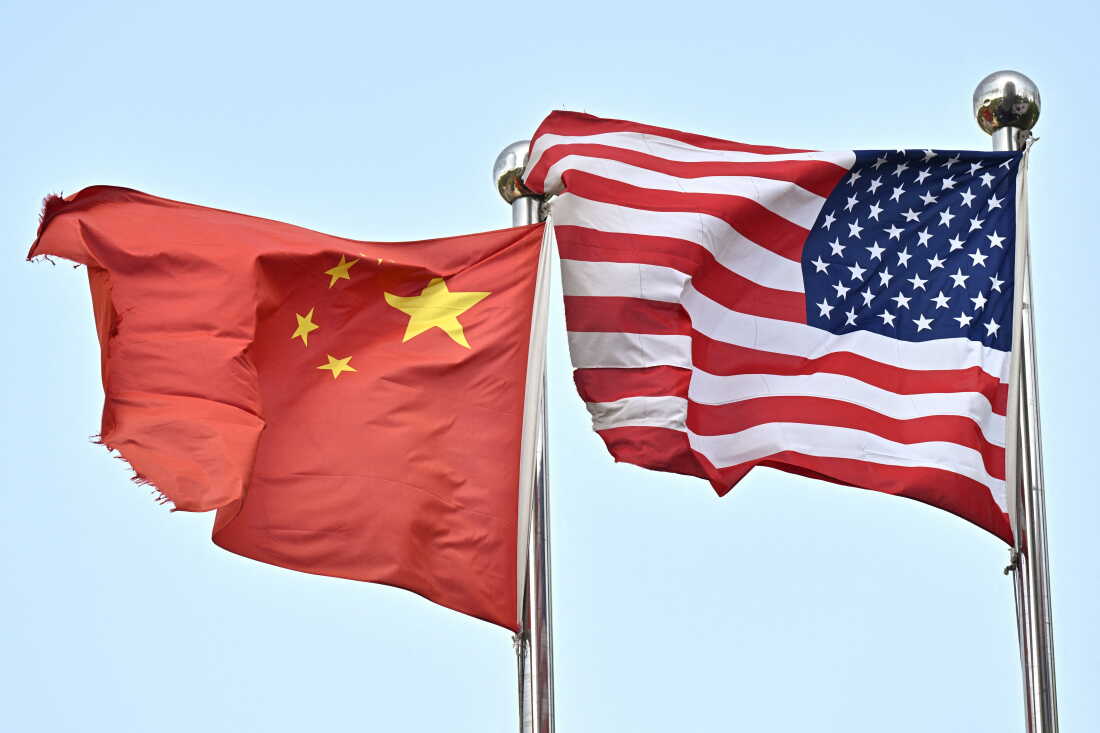
The United States and China are deeply involved in a competitive and cautious relationship over artificial intelligence. As President Trump and Chinese leader Xi Jinping prepare to meet in Washington next Thursday, experts believe there is little chance of altering this dynamic. Recent accusations by the Trump administration against Chinese AI companies for alleged intellectual property theft have heightened tensions. The U.S. government has considered imposing sanctions. China has criticized U.S. export restrictions and suggested these actions resemble a ‘Cold War playbook’ to stifle Chinese AI development.
Despite official tensions, a network of informal discussions, known as ‘Track Two’ diplomacy, continues at the sub-national level. These meetings, often facilitated by think tanks and universities, aim to foster understanding and propose policy recommendations. Sarah Beran, a former U.S. diplomat and incoming president of the National Committee on U.S.-China Relations, emphasized the importance of discussing AI. She noted the current lack of trust adds difficulty to these conversations. The fear of being left behind or AI being weaponized by either side intensifies the complexity.
Track Two diplomacy seeks to bridge understanding between nations by engaging experts in discussions across a broad range of issues. This approach sometimes serves as a low-stakes method to introduce new ideas. Beran recounted how this strategy facilitated the resumption of military communication channels following Nancy Pelosi’s 2022 visit to Taiwan, which had led to a breakdown in dialogue. Informal discussions through Track Two enabled proposals that were later negotiated formally between then-President Biden and Xi, reviving military dialogue in 2023.
Retired Air Force General Jack Shanahan, involved in military AI dialogues through Track Two, highlighted that informal discussions led to an important agreement. Leaders decided that any decision to use nuclear weapons must be human-controlled, not AI-controlled. This decision stemmed from years of quiet and meaningful dialogue.
Samm Sacks, an expert on Chinese technology, noted that Track Two discussions in Shanghai and Beijing have been beneficial. Participants are able to address sensitive topics more openly and without the pressure to reach consensus. She observed that the U.S. and China share common concerns about AI, despite existing tensions over issues like chip export controls and accusations of stolen intellectual property. She emphasized a sense of vulnerability in both countries regarding AI.
Shanahan mentioned a shift in China’s perception as AI technologies evolve. He noted China’s recognition of the risks involved and a willingness to engage in dialogue despite not being at parity with the U.S. This marks a significant shift in China’s approach to AI discussions.
Challenges persist, with each nation’s official concerns differing. U.S. worries focus on cyber vulnerabilities and control over AI, whereas China is concerned with regime stability and self-reliance in hardware production. Experts believe this impacts the nature of Track Two dialogues and tempers expectations for concrete outcomes.
The Center for Strategic and International Studies, another think tank involved in Track Two efforts, uses these dialogues to map out differing perspectives, potential actions, and reactions. While these discussions are valuable, they also require government backing to be effective. Scott Kennedy, an expert in U.S.-China economic dialogues, stressed the need for leadership support to make progress.
As tensions around AI persist, the potential of Track Two diplomacy remains uncertain. A recent push by U.S. AI firms for a global agreement to slow advanced AI development did not receive a favorable response in China. Sacks suggested that high-level signals from both governments about the need for joint efforts on AI safety could be beneficial.
While some Track Two participants feel the current U.S. administration is less engaged than its predecessors, they remain hopeful. Observers await signals from the Trump-Xi meeting in Washington that AI remains a shared concern. Sarah Beran of the National Committee on U.S.-China Relations believes confidence-building measures are essential. Upcoming meetings aim to leverage any positive outcomes from the presidential talks to further AI discussions.