
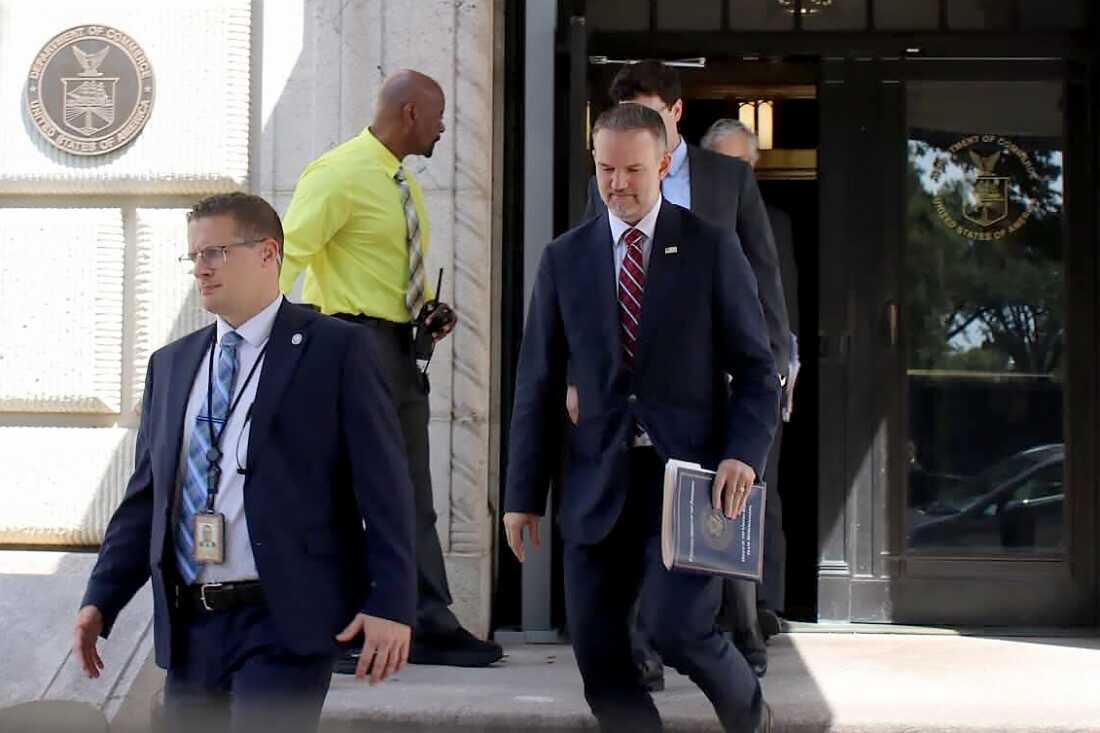
United States Trade Representative Jamieson Greer and Canadian officials met at the U.S. Department of Commerce, signaling ongoing economic negotiations between the two countries. On Monday, August 17, 2026, President Donald Trump announced the postponement of a 50% tariff on $20 billion of Canadian imports, which were imminent as the two nations reached a deal just hours before the tariffs were to begin.
Trump’s announcement, made via his social media platform, offered a window for further negotiations, easing tensions between the historically allied nations. He stated, “I have paused the 50% Tariffs against Canada, that were scheduled to kick in tomorrow morning for a three day period, based on the fact that Canada and the U.S.A., subject to the finalization of documents, have a DEAL!”
If enacted, the tariffs would have affected Canadian products such as hockey sticks and tongue depressors. The political ramifications could have been more significant than the economic ones. Canada had threatened a retaliatory response, with potential levies of its own, sparking a trade conflict between countries that exchanged $880 billion in goods and services last year.
“Substantial progress” had been made but important work remained.
This sentiment was expressed by Canadian Prime Minister Mark Carney, emphasizing that Canada agreed to a three-day pause while negotiations continued. Carney and Trump had multiple phone discussions, including one on Tuesday afternoon, as both countries worked towards an agreement.
Both nations had reasons to seek de-escalation. Last year, the U.S. received nearly 72% of Canada’s goods exports. New tariffs, introduced prior to November’s midterm elections and impacting prices for U.S. consumers, posed a risk for the Trump administration. Voter dissatisfaction with rising living costs already posed challenges.
Ryan Majerus, a partner at King & Spalding and former U.S. trade official, expressed skepticism about any desire to see the tariffs implemented. “There’s a pretty strong push on both sides to find an off-ramp here,” he noted.
Canadian Chamber of Commerce President Candace Laing acknowledged temporary relief provided by the delay but expressed disappointment over the lack of a clear interim agreement. “This limbo state is not anyone’s preferred outcome,” she stated, urging for a swift resolution in negotiations.
Trump’s tariffs, framed as part of a strategy to repatriate manufacturing to the U.S., contrast sharply with past cooperative relations. The imposition of tariffs, paired with contentious narratives about Canada’s status, underscores an aggressive approach consistent with Trump’s second-term economic priorities.
Last year, broad-based import taxes were struck down by the Supreme Court, which deemed Trump’s actions an overreach of presidential authority. In response, Trump explored alternative legal avenues. To target Canada, he invoked Section 338 of the Tariff Act of 1930, allowing tariffs up to 50% on imports from discriminatory trade partners without an investigation.
Section 338, virtually unused since its inception during the Great Depression, grants the president authority to leverage tariffs. With renegotiations of the U.S.-Mexico-Canada Agreement underway, the threat of these tariffs serves as leverage for the U.S. to seek new concessions from Canada.