
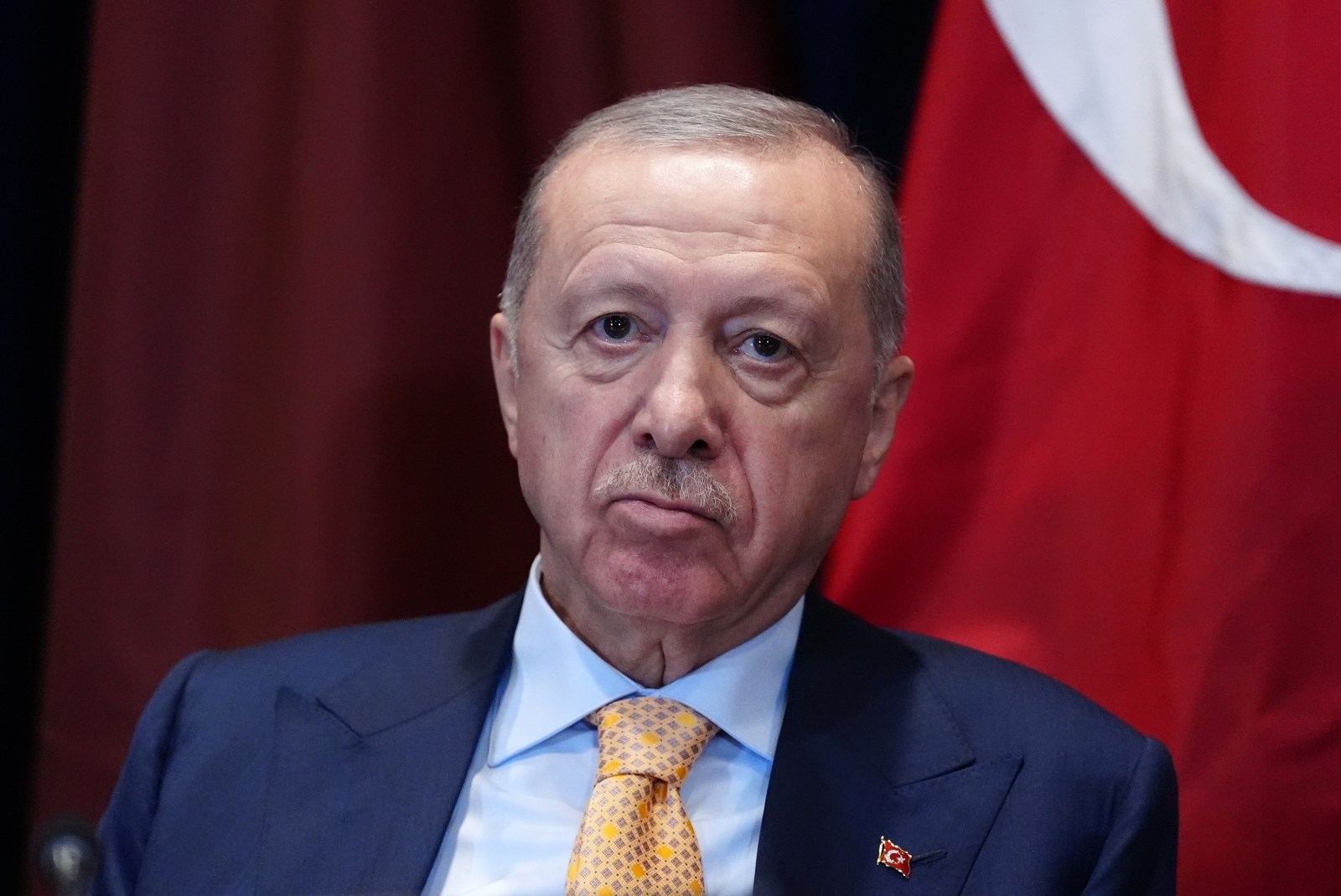
In a recent interview with Newsweek, Turkish President Recep Tayyip Erdogan criticized Israel for spreading a false narrative that portrays Turkey as a threat. Amid escalating tensions between Turkish and Israeli officials, including Israeli Prime Minister Benjamin Netanyahu’s accusations at the United Nations, Erdogan expressed disagreements with the Israeli government on various issues.
Erdogan highlighted his nation’s stance: Turkey does not seek to create conflict. He attributed the negative rhetoric to Israel’s internal political dynamics and election-related factors. Turkey’s opposition, according to Erdogan, is towards policies perceived as contrary to international law and those that destabilize the region.
Erdogan stated, “Recently, a misguided narrative aimed at portraying Türkiye as a new source of threat has been fueled in Israel.” He added, “Türkiye has no hostility toward the Israeli people or toward any other society.”
The Syrian Context
The tension between Israel and Turkey is particularly palpable in Syria. Erdogan supported the new administration of Syrian President Ahmad al-Sharaa after the fall of Bashar al-Assad. Meanwhile, Netanyahu initially welcomed Assad’s downfall due to his ties with Iran but later bombarded Syrian sites.
Israel’s involvement in Syria remains significant, especially in the southwest. Erdogan condemned Israeli military actions as threats to Syria’s sovereignty and regional stability.
Erdogan commented, “We want Syria’s sovereignty, territorial integrity and national unity to be preserved.” He emphasized the negative impact of Israel’s attacks on international law and stability.
Regional Alliances
The rivalry extends to the Eastern Mediterranean, affecting regional alliances. Turkey signed a defense pact with Pakistan and Saudi Arabia, while Israel initiated agreements with Greece, reinforcing defense systems.
Erdogan criticized the defense ties between Israel and Greece but emphasized that Turkey monitors actions that may threaten its security. He voiced preference for diplomacy over conflict, highlighting Turkey’s influence within NATO.
Erdogan stressed, “Türkiye does not view every bilateral relationship as a threat directed against it,” focusing on diplomacy for lasting security.
U.S. Influence
Erdogan’s relationships with U.S. administrations, particularly with Trump, also play a crucial role. Despite shared history with Trump, the Middle East crisis has widened the gap between the U.S.’s regional allies.
Erdogan criticized Israeli military campaigns and called for diplomatic solutions, stating that Turkey-U.S. relations are independent of other nations.
Erdogan remarked, “I do not define Türkiye-U.S. relations through a third country,” asserting open communication with the U.S. on regional matters.
Erdogan underscored the longstanding alliance between Turkey and the United States, emphasizing cooperation in defense, trade, and regional security.