
Europe’s Preparedness for Modern Warfare
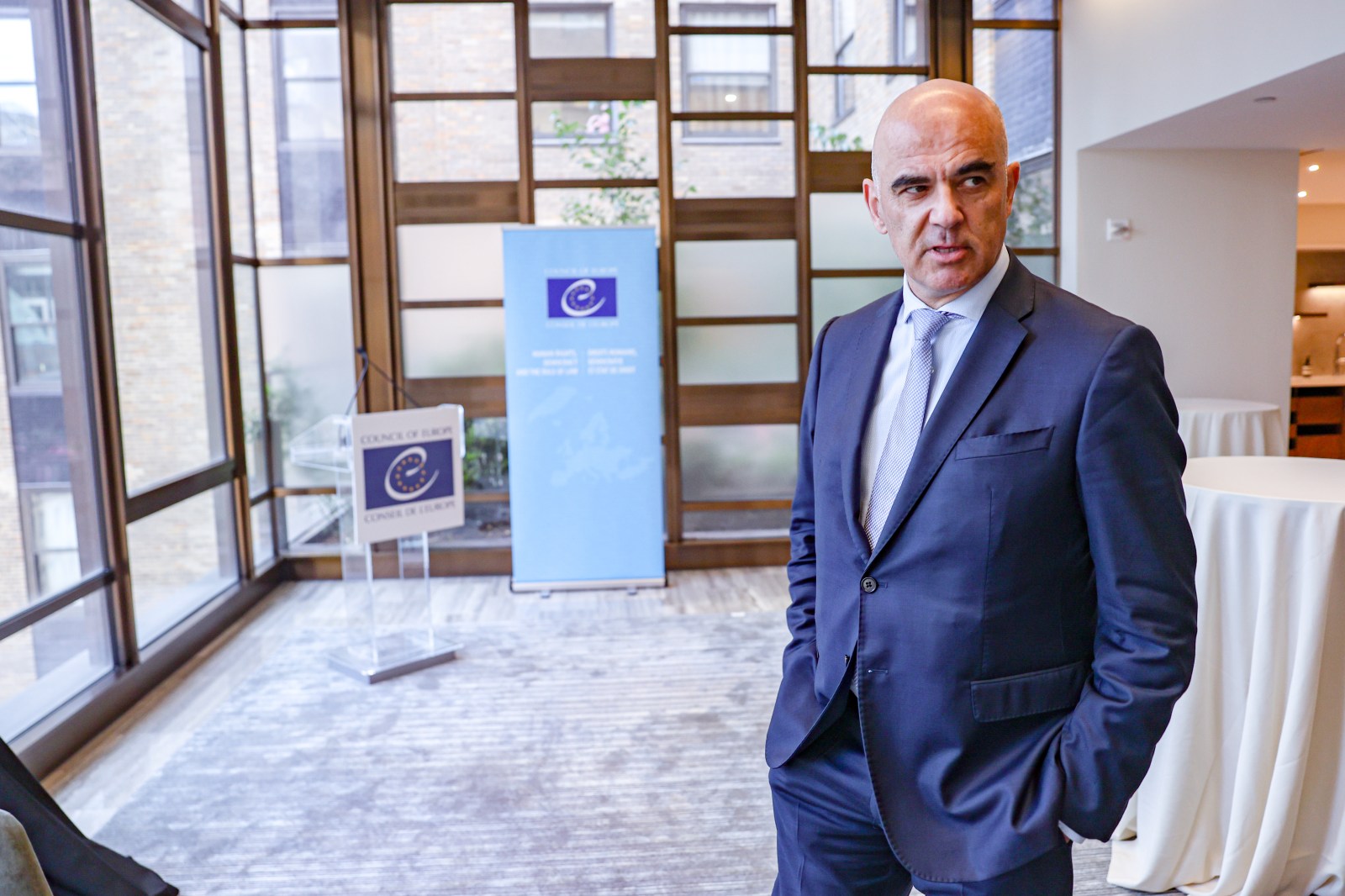
The head of Europe’s largest intergovernmental organization has expressed concerns about the continent’s readiness for modern, hybrid warfare. As tensions with Russia escalate, the need for evolved defense strategies becomes crucial. Council of Europe Secretary-General Alain Berset highlighted Europe’s lack of preparedness to face hybrid threats.
Hybrid Threats on the Rise
Berset, formerly a Swiss president and now leading the Council of Europe, remarked on the changing nature of warfare, as seen in the Russia-Ukraine conflict. Conventional warfare methods like tanks are being replaced by drones, causing destruction from afar at lower costs and with less accountability.
These hybrid threats extend beyond the battlefield, with increasing online interference campaigns penetrating Europe. Such activities exploit political instability, challenging the liberal consensus in Europe.
Berset emphasized, “The most important thing in this context is about information, infrastructure, and information manipulation.” He admitted that Europe has vulnerabilities in its energy systems, security, and general infrastructure, striving to address these weaknesses.
Europe’s Dual Approach
Despite current challenges, Berset sees positive developments. He noted significant institutional evolution over recent years, as European countries work to become independent in armament and defense, witnessing a shift towards stronger defense spending.
Defense budgets across the 27 European Union member states are set to surpass $516 billion this year, marking a 75% increase compared to five years ago. Initiatives like the EU’s ReArm Europe Plan/Readiness 2030 aim to allocate $800 billion more for defense.
Berset stressed that alongside defense investments, democratic security and values need equal attention. He highlighted the urgency in securing the human rights, democracy, and rule of law values championed by the Council of Europe since 1949.
Addressing Political Instability
Berset pointed out the importance of enhancing investment in democratic institutions to prevent extremism from undermining democratic values, as seen in movements like Germany’s far-right Alternative for Deutschland (AfD). This rise signifies nationalist forces gaining traction post-World War II.
Similar right-wing movements are gaining momentum across Europe, including Austria, France, and the Netherlands. Berset noted that while such disruptions are recurrent, Europe’s democracy relies on its ability to “absorb shocks”.
Recent years have witnessed a series of crises, including financial turmoil, inequality, debt issues, and the war in Ukraine. Berset reflected on the effects of social media, AI, and information manipulation. He acknowledged the struggle for citizens to understand the world’s trajectory amidst such rapid changes.
Managing Speech and Free-Speech Principles
Berset stressed the balance between addressing modern challenges and upholding free-speech tenets. He cautioned against over-policing speech, warning that such actions could contribute to future problems. Europe’s approach should focus on empowering democratic security without compromising on free-speech principles.
The Transatlantic Relationship
The current situation presents Europe with a shift in the role of the United States. President Donald Trump’s actions have stressed European rearmament and criticized liberal politics, sometimes endorsing nationalist movements like the AfD.
Berset acknowledged the unpredictable nature of Trump’s policies, which he perceives as creating instability to facilitate deals. Despite this, he affirmed the importance of a strong transatlantic relationship rooted in shared history and goals.
He raised concerns over any potential realignment towards China or Russia, deeming the transatlantic alliance crucial for stability and productive environments. Addressing differences among European countries remains vital to collectively face external threats.
Berset expressed hope that European nations can overcome their differences, considering factors like geography, energy access, education, and defense. Though optimistic, he believed that history shows optimism often leads to favorable outcomes.