
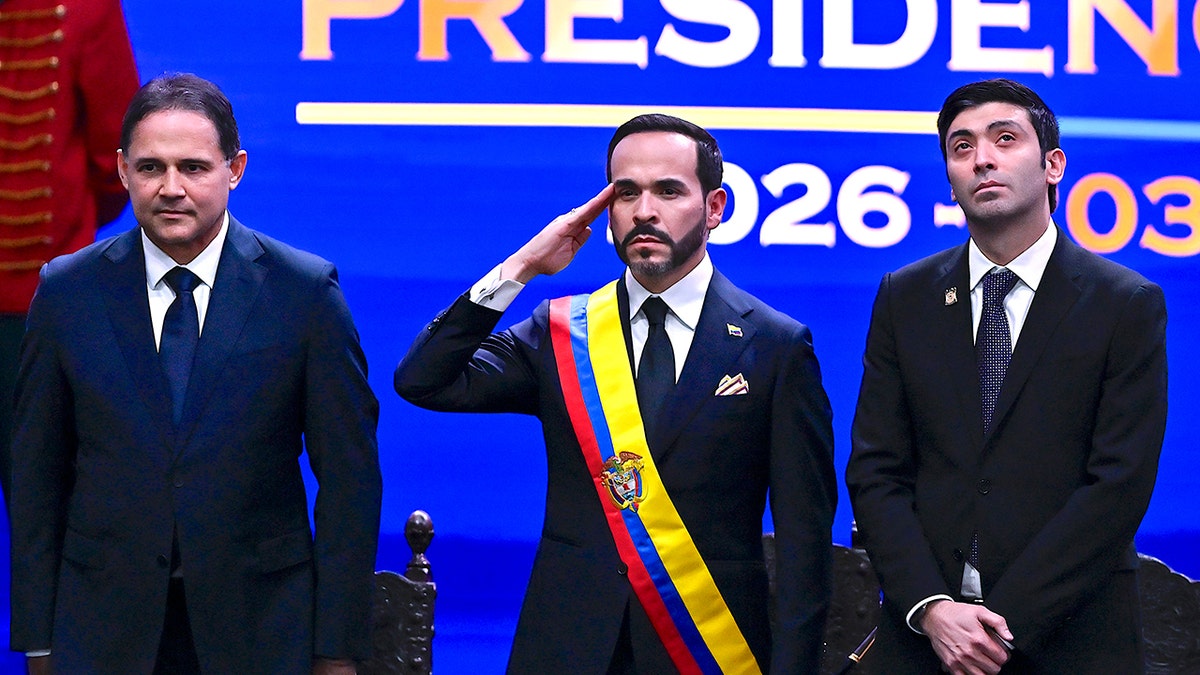
Colombia’s political landscape shifted as conservative President Abelardo de la Espriella took office on Friday. He aims to dismantle much of former President Gustavo Petro’s leftist policies, focusing on security, economic changes, and strengthening ties with the United States.
De la Espriella, nicknamed ‘El Tigre,’ symbolizes one of the largest recent political transitions in Latin America. His inauguration comes after four years of Petro’s ‘Total Peace’ strategy, marked by a rise in coca cultivation and tense U.S. relations. The new president’s challenge is to turn his campaign promises into effective governance.
Several conservative leaders from the region attended the inauguration in Cali, including Argentina’s Javier Milei and Chile’s José Antonio Kast. U.S. Attorney General Todd Blanche was part of the U.S. delegation, along with Spain’s King Felipe VI and FIFA President Gianni Infantino, as reported by the Associated Press.
“I have come to close a long chapter of national resignation and, together with the people, embark on the most profound transformation of our destiny,” De la Espriella announced at the Pichincha Battalion military base in Cali, according to Reuters.
De la Espriella’s first presidential action included joining The Shield of the Americas, established by President Trump. This is part of his strategy to reinforce Colombia’s role as a key U.S. security partner in South America. Colombia’s position influences regional security issues such as migration, crime, and narcotics trafficking.
The new president pledges to rebuild strategic ties with the U.S., restore cooperation with Israel, and adopt a stricter stance against the governments of Venezuela, Cuba, and Nicaragua. However, Camilo Guzmán, executive director of Libertank, highlighted financial constraints as a primary challenge for meeting these goals.
Guzmán described the financial hurdles, “The 2026 deficit is tracking around 6.5–6.7% of GDP, with a financing gap close to $34 billion. Addressing this fiscal situation is imperative before advancing the president’s agenda.”
Colombia’s economy is projected to grow by 2.3% this year, while inflation remains high, according to the International Monetary Fund. This restricts room for new initiatives without major financial adjustments.
Security remains a pressing issue. Violence has risen, with criminal groups extending influence. Guzmán noted, “The first 100 days will focus on law enforcement operations, yet systemic changes take years.”
Political challenges include navigating a fragmented Congress. Although De la Espriella won the presidency, his party holds only five Senate seats. Collaborating with centrist parties becomes crucial for advancing reforms.
Analysts stress the importance of credibility in the initial 100 days. Building a strong administration and fulfilling campaign promises into tangible strategies are key measurements of success. Guzmán concluded, “The first 100 days signal potential changes. Credibility is the asset he can establish early.”
Observers await De la Espriella’s decisions on key policies, such as negotiation with the ELN and restoring full relations with Israel. These initial steps will signal whether he can move Colombia beyond the Petro era despite fiscal, political, and security challenges.