
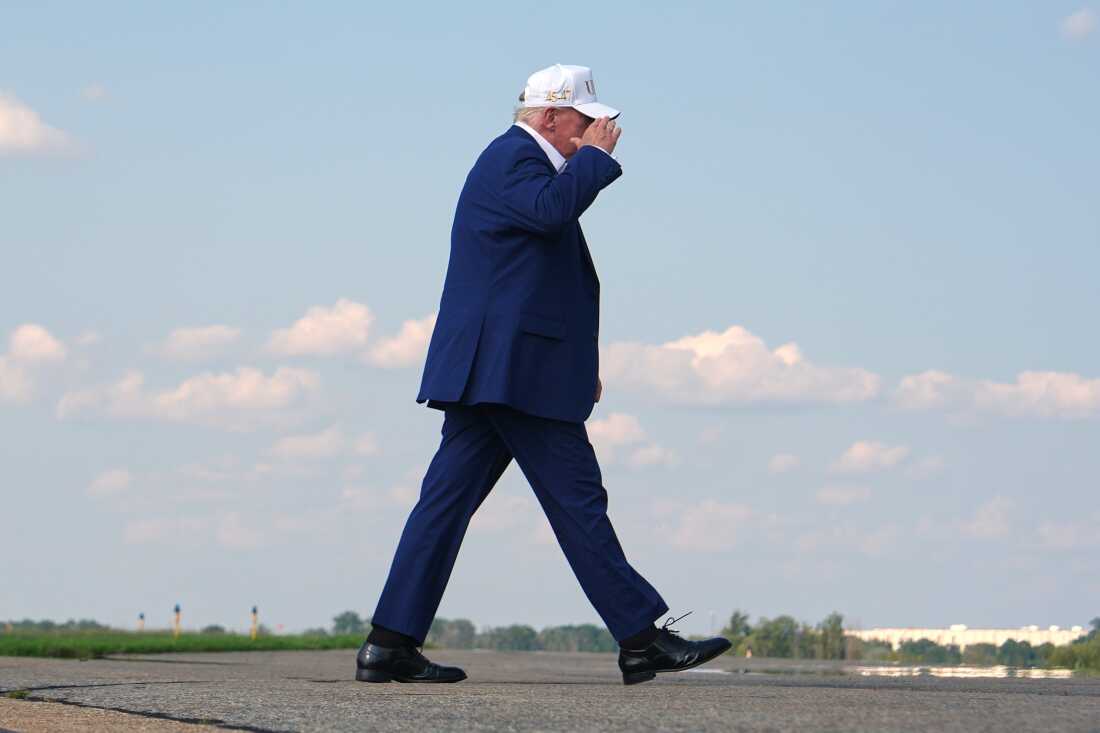
President Donald Trump boarded Air Force One at Morristown Airport in New Jersey on Sunday, August 9, 2026, with a clear economic strategy for his conflict with Iran. Trump stated that economic pressure, following fifty years of failed attempts to deter Iran’s nuclear ambitions, is now his administration’s focus. The aim is to force Iran’s leadership to make concessions by pushing its economy to a breaking point.
The U.S. administration believes months of airstrikes have weakened Iran’s economy. Trump’s new approach includes demanding compensation in peace talks, reflecting a shift in tactics. He asserts that financial pressure will lead Iran to end its nuclear program and fully reopen the Strait of Hormuz, a key passageway for global oil supplies.
High inflation and resource shortages in Iran were noted by Trump, describing Iran as financially broke and unable to meet basic obligations like military salaries. Trump’s assessment of Iran’s inflation rate appears to exceed official estimates, creating concerns about the future economic impact if the conflict continues.
Iran’s response shows a lack of intimidation. Esmaeil Baqaei, the spokesman for Iran’s Foreign Ministry, criticized American reliance on sanctions as ineffective, suggesting that increased sanctions harm diplomatic efforts rather than strengthen them.
Operation Economic Fury
The U.S. initiated “Operation Economic Fury” in mid-April, imposing stricter financial sanctions on Iran. Treasury Secretary Scott Bessent characterized this approach as the “financial equivalent” of military action. However, experts like Richard Nephew argue that sanctions, while useful, require clear objectives to be effective. Trump’s approach is criticized for lacking a consistent strategy.
Despite these challenges, the sanctions and ongoing naval blockade of Iranian ports give the U.S. leverage. Juan Zarate, a former deputy national security adviser, highlighted that sanctions also target third-party countries engaging with Iran, impacting Iran’s economy further over time.
Historically, Trump dismissed the effectiveness of sanctions used by previous administrations. He considered the economic isolation of Iran inadequate to bring about significant change. Although past presidents employed similar tactics, Trump has coupled sanctions with military force, arguing no previous administration has done enough to prevent Iran from developing nuclear weapons.
Economic Impact on Iran and the U.S.
The conflict has severely impacted Iran’s economy, with the International Monetary Fund estimating a 5.4% contraction. Iranian oil exports have plummeted according to the U.S. Treasury Department, dropping to below 500,000 barrels per day. Inflation and economic struggles persist in Iran, while the U.S. faces rising inflation and borrowing costs attributed to the conflict, affecting Trump’s popularity.
A senior U.S. official noted the strategic successes in hindering Iran’s energy sector. The consensus within the administration is that economic and military measures are effective, albeit gradual. The strategy banks on the resilience of the U.S. economy compared to Iran’s prolonged economic challenges.
Defense Secretary Pete Hegseth emphasized the combined power of military and economic tools. Together with Treasury Secretary Bessent, he assured that the U.S. could exert significant pressure to achieve its objectives in Iran.