
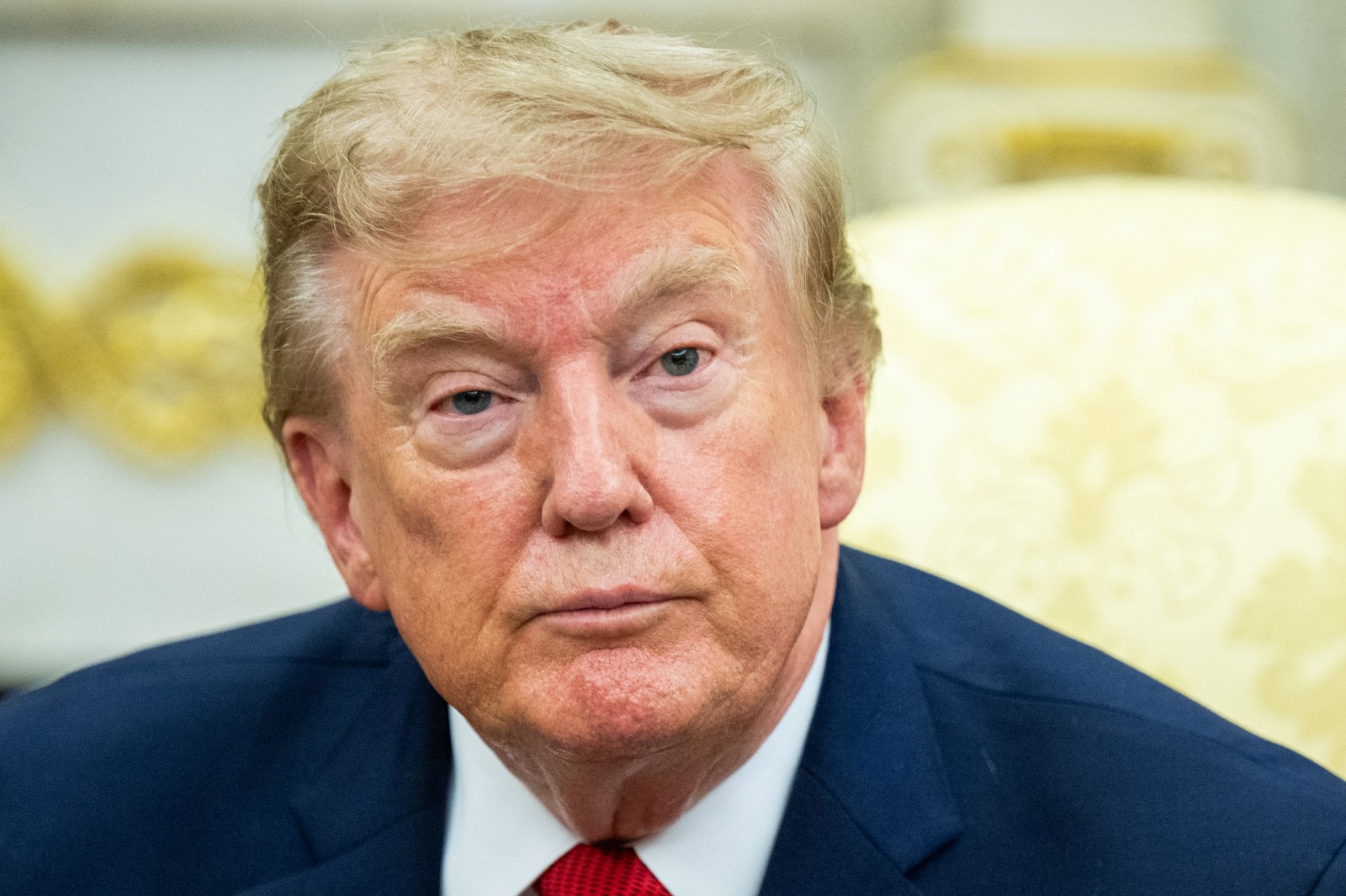
President Donald Trump criticized “fake polls” on Monday, as recent surveys show a decline in his approval rating ahead of the midterm elections. The president’s approval rating can influence the midterms significantly. Historically, presidents with low approval ratings often see their party lose seats during midterms. Democrats aim to frame these elections as a referendum on Trump’s policies, hoping for a victory in the House and Senate.
Economic and foreign policy issues are impacting public opinion toward Trump. Focus on affordability issues was central to Trump’s 2024 campaign and helped him return to the Oval Office. However, inflation remains high, and recent polls reveal dissatisfaction with his economic policies. Additionally, the Iran war has increased gas prices nationwide, affecting his approval rating.
Trump’s Criticism of Polling
In a Truth Social post on Monday, Trump addressed his concerns about polling. He accused the “Radical Left Democrats” of circulating “fake polls” at unprecedented levels. Trump described these polls as “Demoralization Operations,” aimed at discouraging Republicans from voting. He asserted that the “actual” polls are favorable for his administration and claimed national spirit remains high.
Current Approval Ratings
Since Trump’s return to the White House in January 2025, his approval rating has declined. A recent Reuters/Ipsos poll shows 65 percent of respondents disapprove of his performance, while 33 percent approve. The poll surveyed 1,215 adults nationwide and has a ±3 percentage point margin of error.
An Echelon Insights poll reports 40 percent approval and 59 percent disapproval of Trump, surveyed among 1,002 likely voters with a ±3.4 percentage point margin of error. YouGov/The Economist’s poll indicates 35 percent approval versus 61 percent disapproval, surveyed among 1,611 adults with a ±3.4 percentage point margin of error. A Morning Consult poll found 54 percent disapproval and 43 percent approval, in a survey of 2,201 registered voters.
State-Level Approval
Trump’s approval rating has altered across states, according to Civiqs data. He’s struggling in some states he won easily in 2024.
Comparing Approval Ratings
RealClearPolitics’ aggregate shows Trump’s approval at 39.5 percent and disapproval at 57.2 percent. This is a weaker position than during his first term; on August 23, 2018, his approval was 43.5 percent with 52.6 percent disapproval. Former President Joe Biden had a similar standing in August 2022.
Polling analyst Nate Silver noted Trump’s net approval is slightly better than its all-time low of -20.6 but still negative at -19.5. During his first term, Trump’s net approval was -11.6, similar to Biden’s at the same point in their presidencies.
Midterm Implications
Trump’s approval rating poses challenges for Republicans in the midterms, as Democrats remain hopeful they can expand their electoral battleground. Analysts consider Democrats to be favorites for retaking the House, needing only a handful of seats to overcome the Republicans’ narrow majority.
The Senate presents a tougher challenge due to limited opportunities. Republicans hold a 53-47 majority; Democrats need to flip more conservative states like Alaska, Texas, Iowa, and Ohio to win a majority. Vice President JD Vance breaks ties, so Democrats must gain four seats to control the Senate.
Historically, midterm elections show shifts. In 2018, Democrats won the popular vote by nearly 9 points and captured 41 House seats. Prediction markets show favorable readings for Democrats in the House, while opinions are split for the Senate.
Future Outlook
Trump’s approval rating will continue as a significant metric ahead of the November 3, 2026 midterms. Economic conditions and the Iran war’s course will be key in shaping public perception and whether Trump’s approval can recover.
For further inquiry, contact Newsweek editors Jason Lemon and Gray R. Thomas.