
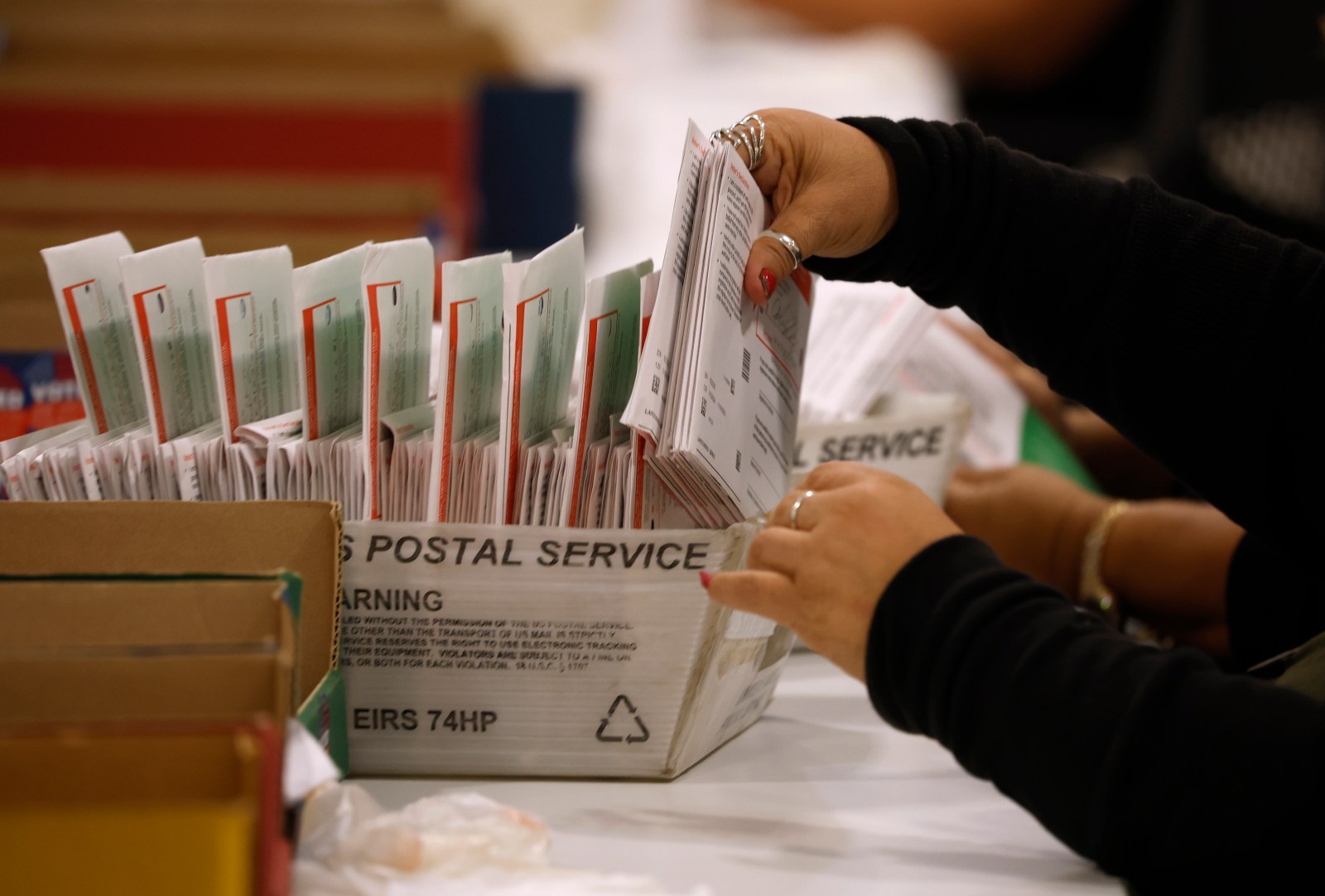
President Donald Trump’s efforts to impose new restrictions on mail-in voting faced a recent development. As the first ballots for the November midterm elections are set to be sent soon, the administration confronts a significant challenge. The Supreme Court lifted an injunction against parts of Trump’s March executive order aimed at tightening federal oversight of mail-in voting. Although this was seen as a legal victory for Trump, it wasn’t entirely conclusive.
The conservative-majority Supreme Court determined that Democratic-led states challenged the executive order prematurely, leading to the lifting of the injunction. However, another injunction concerning the legality of Trump’s mail-ballot provisions remains intact. The Court emphasized this in their ruling, quoting, “The Court’s disposition of this application does not mean that any measure taken by the Government to implement the Order will necessarily be lawful.” This separate nationwide injunction prevents the USPS from applying Trump’s mail-ballot provisions for the November election.
Challenges Ahead
With North Carolina scheduled to send ballots to absentee voters on September 4, time is becoming a critical factor. The administration could win the legal war on mail-in voting, yet the race for the midterms might be lost. President Trump’s executive order from March 31 outlined several changes to federal election management.
The order mandates the Department of Homeland Security, collaborating with the Social Security Administration, to provide state-by-state lists of voting-age citizens to election officials. Additionally, election officials must submit voter information to USPS before accepting outbound mail ballots. It calls for stringent checks on voting fraud allegations and demands a standardization of mail-ballot envelopes with unique tracking barcodes.
For Trump and Republican candidates, this final provision holds significant importance. Judge Indira Talwani’s injunction prevents USPS from rejecting ballots that don’t adhere to these new standards. According to USPS policies, once a ballot enters the mail system, it cannot be stopped or delayed.
As states begin issuing ballots to military and overseas voters, the injunction could mean a substantial part of the election follows existing protocols. An injunction lift after mailing begins will not allow USPS to retrieve ballots already in the system. Implementing the new system requires compliance with envelope and barcode standards, posing further challenges.
Potential Changes
If the injunction is removed promptly, USPS could still enforce the regulations on unmailed federal ballots. Failed compliance could result in rejected and returned mailings, requiring corrections before resubmission. Mail voting constituted nearly a third of the turnout for the 2024 presidential election, with almost 48 million ballots reported returned by voters.
The regulations are not confined to the midterms. If prevailing, they would apply to all future federal elections, excluding primaries and those covered by laws for military and overseas voters. Long-term, no state can argue against implementing barcode, envelope, and data standardization requirements.
Broader Implications
Even if Trump’s rules miss affecting the midterms, the ongoing battle could extend beyond Election Day. Public trust in the U.S. electoral process is fragile, with only 55 percent of Americans confident in the fair and accurate conduct of the midterms.
The administration contends that the new postal rules aim to minimize fraud risks and sustain public confidence. Despite his own Justice Department finding no election-changing fraud in 2020, Trump continues to blame mail voting for significant losses. Should GOP candidates perform poorly in the upcoming midterms, Trump could leverage the injunction as a political weapon.