
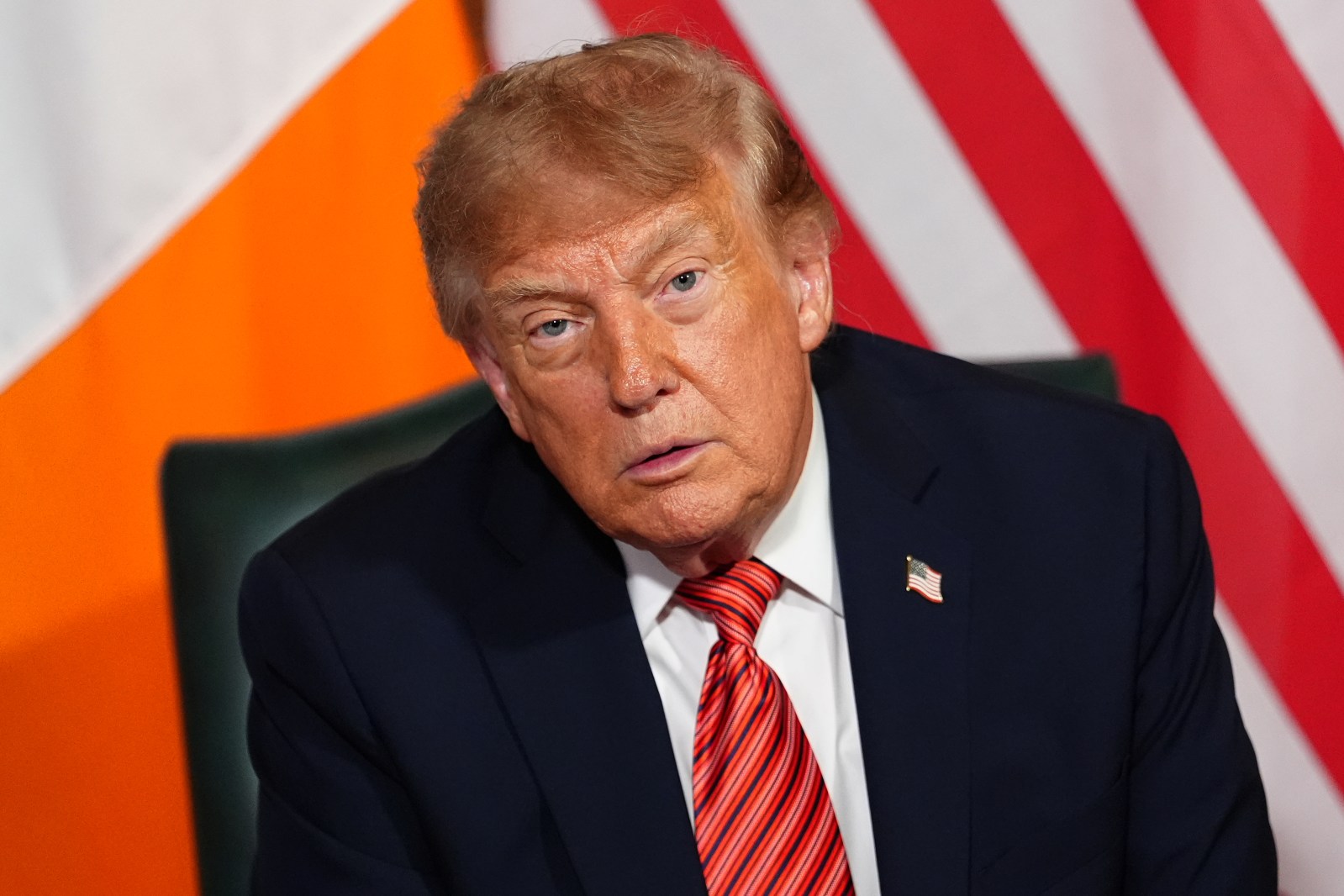
President Donald Trump’s approval rating among college-educated Americans has seen a notable decline recently, posing potential challenges for Republicans aiming to maintain control of Congress in the upcoming elections. In a series of Economist/YouGov polls, Trump’s approval among college graduates dropped from 34% in the August 21-24 session to 31% during August 28-31, and further down to 30% in the September 4-8 poll. Concurrently, the disapproval rate increased from 63% to 69%, expanding Trump’s net deficit with this group from 29 points to 39 points.
Significance of the Shift
This shift is politically significant. College graduates form a crucial segment of the Democratic coalition, while Trump’s earlier victory relied more on voters lacking four-year degrees. According to Pew Research Center, about two-thirds of Trump’s supporters did not hold a college degree. In contrast, college graduates comprised 48% of former Vice President Kamala Harris’ supporters.
The surveys do not specify reasons for the decline. However, consecutive negative trends might indicate challenges for Republican candidates, especially those reliant on college-educated voter turnout. Historically, polls have sometimes underestimated Trump’s popularity.
Commenting on Trump’s broader approval ratings, White House spokesperson Davis Ingle highlighted that nearly 80 million Americans elected Trump in November 2024, backing his agenda.
Poll Insights
The falling approval ratings were driven by both a reduction in the number of approving college graduates and an intensifying opposition to Trump. The August 21-24 Economist/YouGov poll indicated that 34% of college graduates approved of Trump’s job performance, while 63% disapproved, with 54% strongly disapproving. This survey included 1,536 U.S. adults, of which 504 were college graduates.
By the end of August, Trump’s approval rating among college graduates declined to 31%, with disapproval rising to 68% and 57% expressing strong disapproval. The September poll recorded another minor change: 30% approval, contrasted with 69% disapproval, with strong disapproval at 61%. Conversely, among those without a degree, 41% approved and 57% disapproved, offering Trump an 11-point approval margin.
On specific issues, Trump fared poorly with college graduates in the latest poll. Only 28% approved of his economic performance, while 72% disapproved. His inflation management received even less support, with 25% approval. Ratings on taxes and spending were also negative among college-educated respondents.
The polls had overall margins of error between 3.4 to 3.5 percentage points, and YouGov did not release separate error margins for college graduates. Despite this, the continuous results portray a 10-point decline in Trump’s net rating within three weeks.
Implications for Midterms
The same polls highlighted a stronger inclination towards Democratic congressional candidates among college graduates. In early September, 57% of college graduates planned to vote Democratic, against 28% favoring Republicans, marking a 29-point Democratic lead. In comparison, Republicans led 39% to 33% among voters without degrees.
Voter turnout prospects also differ by education level: 78% of college graduates intend to vote, versus 67% of those without degrees. These patterns suggest an advantage for Democrats among college-educated voters, though national polling alone cannot determine the outcomes of individual congressional races, which will be influenced by local issues and specific candidates.
For further details, reach out to Newsweek editors Ben Kelly and Robert Greenall.