
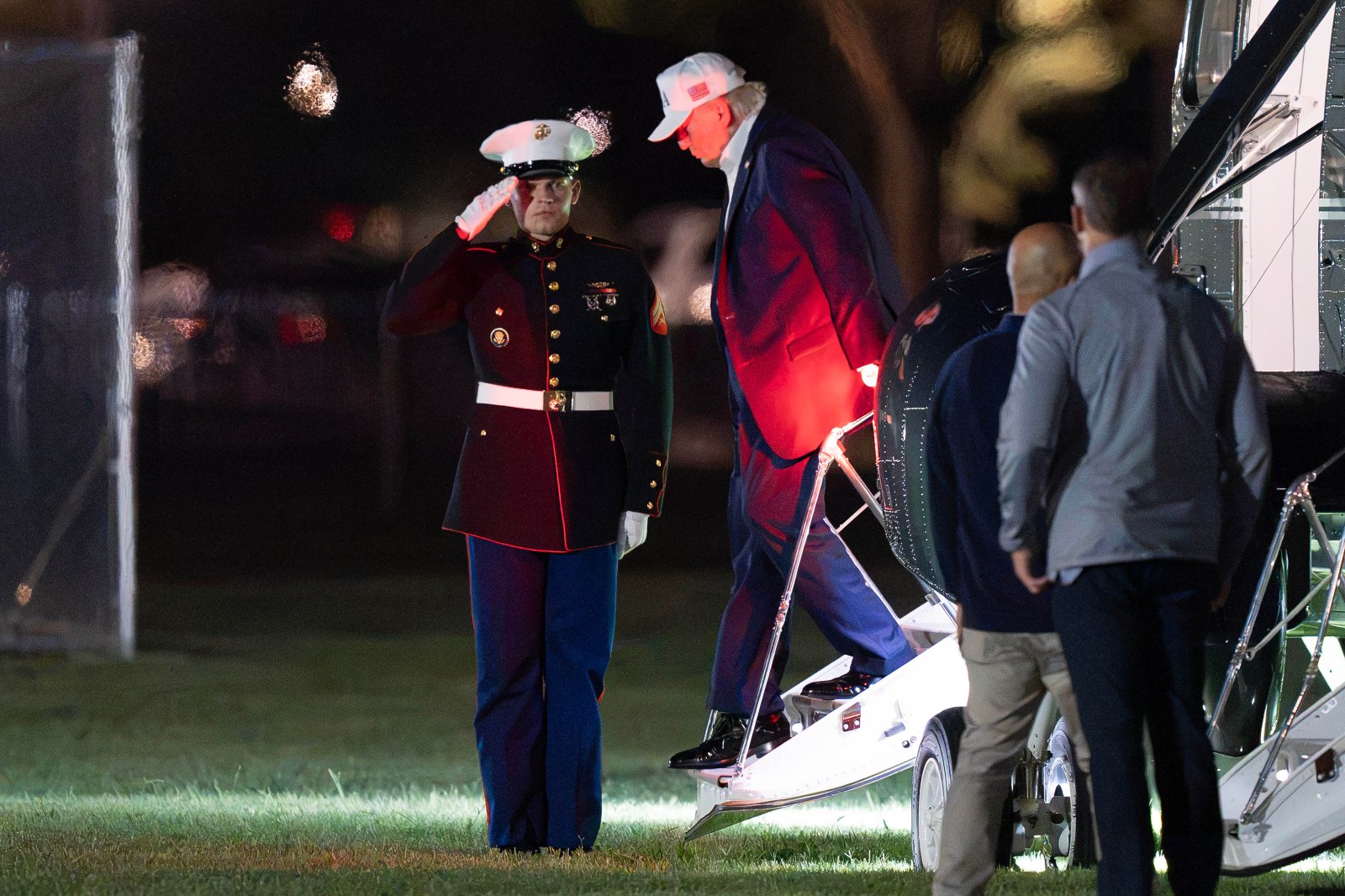
Donald Trump abruptly ended his weekend retreat at Camp David, Maryland, foregoing his planned schedule to return to Washington, D.C. early. This decision followed a State Department warning about potential rapid escalation in the Middle East’s security situation.
Initially set to leave Camp David on Sunday, Trump landed at the Ellipse near the White House just before 8 p.m. Saturday, according to a White House pool report. Although the White House did not officially provide a reason for the early departure, increased tensions in the Middle East are evident. Houthi rebels have claimed responsibility for recent attacks on Riyadh, Saudi Arabia’s capital.
A new security and travel alert from the State Department emphasized heightened risks in the region, advising Americans to stay vigilant. The warning underlined potential disruptions such as flight cancellations, airspace closures, and travel issues, urging heightened awareness for U.S. residents and travelers.
Trump’s time at Camp David began late on Friday, with no public events lined up for the weekend. The last-minute change marks a notable departure from scheduled plans, as seen in previous adjustments like Trump’s canceled visit to his golf club in New Jersey during intensified U.S.-Iran negotiations.
This alteration came on the heels of heightened activities involving Yemen’s Houthi rebels, who have claimed drone and ballistic missile strikes targeting Saudi Arabia. A statement from the group revealed operations against energy facilities and Riyadh, contributing to delays reported at the airport.
Houthi military spokesperson Yahya Sarea detailed successful operations against the Saudi capital, affecting facilities of the state-owned energy entity, Saudi Aramco. The U.S. State Department underscored the threat of Iranian-supported Houthi hostilities toward Saudi Arabia, cautioning unsettled, quickly evolving conditions.
Trump’s anticipatory departure coincided with the interception of an unauthorized aircraft near Camp David. The Defense Visual Information Distribution Service (DVIDS) confirmed that NORAD F-16 jets dispensed flares to alert the pilot, ensuring the aircraft’s safe exit from the area.
In response to developments in Saudi Arabia, the State Department issued fresh security alerts across embassies in the region, including Lebanon, Iraq, and the United Arab Emirates.
The advisory cautioned American travelers about rapidly shifting dynamics, stressing the importance of monitoring airport operations and staying informed through local media. Advisories recommend alertness at locations linked to the U.S. following prior attacks on U.S. diplomatic sites.
The travel advisories specify:
- Level 4: Do not travel – Iran, Iraq, Lebanon, Syria, Yemen
- Level 3: Reconsider travel – Bahrain, Israel, The West Bank and Gaza, Jordan, Kuwait, Oman, Qatar, Saudi Arabia, United Arab Emirates
- Level 2: Exercise increased caution – Egypt, Turkey
For further information on this report, contact Newsweek editors Daniel Orton and Cristina Diciu.