
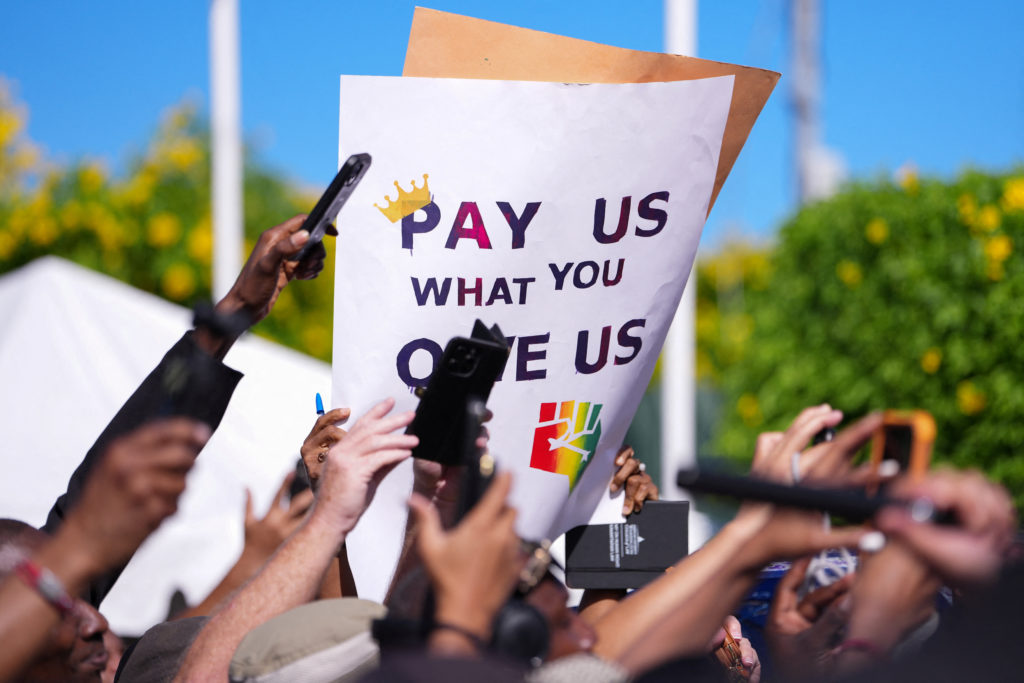
As King Charles III embarks on a tour of the Bahamas, Guyana, and Antigua and Barbuda, he faces a persistent challenge. The legacy of slavery linked to the British throne continues to demand acknowledgment. For centuries, the monarchy presided over the enslavement of millions of Africans in the Caribbean and North America. Calls for Britain to apologize and offer reparations persist, yet these demands remain unmet.
King Charles is expected to describe slavery as an ‘atrocity that forever stains our history,’ a sentiment he expressed recently at a youth rally in Nassau, Bahamas. Historians and critics, however, view these comments as insufficient. Brooke Newman, historian and author of ‘The Crown’s Silence: The Hidden History of the British Monarchy and Slavery in the Americas,’ expressed that such remarks fail to spark needed dialogue.
‘It doesn’t create dialogue,’ Newman noted. ‘People are frustrated by being told the matter is off the table.’
The monarchy’s links to slavery date back to 1563. Newman documents these connections extensively, illustrating how British monarchs were more than passive overseers. Queen Elizabeth I played an active role by supporting sea captain John Hawkins’ early slave-trading efforts. In exchange for aiding Hawkins, the queen received profits directly from the transatlantic slave trade.
The trade began with commodities like gold and ivory but soon shifted to human lives. Nearly a century later, King Charles II expanded these efforts. His establishment of the Royal African Company marked deeper royal involvement. The company, granted exclusive trading rights in West Africa, rapidly pivoted to the trade in enslaved Africans.
Reparations demands from nations affected by slavery have intensified. Recent UN resolutions have called for full apologies and compensation for historical and ongoing injustices. Charles, representing government policy, will not issue an apology during his tour. Craig Prescott, a constitutional law expert, highlights this constraint, noting the government’s stance against reparations.
‘It’s a longstanding policy…’ Prescott said, explaining the financial implications that deter the UK from pursuing reparations.
Charles’ comments, however, must remain sensitive and considerate of how they may be perceived throughout the Caribbean and the broader Commonwealth. The Commonwealth is a collective of 56 nations, many previously under British rule. Out of these, 14 still recognize the British monarch as head of state.
The final days of the king’s tour coincide with a significant Commonwealth summit in Antigua and Barbuda. Hilary Beckles, a Caribbean reparations advocate, has urged Charles to address slavery not as a monarch, but as an individual. Beckles emphasizes the personal and familial legacy of wealth derived from slavery.
‘The wealth he is passing on… came out in significant sums from this process,’ Beckles asserted during a recent press briefing.
Britain has previously confronted these issues, including during the 2007 commemoration of the slave trade’s end. The event was disrupted by a protester calling for an apology, highlighting public discontent. Newman considers these ongoing challenges significant. The history and impacts of slavery and colonialism cannot be superficially addressed and forgotten.
‘The afterlives of colonialism and slavery are still with us,’ Newman concluded.