
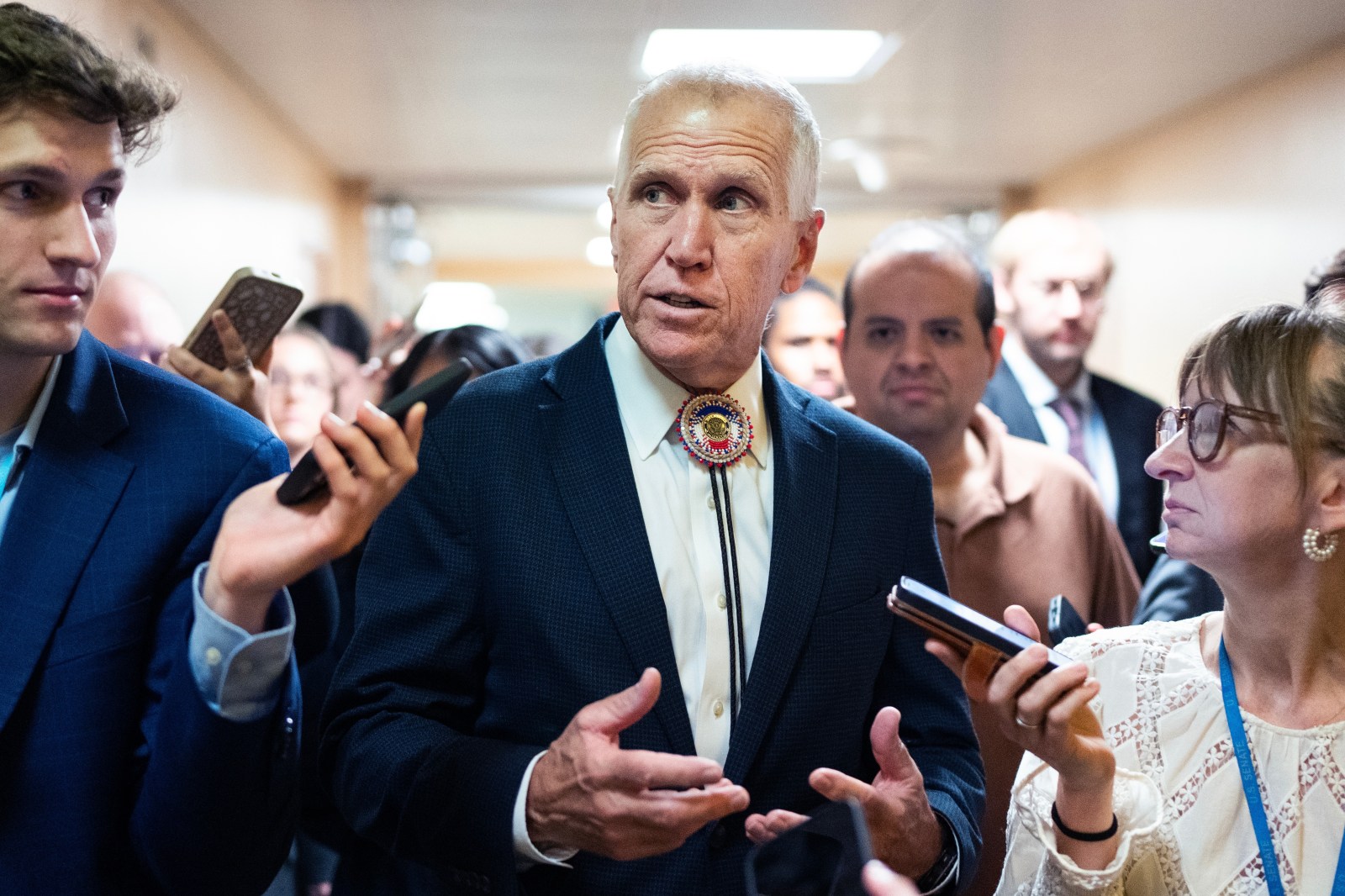
President Donald Trump visited Greenville, North Carolina, to campaign for Republican Senate nominee Michael Whatley, who is vying for the seat of retiring GOP Senator Thom Tillis. Tillis has voiced concerns about potential Republican losses in the upcoming midterms, suggesting the party might lose the House and struggle to maintain the Senate majority. He has highlighted the date of the November 3 election on his phone with a label warning of the impending challenges.
The president’s visit to North Carolina is a strategic move to rally support in key battlegrounds. Whatley, previously the Republican National Committee chairman, is up against former Democratic Governor Roy Cooper in this highly contested 2026 midterm race. Republicans aim to counter a Democratic surge, while Democrats view North Carolina as a prime opportunity to gain a Senate seat. With Democrats needing to defend their current seats and flip four Republican seats, the stakes are high.
President Trump is scheduled to speak at Pitt-Greenville Airport. The event underscores the GOP’s efforts to generate enthusiasm and secure support for Whatley, despite a recent poll showing Cooper with a significant lead over Whatley among likely voters.
North Carolina Senate Race: Michael Whatley vs. Roy Cooper
North Carolina remains a pivotal battleground, with the last Democratic Senate win in 2008. Governor Cooper has garnered popularity during his two terms, presenting a formidable challenge for Whatley. The Republican nominee faces scrutiny, as Tillis argues that Whatley’s past roles may hinder his appeal to unaffiliated voters. The GOP has adjusted its financial strategy, redirecting funds initially earmarked for Whatley to other races.
Tillis Critiques Trump’s Advisors
In an interview, Tillis criticized Trump’s advisors, including Defense Secretary Pete Hegseth and Health Secretary Robert F. Kennedy, alleging they poorly advise the president. He emphasized the importance of changing Trump’s inner circle to influence his decisions, expressing concern over some of the administration’s controversial actions.
Focusing on undecided voters, Tillis warned that Trump’s current policies, such as trade wars and foreign policy threats, may alienate them. He foresees potential Republican setbacks in the House but maintains that Senate control remains a possibility.
Republican Challenges Post-2026
Tillis expressed doubt about the longevity of Trump’s coalition beyond his presidency. He suggested that many of Trump’s supporters may not align with the Republican party’s conservative agenda long-term. Looking ahead to the 2028 presidential election, Tillis emphasized the need for the party to adapt after the midterms to avoid further electoral challenges if dominated by loyalty to Trump.