
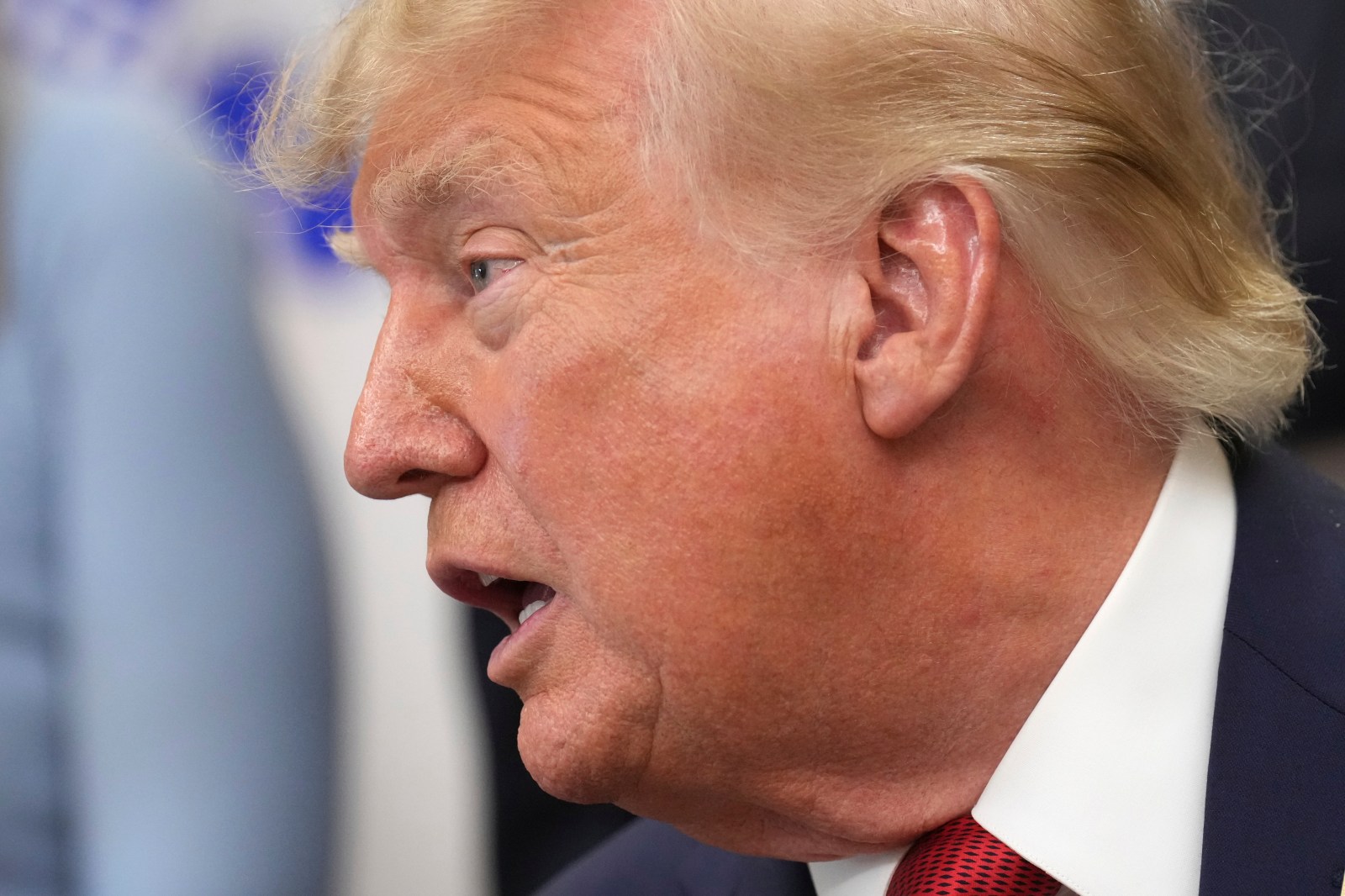
President Donald Trump announced the creation of an “AI Force” and the appointment of an artificial intelligence “czar.” His proposal reflects a significant change from his previous stance against new regulations in the tech sector.
In a Truth Social post, Trump revealed this initiative aims to manage AI without stifling its innovation. He stated that the administration will avoid hindering the growth of the AI industry and instead support and monitor its progress. Trump believes existing laws can handle misconduct by AI companies without new regulations.
Trump emphasized that the AI Force will mirror the Space Force, a success from his first term. He plans to announce the AI “Czar” soon, seeking “high I.Q. individuals” for the role. AI is portrayed as holding potential equal or surpassing that of past revolutions, possibly contributing up to 25% of the U.S. GDP. The president stressed the importance of maintaining the U.S.’s lead over China.
The proposal lacks details about structure and staffing but comes as AI becomes central to U.S. economic and national security policy. Tech leaders like Dario Amodei of Anthropic, Sam Altman of OpenAI, and Elon Musk support stronger safeguards and slower development of advanced AI systems to ensure safety.
Trump views AI as a strategic competition with China, warning of the need for U.S. leadership. This announcement followed Trump’s dismissal of concerns about advanced AI’s risks and his critique of additional oversight as a “hoax.”
“The opportunity is not simply to create another government organization,” said John Walsh, chief technology officer for government and critical infrastructure at IGEL. He stressed creating a collaborative ecosystem around AI safety and security involving government, industry, researchers, and insurers.
Walsh noted the automotive industry’s regulatory model, suggesting AI safety and security standards that can create competitive advantages. Such standards and certifications could promote international adoption, benefiting the U.S. and setting a practical requirement for trustworthy AI development.
Walsh warned about the transition from generative AI to agentic AI, which can interact with systems and infrastructure, necessitating a disciplined approach to engineering trust, identity verification, and security.
Calls for AI regulation are rising across sectors. Amodei cautioned against rapid AI development, advocating for a measured pace. Altman and Musk supported calls for more cautious advancement in AI.
A warning from AI researcher Jacob Coxon on potential existential risks further highlights concerns, leading to resignations and debates about responsible AI development practices. Coxon pointed to risks of “superhuman systems,” emphasizing U.S. leadership in AI safety and security measures.
Lawmakers from both parties propose federal AI legislation to address security and misinformation threats. Senator Bernie Sanders and Representative Anna Paulina Luna have vocalized the urgency for regulation and discussions. Bipartisan legislation aims to empower developers and the Secretary of Homeland Security to intervene with AI systems deemed harmful.
As the U.S. prepares discussions with China, the AI Force proposal could influence domestic and international policy on governing powerful AI systems.