
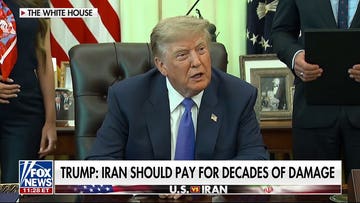
Former President Donald Trump has called on Iran to pay reparations for damages he claims the regime has caused over several decades. Trump is focusing on economic measures to pressure Iran, particularly as tensions around the Strait of Hormuz rise.
Trump’s demand for reparations follows a series of statements where he criticized the Iranian regime for its actions and influence in the region. He outlined what he views as a history of damaging behavior from Iran, suggesting that reparations should be part of rectifying these past actions.
The demands come amid ongoing discussions about the U.S.-Iran relationship, with Trump suggesting a shift in strategy to increase economic pressure. This move signals a continued focus on using economic tools to influence Iran, rather than military engagements.
“They owe us for so many things they have done over the years,” Trump reportedly stated, emphasizing his view on the matter.
Trump’s comments reflect a broader strategy that prioritizes economic pressure over conventional military approaches. This strategy aligns with previous efforts to use sanctions and economic isolation as tools to coerce changes from the Iranian government.
The complex relationship between the U.S. and Iran continues to be influenced by historical events, current geopolitical dynamics, and the domestic political landscape in both countries. Trump’s demand for reparations fits within this larger context of ongoing tensions and policy debates.