
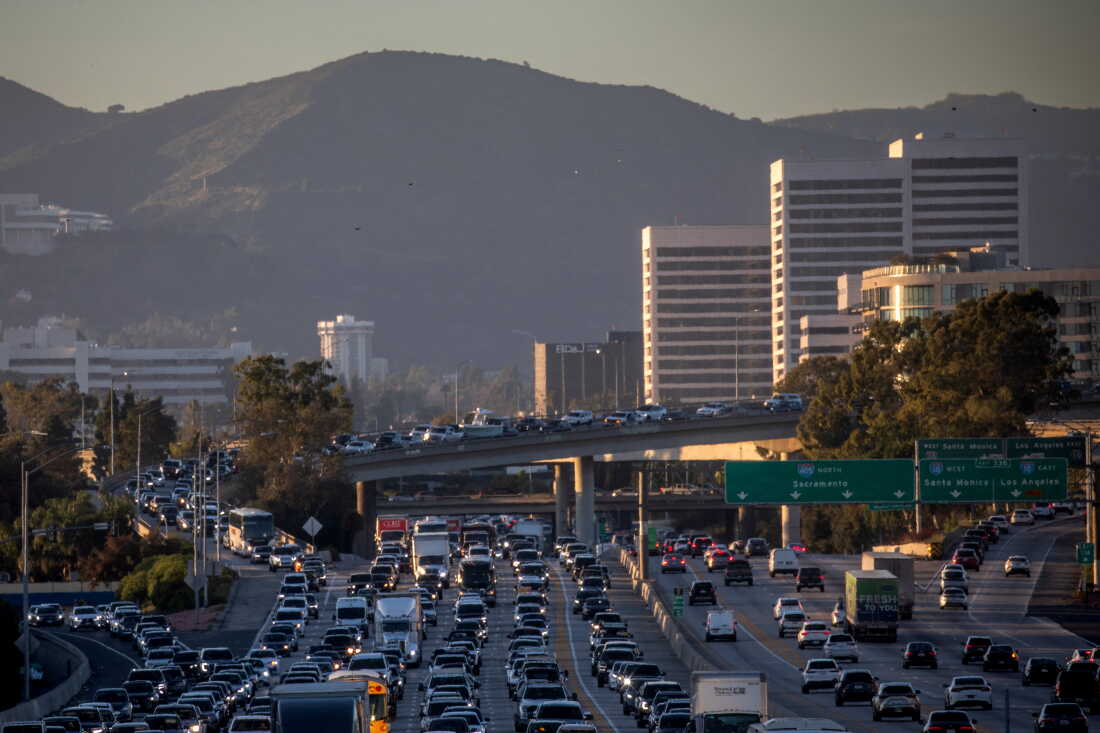
On February 13, traffic flowed along the 405 Freeway in Los Angeles. Recently, the Trump administration announced a rollback of fuel efficiency standards for American carmakers. The Corporate Average Fuel Economy (CAFE) standards now require carmakers to improve fuel efficiency by 1% annually, targeting 34.9 miles per gallon by 2031. This contrasts with Biden-era standards, which called for a 2% increase yearly, with a goal of 50.4 miles per gallon by 2031.
Administration officials emphasized affordability, noting that fuel efficiency technology increases vehicle costs. They estimate the rollback will save about $1,300 off new car prices. U.S. Transportation Secretary Sean Duffy stated that the administration’s move aims to lower car prices and support American manufacturing.
Critics argue this change undermines climate policies from the previous administration, including cuts to electric vehicle tax credits and delays in federal EV charging programs. Dan Becker, director of the Safe Climate Transport Campaign, believes the rollback will increase gasoline consumption and pollution, burdening consumers at gas stations and doctors’ offices. With current gasoline prices near $4.50 per gallon and diesel at $6.50 per gallon, easing CAFE standards could hinder progress toward fuel-efficient and electric vehicles.
Economist Sue Helper from Case Western Reserve University warns the rollback might slow auto industry progress and competitiveness. American carmakers aim to sell vehicles in foreign markets with stricter emissions standards, amid the potential of rule changes by future administrations.
The CAFE standards emerged in 1975 to reduce dependency on Middle Eastern oil during an oil supply shock. Although the U.S. is now the largest oil producer, fuel efficiency remains essential for climate change concerns. Since the 2010s, passenger vehicle efficiency requirements have consistently risen, encouraging electric vehicle production.
The One Big Beautiful Bill Act, signed by the Trump administration, ended penalties for noncompliance, affecting Biden-era standards. The National Highway Traffic Safety Administration (NHTSA) recently opened a public comment period on the rollback, removing electric vehicle credit trading among carmakers, which previously helped meet CAFE targets.
Regarding affordability, experts like Helper suggest that rising car prices result from factors beyond fuel economy standards, such as larger vehicles, tariffs, supply chain issues, and additional features. A Consumer Reports analysis shows that while vehicles have become 30% more fuel-efficient between 2003 and 2021, price increases are linked to the industry’s shift toward expensive SUVs.
Ellen Hughes-Cromwick points to high monthly payments driven by interest rates as another issue hindering car affordability. Consumers may face greater gas costs if vehicles are less fuel-efficient, especially with current high gas prices and geopolitical tensions.
The rollback presents challenges for American carmakers, balancing short-term profit from SUVs and trucks with global market demands. The Alliance for Automotive Innovation supports the move, seeing it as an alignment with market conditions and customer demand.
Despite current trends, Hughes-Cromwick highlights the global shift to electric vehicles, where American carmakers face competition from China’s electric vehicle industry. Legal obstacles or future administrations might reverse these changes, compelling carmakers to maintain their existing strategies for now.