
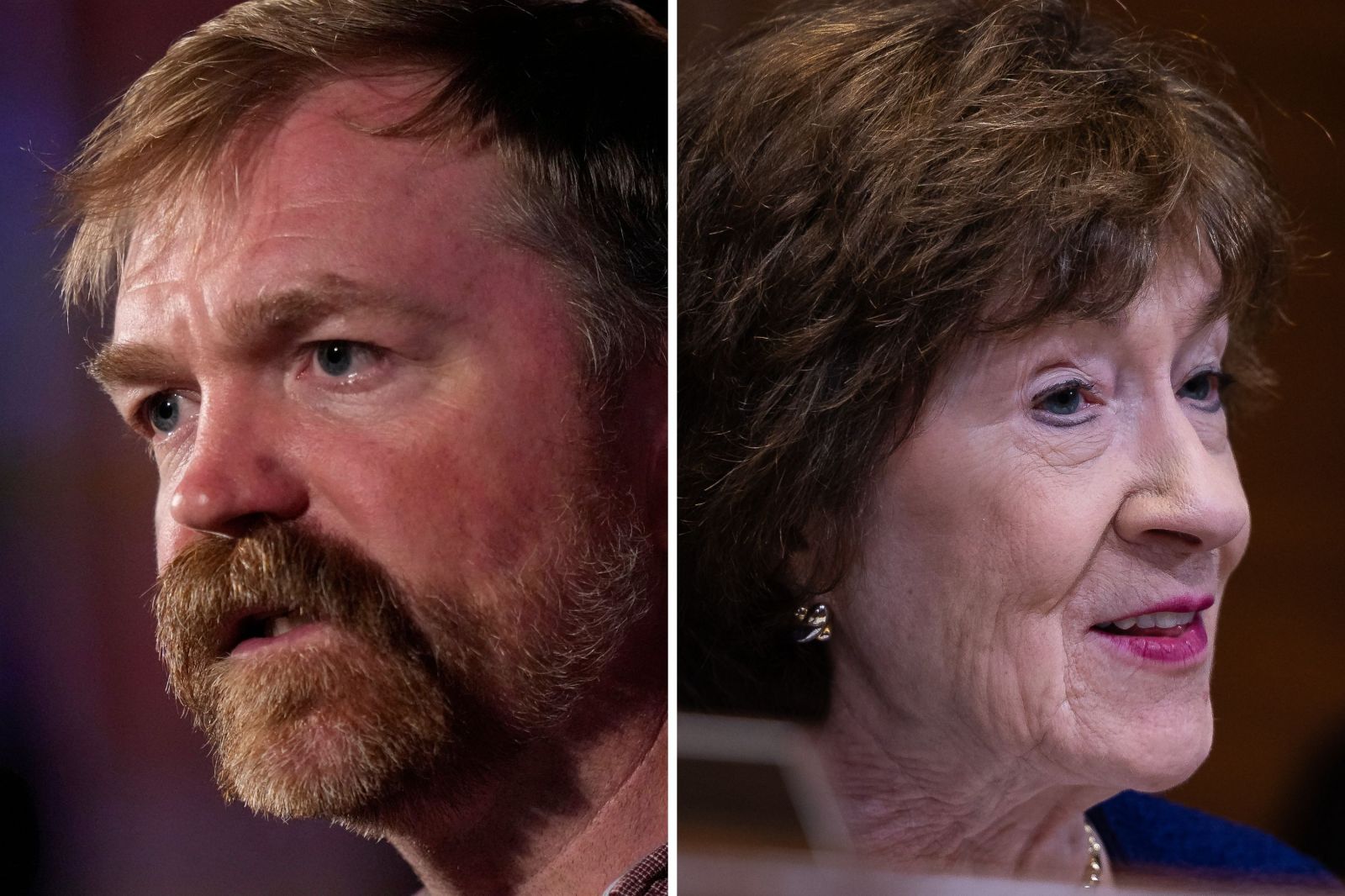
A recent poll indicates that the Senate race in Maine between Democrat Graham Platner and Republican Susan Collins is increasingly competitive. Conducted by President Donald Trump’s pollster, the survey reveals both candidates tied at 46 percent. The poll, executed between June 1 and 3 under the sponsorship of the Pine Tree Results PAC, details fluctuations in Platner’s popularity. His favorability increased slightly from 35 percent to 40 percent between January and June, yet his unfavorable ratings also grew significantly from 29 percent to 49 percent.
According to the poll, Platner’s overall support was 44 percent compared to 45 percent for Collins earlier in January. While the race remains tight, pollster insights suggest that more controversies surrounding Platner could harm his prospects. A particular concern is his presence on the social media site Kik, flagged by the National Center on Sexual Exploitation as being risky. Reports about a Kik profile linked to Platner are circulating, though evidence of inappropriate communications is lacking.
The Maine Senate race continues to be fervently contested. Both Sen. Collins and her allies are keen to counter the Democratic financial push for Platner’s campaign. Observers note that Platner’s betting odds have dropped to the lowest since he joined the race.
Controversies Surrounding Graham Platner
Graham Platner launched his Maine Senate campaign in August 2025. The progressive candidate, endorsed by figures like Bernie Sanders, has prioritized accessible housing, universal healthcare, labor union empowerment, and reducing the billionaire influence in Maine.
Yet, his campaign has faced several controversies. In October 2025, past Reddit postings with offensive language and violent rhetoric resurfaced, prompting Platner to apologize. Additionally, scrutiny emerged over a tattoo with potential Nazi associations, which Platner explained as unintentional and subsequently covered up.
In May, reports on sexually explicit messages Platner sent to women outside his marriage surfaced. Initially labeled as gossip by his campaign, Platner eventually acknowledged his actions publicly. Most recently, a New York Times report cited women recounting unsettling behavior by Platner, allegations he has denied as politically motivated.
Platner also addressed issues of mental health, mentioning struggles with PTSD and alcohol during a difficult personal phase, for which he has since sought treatment.
Election Outlook
With the primary election imminent, Platner remains in the race, essential for potential Democratic control over the Senate. While specific impacts of the controversies are uncertain, earlier polls before recent reports showed him edging ahead of Collins. A survey by UMass Lowell positioned Platner at 48 percent support compared to Collins’ 43 percent, with undecided voters comprising 6 percent of the sample.
John Cluverius of UMass Lowell comments on the contentious nature of Maine’s Senate race, noting challenges for both candidates. Platner’s lesser-known profile provides room for voter persuasion amid new developments, while Collins contends with economic concerns and an unpopular presidential figure.
The Democratic primary is scheduled for June 9, with the general election following on November 3. The race remains one of the most watched and competitive in the nation.