
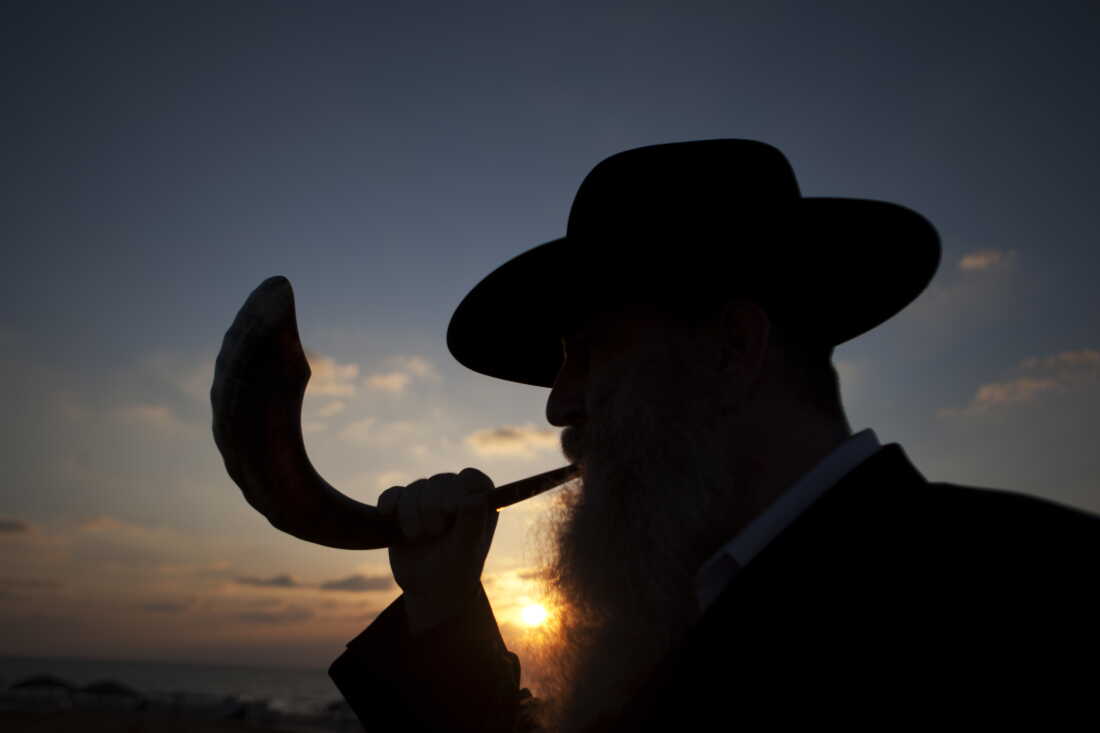
The shofar, an ancient instrument made from an animal’s horn, plays a central role in the Jewish holiday of Rosh Hashanah. Whether crafted from the curved horn of a ram or the spiral of an African antelope, its sound is distinctive and carries deep spiritual significance.
Rabbi Alicia Jo Rabins, a musician from Portland, Oregon, explains the process of playing the shofar. It requires taking a deep breath and pursing one’s lips as if playing a brass instrument. The shofar serves as a call to prayer and reflection during Rosh Hashanah, which begins at sunset on Friday and extends into a two-day observance filled with prayer, contemplation, and celebration.
Associate Professor Daniel Picus from Western Washington University notes that the Hebrew Bible consistently associates the shofar with attention-getting. Its blasts marked significant events such as the revelation of the Torah at Mt. Sinai and the start of the Jubilee year. Priests used the shofar to bring down the walls of Jericho, and it marks moments of heightened emotion during Rosh Hashanah.
The Mishnah details the preparation and use of the shofar during Rosh Hashanah, discussing its hollowing and the complex sequence of blasts throughout the service. Although traditionally not blown when Rosh Hashanah falls on Shabbat, modern synagogues have reconsidered this practice.
Rabbi Micha’el Rosenberg from the Hadar Institute in New York highlights interpretations of the shofar’s sound, comparing it to the cries of mothers in pain, such as the mother of the slain commander Sisera. This idea is embodied in the broken staccato sound known as ‘teruah.’
Maimonides, a medieval Jewish rabbi, interprets the shofar blast as a spiritual wake-up call urging self-improvement. He emphasizes the importance of looking beyond one’s immediate surroundings, promoted by the shofar’s expansive call.
Hasidic thought compares the shofar’s sound to the breath that animates the world, yet its most profound impact may lie in its wordless expression of feeling. Rosenberg views the shofar as transcending rational thought, connecting deeply with emotions.
Rabbi Rabins expresses how the shofar reaches wordless places, forging connections with ancestors who have heard and created its sound for generations. She articulates that the shofar awakens listeners to life’s joys and sorrows, urging attention to the present moment and the coming year.
This narrative emerges from collaboration between NPR and Religion News Service, serving as a reminder of the enduring tradition and spiritual resonance of the shofar.